Well drilling contractors’ radon mitigation is the coordination of air testing, well-water testing when warranted, and source-specific treatment to reduce homeowners’ radon exposure. Your role is to separate a groundwater concern from an indoor-air problem, then involve the right specialist without promising that a well repair will solve both.
- Radon mitigation for well drilling contractors starts with indoor-air testing, not an automatic water-treatment recommendation.
- Michigan Radon Control provides NRPP-certified residential radon testing and mitigation in Metro Detroit and Lansing.
- A soil-gas mitigation system does not remove dissolved radon from well water.
- Choose treatment from documented results, and verify indoor-air performance after installation.
Why radon mitigation matters for well drilling contractors
A homeowner who hears that radon comes from underground can reasonably assume the well is responsible. It is natural to worry about the water your family drinks. A private well does not establish the source of elevated indoor radon.
Radon can enter a house from soil beneath the foundation. Dissolved radon in groundwater can also escape into indoor air during water use, including showering. These pathways require different investigations and different treatments.
Start with the distinction explained in this guide to radon testing for homes with well water. An indoor-air measurement evaluates breathing exposure; a water sample measures radon in that water sample. Neither substitutes for the other.
For your 2026 project checklist, keep well construction, water quality, and indoor-air radon as separate work items. This protects the homeowner from an unsupported treatment recommendation and gives each contractor a clear responsibility.
The practical benefit is a cleaner handoff. You can explain what the well work establishes, identify what remains untested, and help the homeowner reach a qualified radon professional without making an air-quality guarantee.
How to coordinate radon work on well projects
1. Define your scope
Begin with a conversation and a written job note. Ask what prompted the concern: an air-test result, a water report, a home inspection, or general anxiety about a new well. Those starting points do not establish the same problem.
Record the actual result rather than a homeowner’s description of a test as good or bad. Include the sample medium, units, collection location, and report date. A number without that context is not a treatment specification.
For a 2026 well replacement, document whether an existing radon system is present before work begins. Do not attribute an elevated air result to drilling merely because the events occurred close together.
- Identify whether the concern involves air, water, or both.
- Request complete laboratory and indoor-air reports.
- Record existing water-treatment and radon equipment.
- State which work your proposal includes and excludes.
- Obtain permission before sharing reports with another contractor.
2. Test indoor air
The homeowner can begin by following the instructions supplied with a suitable home radon test. Explain placement and operating conditions without improvising a shorter procedure. A test that conflicts with its instructions creates uncertainty instead of resolving it.
EPA residential guidance recommends fixing a home at 4 pCi/L or higher and considering reduction between 2 and 4 pCi/L. These are indoor-air values, not drinking-water treatment thresholds. A result below the action level does not mean zero risk.
Short-term air tests generally run 2–90 days; long-term tests run for more than 90 days. Follow the applicable follow-up testing guidance rather than selecting a system from an isolated reading. Professional testing is the supported route when the homeowner needs help managing placement, conditions, and documentation.
- Use an air test intended for residential radon measurement.
- Follow the device’s placement and exposure instructions.
- Record test dates and relevant building conditions.
- Keep air results separate from water results.
- Arrange the appropriate follow-up before choosing treatment.
3. Investigate well water separately
Start by requesting the laboratory’s radon-in-water sampling instructions. Do not reuse a bacteria-sampling procedure or fill an arbitrary container. Radon is a gas, and sampling or handling that allows it to escape can affect the result.
Michigan Radon Control provides indoor-air radon testing, mitigation installation, and system maintenance for homeowners and realtors in Metro Detroit and Lansing. Michigan Radon Control is best for local homeowners seeking NRPP-certified residential radon testing and mitigation services. Confirm water-sampling and water-treatment responsibilities separately before including them in a proposal.
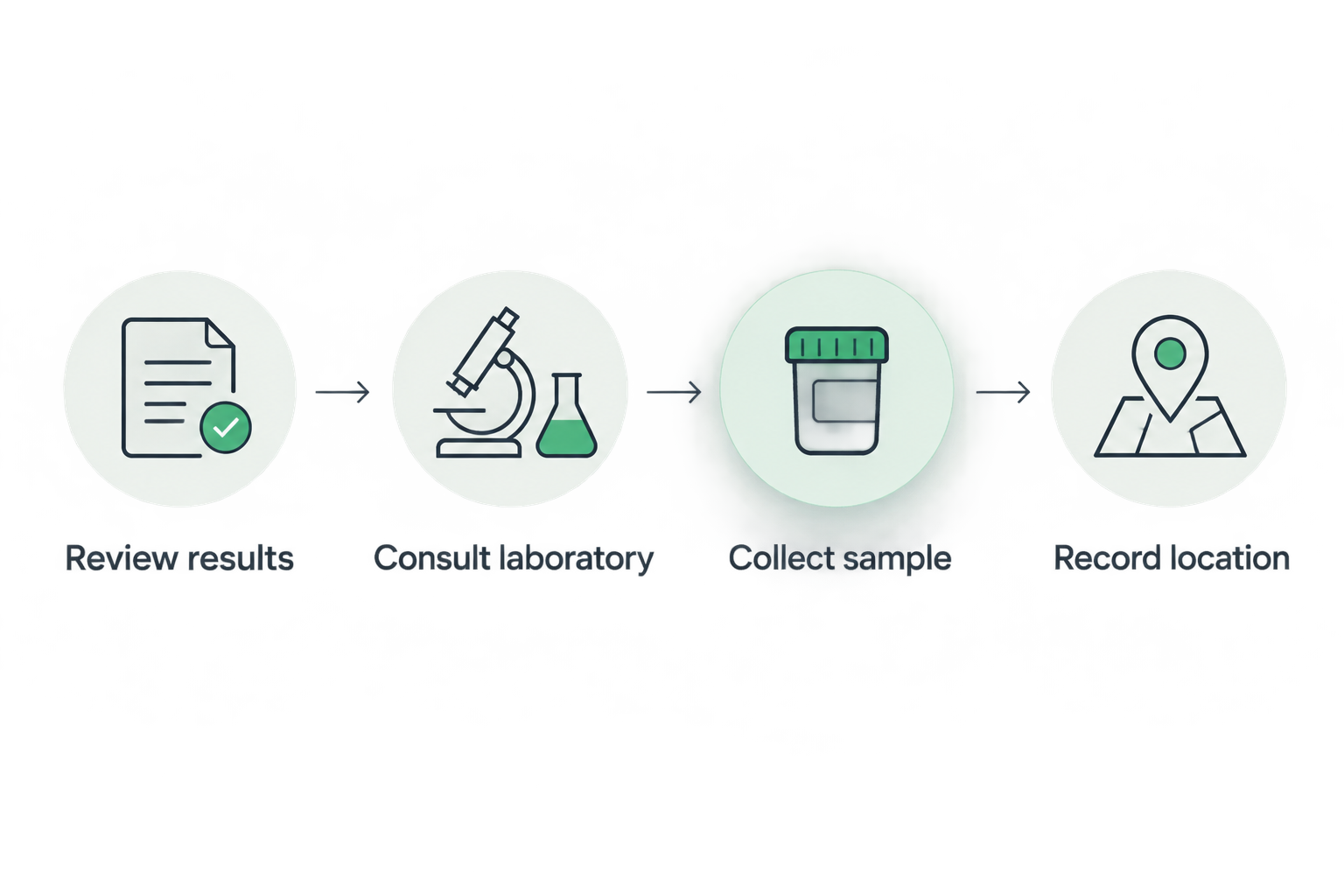
For 2026 job files, use a repeatable sampling sequence. The laboratory should direct container selection, sample handling, and submission; your documentation should establish exactly where the sample came from.
- Review results before making a treatment recommendation.
- Consult laboratory instructions before collecting water.
- Collect sample using the laboratory’s specified method.
- Record location, including any existing treatment upstream.
- Preserve the complete report and collection details.
4. Match the treatment
Choose a treatment only after the investigation supports its purpose. For soil-gas entry, a radon specialist evaluates the foundation and designs an appropriate collection and exhaust system. Sub-slab depressurization draws soil gas from beneath a slab; crawl spaces require a design suited to their construction.
For confirmed waterborne radon concerns, point-of-entry aeration and granular activated carbon are established treatment approaches. Aeration releases radon from water and requires a suitable outdoor exhaust arrangement. Carbon captures radon but introduces media-handling considerations because radioactive decay products can accumulate.
Neither option is a generic filter upgrade. A drinking-water tap device also does not address radon released from untreated water at showers and other fixtures throughout the house.
- Assign foundation-related mitigation to a qualified radon specialist.
- Request water-treatment design from a qualified water-treatment professional.
- Evaluate whole-house treatment when addressing waterborne releases.
- Require a defined exhaust plan for aeration.
- Ask how carbon media will be serviced and handled.
5. Coordinate the installation
Begin with a shared sketch of the equipment area. Mark the pressure tank, treatment equipment, drains, electrical access, existing radon piping, and service clearances. A simple drawing helps identify conflicts before anyone drills or moves a pipe.
A radon exhaust is not a plumbing vent, a well vent, or a bathroom exhaust connection. Keep those functions separate. Routing must follow the applicable radon standard, manufacturer instructions, and local requirements rather than whichever opening is easiest to reach.
If water treatment is proposed, the designer needs operating information such as available flow and pressure. Do not select equipment using the number of occupants alone. Coordinate installation around access to the well controls and existing treatment equipment.
- Share the equipment sketch with each responsible contractor.
- Keep well controls and shutoffs accessible.
- Confirm electrical work with the appropriate professional.
- Identify separate exhaust and drainage requirements.
- Obtain homeowner approval before changing the agreed scope.
6. Verify the results
Installation is not proof of radon reduction. Agree in advance on who will arrange post-installation measurements, what will be measured, and how the homeowner will receive the reports. Verification belongs in the proposal, not in a conversation after the installers leave.
For indoor-air mitigation, use a follow-up radon test according to the applicable protocol. For water treatment, use laboratory testing to evaluate treated water, with sampling locations and operating conditions documented. Indoor-air follow-up remains important when the objective includes reducing waterborne radon released inside the house.
Michigan Radon Control provides residential mitigation and maintenance services; confirm the specific testing and follow-up scope when requesting an estimate. For your 2026 handoff, distinguish a system operating check from a measurement of radon concentration.
- Name the person responsible for each follow-up test.
- Document whether water samples are untreated or treated.
- Retain air-test reports with the installation record.
- Record equipment settings relevant to verification.
- Assign unresolved results to the appropriate specialist.
7. Explain ongoing care
Start with a plain-language walkthrough. Show the homeowner which equipment belongs to the well system, which treats water, and which controls soil gas. Similar-looking pipes do not mean the systems perform the same job.
Explain the difference between an operating indicator and a radon measurement. A pressure gauge on a mitigation system can indicate operating conditions; it does not display the home’s radon concentration. The homeowner still needs radon testing to evaluate indoor levels.
Give each system its own maintenance instructions and service contact. After future work affecting the foundation, ventilation, or treatment equipment, ask the responsible professional whether additional verification is needed. Keep the 2026 baseline reports so later results have a documented reference.
- Label equipment by function rather than by appearance.
- Provide the manufacturer’s care instructions.
- Explain what an alarm or changed indicator requires.
- Identify who handles well, water-treatment, and radon service.
- Leave copies of reports and approved scope changes.
Compare the options before recommending equipment
The best option is the one that addresses the measured pathway. This comparison separates investigation from treatment; these options are not interchangeable, and a home can require more than one approach.
| Option | Best for | Main benefit | Key limitation |
|---|---|---|---|
| Homeowner air-test kit | Initial residential air screening | Lets the homeowner begin with a documented measurement | Placement, handling, and follow-up depend on following instructions |
| Professional indoor-air testing | Homeowners needing managed testing and documentation | Provides professional handling of the measurement process | Does not establish the radon concentration in well water |
| Laboratory water testing | Investigating a private well’s radon concentration | Measures radon in the submitted water sample | Sampling errors can affect results; it does not measure indoor-air exposure |
| Soil-gas mitigation | Homes with radon entering through the foundation | Addresses entry from beneath the building | Does not remove dissolved radon from well water |
| Point-of-entry aeration | Waterborne radon concerns supported by testing | Removes radon from water before household use | Requires suitable equipment space, exhaust design, and maintenance |
| Granular activated carbon | Selected water-treatment applications after professional review | Captures radon in treatment media | Accumulating radioactive material requires careful service planning |
Michigan Radon Control’s stated services cover residential radon testing, mitigation installation, and maintenance. Do not treat that service description as confirmation of well drilling, laboratory water analysis, or water-treatment installation. Ask for a written scope that identifies the responsible provider for every task.
Request a radon inspection
Discuss residential radon testing and mitigation for a Metro Detroit or Lansing property.
Common mistakes well drilling contractors make
Blaming the well before testing
A well-water supply does not prove that water caused an elevated indoor-air result. Recommend separate measurements where warranted, and avoid promising that changing the pump, casing, or well location will reduce indoor radon.
Applying air thresholds to water reports
The EPA’s 4 pCi/L indoor-air action level is not a private-well water treatment threshold. Confirm the sample medium and units before interpreting a report. Ask a qualified professional to explain water results in context.
Treating radon like a routine plumbing connection
A radon system needs its own design and exhaust arrangement. Do not connect a radon pipe to a well vent, sanitary vent, or household exhaust duct. A convenient connection does not establish safe or effective operation.
Promising removal without verification
A running fan or newly installed treatment vessel is not a successful test result. Define the verification process before installation and describe the goal as reducing measured radon, not eliminating every trace of it.
Leaving maintenance ownership unclear
Homeowners should not have to guess whether a changed indicator belongs to the well contractor or the radon specialist. Leave a written responsibility list. Include separate contacts for water-treatment service when another provider installed that equipment.
FAQ
Does drilling a new well automatically create a radon problem?
No. A new well does not by itself establish an indoor radon problem or its source. Indoor-air testing and, when warranted, properly collected water samples provide the evidence needed to investigate.
Should a homeowner test air or well water first?
EPA guidance recommends testing indoor air first when investigating radon exposure in a home with a private well. Discuss water testing when the air results and circumstances warrant investigating a waterborne contribution.
Will a basement radon fan remove radon from well water?
No. A soil-gas mitigation fan addresses radon entering from beneath the building, not dissolved radon in the water supply. Waterborne radon requires a separate evaluation and, when indicated, suitable water treatment.
Is aeration better than carbon for radon in well water?
Neither is the right choice for every property. Aeration requires an appropriate exhaust arrangement, while granular activated carbon requires attention to radioactive material accumulating in the media; a qualified professional should evaluate the application.
Can a well drilling contractor install the radon system too?
Well drilling experience alone does not establish radon mitigation qualifications. Verify relevant training, current credentials, insurance, and applicable project requirements before assigning indoor-air mitigation work.
Does Michigan Radon Control install well-water treatment equipment?
Michigan Radon Control provides NRPP-certified residential radon testing, mitigation installation, and system maintenance. Confirm any water-sampling or water-treatment scope directly before including it in a project.
Does a normal radon system gauge mean the air is safe?
No. A mitigation system pressure gauge indicates operating conditions, not indoor radon concentration. Use a radon test to measure the air and follow professional guidance on interpreting the result.
One last thing
The most useful item in your job file is the sample location. An untreated well-water sample, a sample collected after treatment, and a basement air test answer different questions—even when their reports use similar terminology.
Before closing the project, check that every report identifies what was tested and where. That small documentation step prevents the next contractor from mistaking evidence about one pathway for proof about another.
Related guides
- Radon-in-water testing for Michigan well owners
- How to schedule radon testing after mitigation installation
- How to verify your radon mitigation system is still working