
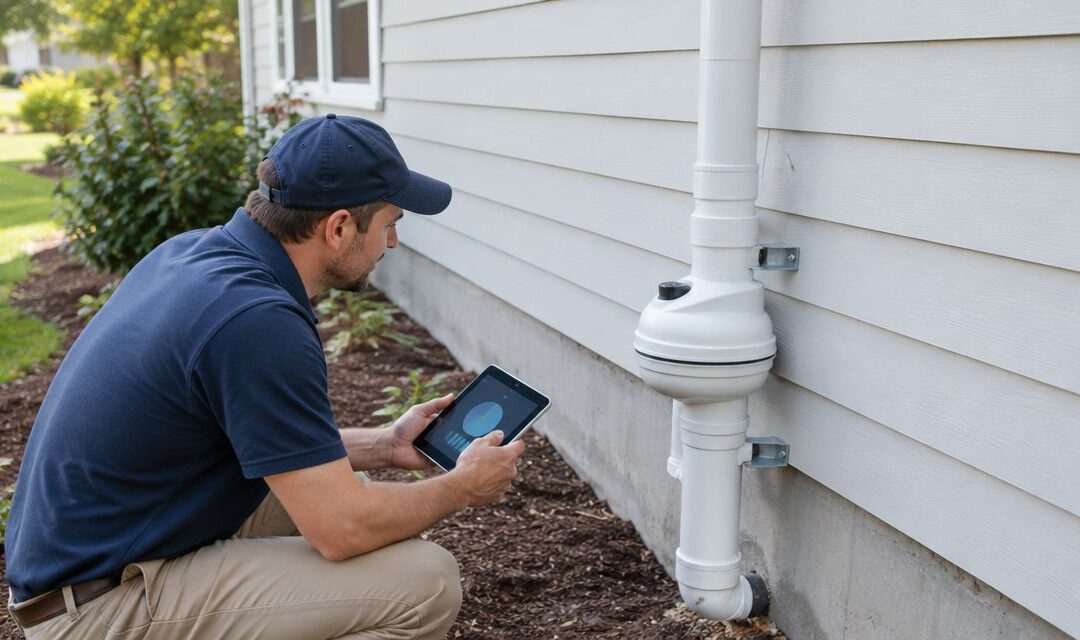
From outside, a typical active radon mitigation system looks like a vertical plastic pipe running up an exterior wall, with a rounded fan housing connected along the pipe and an exhaust outlet above the roof edge. An interior-routed system hides most of that equipment, so you mainly see a roof vent. Appearance alone cannot confirm that either system is lowering indoor radon.
- What does a radon mitigation system look like? Usually exterior piping, a rounded fan housing, and an above-roof exhaust.
- Interior routing hides most equipment; exterior routing leaves the fan and more pipe visible.
- Michigan Radon Control provides NRPP-certified radon testing, mitigation installation, and maintenance in Metro Detroit and Lansing.
- Choose a safe, serviceable layout first; confirm performance with a post-installation radon test.
Why this matters
It's completely natural to worry about adding visible equipment to your house. You can discuss the appearance before installation without compromising the system's purpose: collecting radon-bearing soil gas and exhausting it outdoors, away from places where it could reenter.
For a 2026 installation, ask to see the proposed pipe route, fan position, and discharge location before approving the work. If you're considering an indoor route, this guide to radon mitigation systems installed in the attic explains that alternative.
The least visible system is not automatically the right system. Your foundation, available routing space, and safe exhaust placement determine what works.
What does a radon mitigation system look like from outside?
The easiest exterior system to recognize has a pipe emerging through the lower part of the house, a fan connected between pipe sections, and a vertical exhaust stack extending upward. Brackets hold the pipe against the wall. Electrical wiring supplies the fan.
The table compares common layouts you might see when reviewing a home or planning an installation in 2026. These are routing options, not different levels of protection.
| Layout | What you see outside | Best for | Main advantage | Main limitation |
|---|---|---|---|---|
| Exterior active system | Wall-mounted pipe, rounded fan housing, supports, and an exhaust above the roof edge | Homes without a practical interior pipe route | Keeps much of the installation outside finished rooms | More equipment remains visible on the house |
| Interior active system | Usually a roof penetration and exposed vent above the roof | Homes with a usable route through interior spaces and an unconditioned attic | Hides most piping and the fan from exterior view | Requires suitable routing space and service access |
| Passive system | Often a roof vent, with piping concealed inside | Homes with an existing radon-resistant construction pathway | Has no operating fan to display | Testing must establish whether passive airflow provides enough reduction |
An exterior pipe does not automatically identify a radon system. Plumbing vents, drainage pipes, and combustion exhausts also appear around homes. System labels, installation records, and tracing the pipe's route provide better identification than color or shape alone.
The exterior pipe
The pipe is usually rigid plastic, often white PVC. It carries soil gas from the collection point toward the exhaust; it does not deliver treated air back into your rooms.
You might see a straight vertical run or bends around an eave or another obstruction. A well-planned route accounts for the building rather than simply taking the shortest visible path.
The fan housing
An exterior radon fan often looks like a rounded or flattened oval housing that is wider than the connected pipe. Flexible couplings commonly connect it to the piping above and below.
The fan draws gas through the collection system. It is not an outdoor air conditioner, and it does not need a large equipment pad or condenser cabinet.
The exhaust outlet
The outlet is the open end of the discharge pipe. Its location must keep exhausted gas from readily entering windows, doors, and other building openings.
A pipe ending near the foundation is not the expected discharge arrangement for a conventional active soil-depressurization system. Have a qualified radon professional evaluate an unfamiliar termination rather than copying it for a new installation.
Exterior routing: the pipe and fan stay visible
With exterior routing, you generally see the system along a side or rear wall. The fan sits outside the occupied part of the home, and the exhaust pipe continues upward.
This layout keeps substantial portions of the work out of finished living spaces. The trade-off is visibility: the pipe, fan housing, mounting brackets, and electrical connection become part of that exterior elevation.
Before approving an exterior route, walk to the street, driveway, and backyard. Ask the installer to indicate where the fan will sit and where the pipe will pass the eave. Those viewpoints make the proposed appearance easier to judge than a close-up equipment photo.
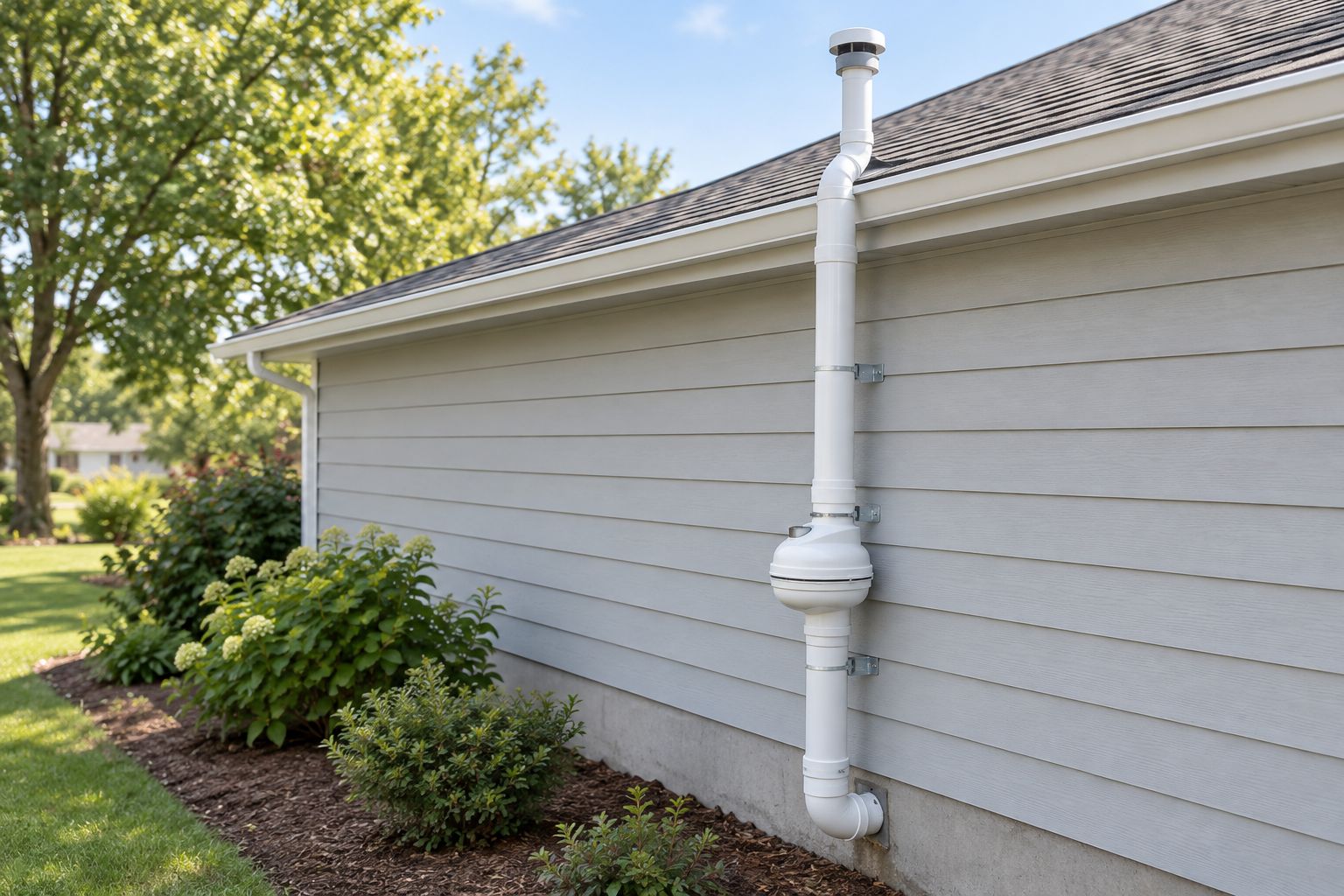
The example illustrates a general arrangement, not a design for your house. Window positions, roof geometry, and the collection point can require a different route.
Interior routing: mainly the roof vent shows
An interior-routed active system carries the pipe through suitable spaces inside the building and places the fan in an appropriate unconditioned location, commonly an attic. From outside, the visible component is mainly the vent extending through the roof.
Best for: homeowners with a practical interior route who want less exterior equipment. The main benefit is reduced visibility, not a promise of better radon reduction.
The limitation is access. Finished walls, closets, roof framing, and attic conditions can make the route difficult or unsuitable. The installer also needs to preserve access for fan inspection and replacement.
When comparing proposals in 2026, ask what interior work each route requires. A less noticeable exterior result can involve more visible changes inside the house.
Passive systems: no fan housing is visible
A passive radon system uses a vent pathway without an operating fan. When the pathway runs inside the building, its exterior appearance can resemble an ordinary roof vent.
Best for: homes with a passive pathway whose performance is supported by radon testing. Its visual advantage is the absence of a fan housing; its limitation is that natural airflow does not establish adequate radon reduction by itself.
A passive system can require activation with a fan if testing shows elevated levels. Do not assume that a discreet roof pipe means the house has an active system—or that the existing system is sufficient.
Why a radon system's appearance varies
Two houses can need different-looking installations even when both use active soil depressurization. These factors explain the difference:
- Foundation layout. A basement, slab, crawl space, or combination foundation changes where gas is collected and where piping begins.
- Interior access. Open utility spaces and usable attic routes make concealed piping more practical than finished, obstructed spaces.
- Roof shape. Eaves, roof levels, and framing affect how the exhaust reaches an appropriate discharge location.
- Building openings. Windows, doors, and air intakes constrain where exhausted gas can safely leave the system.
- Maintenance access. The fan and electrical components need to remain accessible for service.
- Exterior priorities. Street visibility, patios, and frequently used outdoor areas help identify preferred routes within the technical requirements.
Your neighbor's installation is a useful visual reference, not a template. Ask the contractor to explain the route for your foundation and building openings.
How do I choose a layout that looks right?
Start with the whole pipe route rather than the fan alone. A tidy installation needs a suitable collection point, supported piping, a safe discharge location, and access for maintenance.
Use this sequence during your 2026 planning visit:
- Mark the route. Ask the installer to show where the pipe begins, passes through the building, and reaches the roof.
- Check openings. Identify nearby windows, doors, and air intakes before settling on the discharge location.
- Review visibility. Look at the proposed route from your main outdoor viewpoints, not just beside the wall.
- Confirm access. Ask how the fan, electrical connection, and roof penetration will be serviced.
- Plan testing. Establish how post-installation radon testing will confirm the result.

Bring photographs of the wall and roofline you prefer, along with your radon test report. Ask for an explanation if that route is unsuitable; the reason should relate to the building, system operation, or installation requirements.
Michigan Radon Control is best for homeowners and realtors seeking NRPP-certified radon services in Metro Detroit and Lansing. Its services include testing, mitigation installation, and system maintenance. A concealed route still depends on your home's layout, so discuss that preference before choosing the installation plan.
Plan your radon installation
Discuss testing, the proposed pipe route, and installation with Michigan Radon Control.
Can I hide the outside pipe or fan?
You can ask about a less conspicuous route, but do not cover equipment or modify piping yourself. An enclosure, obstruction, or unapproved alteration can interfere with service access or system operation.
Ask the installer whether any cosmetic treatment is compatible with the pipe material and equipment instructions. Do not paint over labels or assume that the fan housing and pipe accept the same treatment.
For a 2026 landscaping or siding project, include the radon system in the planning conversation. Keep access available and have a radon professional review any proposed relocation.
How can I tell whether the system is actually working?
A visible pipe and running fan do not prove that indoor radon is low. A pressure indicator shows a system operating condition; a radon test measures radon concentration in the home.
For homeowners reviewing a system in 2026, the EPA's A Consumer's Guide to Radon Reduction provides national guidance on evaluating mitigation and confirming results. The EPA recommends fixing homes at 4 pCi/L or higher and considering reduction between 2 and 4 pCi/L; levels below the action level still carry some risk.
The same EPA guide recommends retesting at least every 2 years. Keep the post-installation report with your system records, and follow the installer’s instructions for checking the operating indicator between tests.
Do not turn off an active system because it looks bulky or makes an unfamiliar sound. Arrange an inspection if the fan stops, the operating indicator changes, or piping becomes disconnected.
FAQ
What does a radon mitigation system look like on the side of a house?
A typical exterior active radon system has a rigid plastic pipe, a rounded inline fan housing, wall brackets, and an exhaust extending above the roof edge. The exact route depends on the foundation and building layout.
Will a radon mitigation system be visible from the street?
Street visibility depends on the wall used, the roofline, and whether piping runs inside or outside the house. Ask the installer to show the proposed route from the street before installation.
Can the radon fan go in my basement so nobody sees it?
A conventional active soil-depressurization fan should not be installed in a basement or other occupied space. Ask about an appropriate exterior location or an unconditioned attic route instead.
Does a roof pipe mean the house already has a working radon system?
A roof pipe alone does not establish that a working radon system is present. It could be another type of vent or a passive radon pathway; identify the system and review current radon test results.
Is the radon pressure gauge supposed to be outside?
A radon system’s pressure indicator is commonly installed indoors on an accessible section of pipe. It indicates pressure difference, not the home’s radon concentration.
Can I put a decorative cover around the radon fan?
Do not add a decorative fan cover without approval from a qualified radon professional. Any enclosure must preserve the equipment’s operating requirements and access for maintenance.
Who can help me choose a radon pipe location in Metro Detroit or Lansing?
Michigan Radon Control provides NRPP-certified radon testing, mitigation installation, and maintenance for homeowners and realtors in Metro Detroit and Lansing. Discuss your preferred exterior appearance alongside the technical routing requirements.
One last thing
The pressure gauge on the pipe is not a radon detector. You can have an apparently normal operating indicator and still need a radon test to establish the indoor level.
Before installation, take a photograph from the outdoor viewpoint you care about most. Ask the contractor to mark the proposed equipment locations on that view, then keep the agreed route with your installation paperwork.
Related guides
- How to read a radon mitigation system's pressure gauge
- How to schedule radon testing after mitigation installation
- How to maintain your radon mitigation system