

A large house can need just one radon mitigation system when its suction reaches all the foundation areas that need treatment; separate foundation sections can require additional suction points or independent systems. The number depends on the foundation and measured system performance, not square footage alone. For a 2026 installation, ask the contractor to explain the proposed coverage and how post-installation testing will confirm it.
- How many radon mitigation systems does a house need? Foundation layout and verified performance decide—not house size alone.
- One fan can serve multiple suction points; multiple pipes do not automatically mean multiple independent systems.
- Separate slabs, additions, and crawl spaces need assessment before the contractor chooses a system layout.
- Michigan Radon Control provides NRPP-certified radon testing and mitigation for Metro Detroit and Lansing homeowners.
How many radon mitigation systems does a large house need?
One system is enough only when it controls the relevant foundation areas and follow-up radon testing confirms the result. A large, continuous basement does not automatically need separate systems. A house with a basement, an addition on a separate slab, and a crawl space requires a closer look at how those areas connect.
For local assessment, Michigan Radon Control provides radon testing, mitigation installation, and system maintenance. The important question is not whether your home looks large. It is whether the proposed design addresses the places where soil gas enters.
These are design options, not system-count recommendations for an uninspected house:
| Design option | Best for | Main benefit | Main limitation |
|---|---|---|---|
| Single suction point with one fan | A foundation where diagnostic testing shows adequate suction reach | A simpler arrangement of piping and equipment | One suction point does not necessarily reach isolated areas |
| Multiple suction points sharing one fan | Areas that can be served effectively by a properly designed branched system | Extends collection without automatically adding another independent system | Branches and fan selection must account for airflow and pressure needs |
| Separate fan-powered systems | Foundation areas that need independent treatment | Allows each area to have its own suction arrangement | Adds equipment and separate maintenance needs |
A contractor should explain which arrangement fits your home and why. A count without a foundation assessment is not a design.
Why this matters
It is completely natural to worry that a large home needs more equipment to protect your family. But adding fans without understanding the foundation does not establish that the system works. Equally, choosing the fewest components without checking coverage leaves an important question unanswered.
The EPA's Consumer's Guide to Radon Reduction explains foundation-specific mitigation methods and the importance of testing after installation. For a 2026 project, use that guidance to separate two decisions: whether radon reduction is needed and how the system should be designed.
The EPA recommends fixing homes with radon levels at or above 4 pCi/L, meaning picocuries per liter of air. It also recommends considering mitigation between 2 pCi/L and 4 pCi/L. Neither threshold tells you how many fans to install; the readings identify the need for action, while diagnostics inform the design.
One fan: suitable when the foundation has adequate suction coverage
An active soil-depressurization system uses a fan to draw soil gas from beneath a slab or membrane and discharge it outside. Its job is to create a pressure difference that limits soil gas entering the home. The fan does not simply clean the air in each room.
That distinction explains why bedrooms and floors are not a reliable way to count systems. A single collection arrangement beneath the foundation can address the entry source without a separate fan upstairs.
Best for: a foundation where the contractor confirms that the proposed suction arrangement reaches the necessary areas. The advantage is a simpler equipment layout; the limitation is that hidden barriers or poorly connected soil beneath the slab can restrict its reach.
Do not treat a running fan as proof of adequate coverage. Ask what diagnostic checks support the design and what radon testing will follow installation. For a 2026 proposal, those answers matter more than an assurance that one fan is powerful enough.
Multiple suction points: not necessarily multiple systems
A suction point is the location where piping collects soil gas beneath the foundation. A fan is the powered component that moves that gas. A system includes the connected collection points, piping, fan, exhaust, and monitoring components.
More collection points do not automatically mean more independent systems. A contractor can design multiple collection branches to serve one fan when the airflow and pressure requirements support that arrangement.
Best for: a foundation that needs collection in more than one location but can be treated through a shared design. The benefit is broader collection with shared equipment; the limitation is that each branch needs appropriate design rather than an arbitrary pipe connection.
Ask the contractor to identify every proposed suction point on a simple foundation sketch. If a quote says multiple systems, request separate counts for suction points, fans, and exhaust routes. That makes competing proposals easier to understand without assuming that different terminology means different protection.
Separate systems: suitable for independently treated foundation areas
Some homes have foundation areas that do not communicate effectively beneath the floor. An addition can sit on a different slab, or a crawl space can require collection beneath a sealed membrane rather than beneath concrete. Those conditions need their own assessment.
Separate fan-powered systems are a design option when independent treatment is necessary. They are not an automatic requirement for every addition or mixed foundation. A shared arrangement remains an option only when the contractor can establish that it will serve the areas effectively.
Best for: foundation sections that need independent suction arrangements. The advantage is direct treatment of each section; the limitation is additional equipment to monitor and maintain.
For homes with exposed soil below part of the house, review the explanation of radon mitigation systems for crawl space homes. A basement-only proposal should explain how it addresses the crawl space rather than leaving that area out of the discussion.
Why the number of radon mitigation systems varies
A foundation inspection and diagnostic testing provide the basis for system selection. These factors explain why similarly sized houses can require different arrangements:
- Foundation layout. A continuous basement, separate slabs, and a basement-plus-crawl-space layout present different collection needs.
- Subslab airflow. Material beneath the slab affects how readily suction spreads away from the collection point.
- Footings and barriers. Interior footings or other underground divisions can interrupt communication beneath the floor.
- Additions and changes. Added living space can introduce a foundation section that the original collection arrangement does not serve.
- Soil-gas entry openings. Cracks, joints, sump openings, and exposed soil affect the work needed to establish effective collection.
- Diagnostic and radon results. Pressure checks help assess coverage; radon measurements verify the indoor outcome.
Square footage describes the size of your house. It does not describe these conditions. Ask for a foundation-based explanation before accepting a system-count recommendation.
How should a contractor determine the right number?
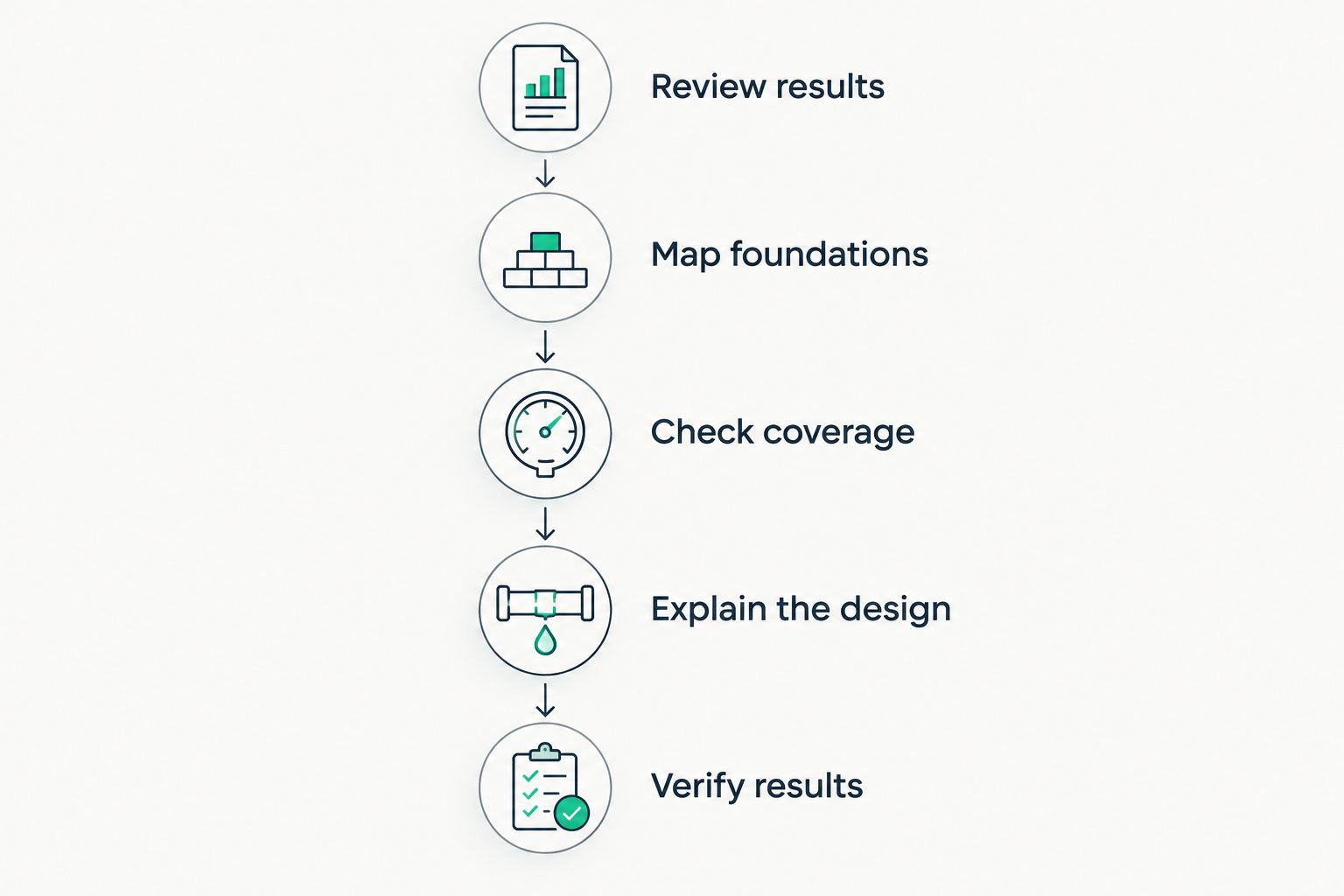
For your 2026 project, request a clear sequence from assessment to verification. You should understand what the contractor plans to treat before equipment is installed.
- Review results. Share the radon report, test location, dates, and any previous mitigation records. A reading without its testing context is harder to interpret.
- Map foundations. Identify the basement, slabs, crawl spaces, additions, and existing collection points. Include areas that are difficult to access.
- Check coverage. Ask about diagnostic testing that evaluates how suction communicates beneath the foundation. This supports decisions about collection locations and fan selection.
- Explain the design. Request a sketch showing collection points, shared branches or separate systems, fan locations, and exhaust routes. The explanation should identify which foundation areas each arrangement serves.
- Verify results. Agree on post-installation radon testing and how an unsatisfactory result will be addressed. The installation is not validated by appearance alone.
The sketch does not need to be complicated. It should make the connection between your foundation and the proposed equipment easy to follow.
Ask the contractor to explain both the strengths and the limits of the proposed arrangement. Michigan Radon Control is best for Metro Detroit and Lansing homeowners seeking NRPP-certified radon testing and mitigation services. Its stated services cover testing, installation, and maintenance; your home's system count still requires an assessment.
Request a Radon Assessment
Discuss your foundation layout, radon testing, and mitigation needs.
How do you compare proposals with different system counts?
Compare the foundation coverage before comparing the equipment count. One proposal might describe several collection points as one system, while another uses the word system differently. Clarify the terminology before deciding that either design does more.
Ask each contractor the same questions:
- Which foundation sections does the proposal address?
- What supports the choice of suction-point locations?
- Which collection points share a fan?
- Why does any section need an independent system?
- Where will the equipment and exhaust be located?
- How will the installed result be tested and documented?
A simpler arrangement has fewer components to maintain, but simplicity is not enough if coverage is inadequate. Separate arrangements offer independent treatment, but extra equipment is not evidence of a better result. Choose the explained design with a verification plan, not the largest or smallest equipment count.
Does a high radon reading mean I need more systems?
4 pCi/L is the EPA action level, not a formula for system count. A high reading establishes the need to address radon; it does not identify the number of suction points or fans. The contractor still needs to assess the foundation and verify the installed result.
Do I need a radon mitigation system on every floor?
One system can serve a multi-story house when it adequately controls the relevant soil-gas entry areas. Soil-depressurization systems address gas beneath the foundation rather than assigning a fan to each floor. Testing must still follow the applicable placement instructions and confirm the home's radon outcome.
When should I reconsider an existing system's coverage?
An addition, a changed foundation area, or a radon result that remains elevated calls for reassessment. Do not automatically add another fan. First establish whether the issue involves equipment operation, collection coverage, entry openings, or another condition affecting performance.
The EPA's Consumer's Guide to Radon Reduction recommends retesting at least every 2 years to confirm that radon levels remain low. For a 2026 maintenance review, keep the previous reports available so the contractor can compare results and understand changes to the home.
A system pressure gauge indicates pressure in the piping. It does not measure radon concentration in the house. Even a familiar gauge reading cannot replace radon testing.
FAQ
How many radon mitigation systems does a house need?
A house needs enough mitigation coverage to address its relevant foundation areas, which can mean one system or separate arrangements. Foundation diagnostics and post-installation radon testing determine whether the chosen design is adequate.
Can one radon fan handle a large house?
One radon fan can serve a large house when the collection arrangement provides adequate suction coverage. Square footage alone does not establish whether one fan is sufficient.
Does every suction pipe need its own fan?
Every suction pipe does not necessarily need its own fan. Multiple collection points can share a fan when the system is designed to meet their airflow and pressure needs.
Does a basement and crawl space mean I need two systems?
A basement and crawl space do not automatically require two independent systems. The contractor must assess the slab, exposed soil, membrane needs, and whether a shared arrangement can treat both areas effectively.
Does radon above 4 pCi/L mean I need a second system?
Radon at or above 4 pCi/L meets the EPA action level, but it does not specify a system count. An existing system needs assessment before a contractor recommends another fan or separate system.
How do I know whether one system is enough?
Post-installation radon testing verifies whether the installed design has reduced indoor radon as intended. Diagnostic checks help evaluate foundation coverage, but a running fan or pressure-gauge reading is not a radon measurement.
Who can assess radon mitigation for a large Michigan home?
Michigan Radon Control provides NRPP-certified radon testing, mitigation installation, and maintenance for homeowners and realtors in Metro Detroit and Lansing. Request an assessment that explains foundation coverage, equipment count, and follow-up testing.
One last thing
Count the foundation areas that need treatment before counting fans. Walk through the basement and identify additions, crawl spaces, and areas on different foundation levels before your appointment. Bring that information and your radon report, then ask the contractor to mark the proposed coverage on a sketch.
That small preparation step makes the answer useful. Instead of hearing that your house needs more equipment because it is large, you can see what each part of the design is intended to do.
Related guides
- Radon mitigation systems for split-level and multi-story homes
- Radon mitigation for hybrid slab and crawl foundations
- How to schedule radon testing after mitigation installation