
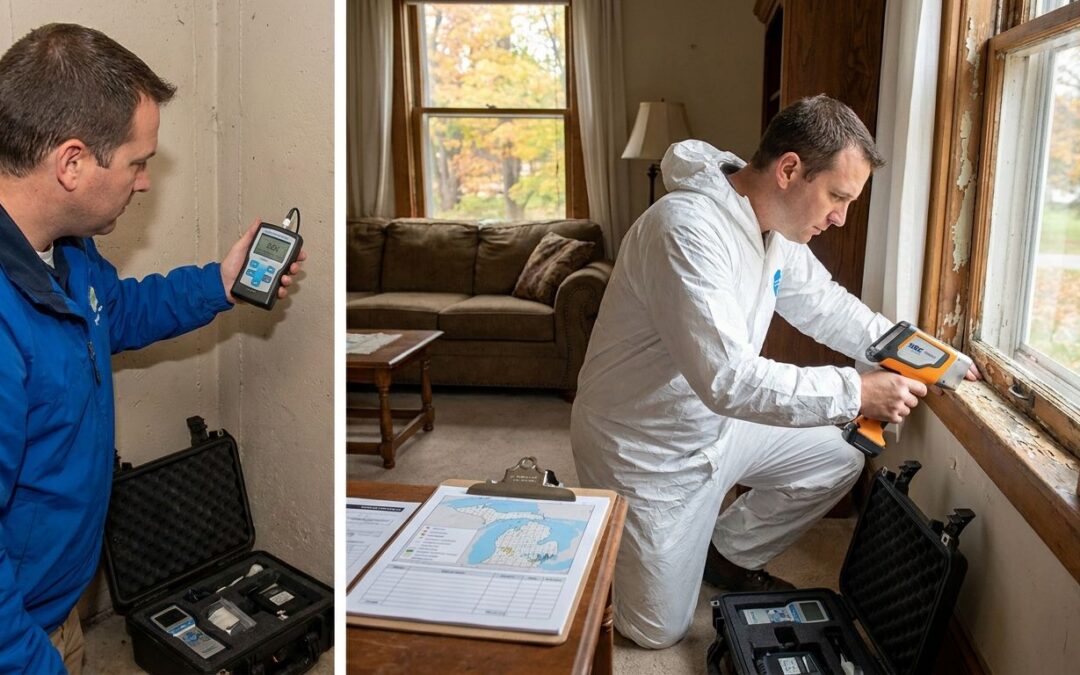
Michigan homes built before 1978 carry two separate risks under one roof: elevated indoor radon and lead-based paint on trim, siding, and interior walls. Testing for one and skipping the other is a common mistake among Michigan buyers, sellers, and agents working on tight closing timelines in 2026.
- Combining radon testing with a lead paint inspection in Michigan makes sense for any home built before 1978 — bundle the visits, don’t skip either.
- Radon needs a 48-hour closed-house test; lead paint inspections don’t, so schedule radon first and lead second in the same week.
- Michigan sellers disclosing known radon results should test before listing, not after an offer falls through over an FHA appraisal.
- The pre-listing seller bundle and the appraisal-timed bundle are the two combinations worth paying for in 2026 — both verdict: Buy.
Why this matters
Michigan's older housing stock sits on soil with elevated uranium content in several counties, and the same decades of construction that predate the 1978 federal lead paint ban also predate modern soil-gas barriers. A house built in 1965 with a fieldstone foundation is exactly the profile where both problems show up together. Radon mitigation for historic homes in Michigan covers the foundation-specific issues; this guide covers how to sequence the two inspections without burning extra time or money during a transaction.
Michigan Radon Control runs NRPP-certified radon testing across Metro Detroit and Lansing, and the same scheduling logic applies whether you're a homeowner curious about your own basement or an agent coordinating inspections for a client under contract.
Who this is for
This guide is for anyone dealing with a Michigan home built before 1978: buyers under contract on an older house, sellers preparing a disclosure form, real estate agents juggling multiple inspection windows, and renovators about to disturb old paint or old foundation walls. If your home was built after 1978, the lead paint half of this doesn't apply to you — skip straight to radon testing alone.
What to look for when combining radon testing with a lead paint inspection
Correct sequencing
Radon tests require 48 hours of closed-house conditions to produce an accurate EPA-standard reading. Lead paint inspections don't have that requirement. Run the radon test first, keep doors and windows shut, then schedule the lead inspection for the day after the radon monitor comes down.
Separate certifications, not one inspector
Radon testing in Michigan runs through NRPP certification. Lead-based paint inspection runs through EPA/HUD-recognized risk assessor credentials. These are two different licenses, and assuming one inspector automatically holds both is the single most common scheduling mistake in this bundle.
Documentation lenders will actually accept
FHA and VA-backed purchases sometimes require radon results tied to the appraisal window, and lead paint disclosure forms follow a federal format for pre-1978 homes. Loose paperwork from an uncertified tester gets rejected at closing, not before.
How results change negotiation
A radon reading above 4 pCi/L, the EPA's action level, or a positive lead paint result both become negotiation points on a Michigan purchase agreement. Knowing both numbers before you're in a 10-day inspection window gives you leverage instead of a scramble.
Timing around basement or paint disturbance
Opening walls, sanding trim, or digging near a foundation kicks up lead dust and can also open new soil-gas entry points. If a remodel is coming, test for both before the work starts, not after.
The best ways to combine the two inspections
The Pre-1978 Historic Home Bundle — the highest-risk combo. Any Michigan home built before 1978 with an unfinished basement or crawl space should get both tests in the same visit window. Homes from this era often pair lead-painted trim with fieldstone or rubble foundations, which are notoriously porous to soil gas. Verdict: Buy.
The Pre-Listing Seller Bundle — the seller's insurance policy. Michigan's seller disclosure form asks directly about known radon test results, and a lead paint finding after an accepted offer is one of the fastest ways to lose a deal at the inspection contingency stage. Testing both before you list puts the numbers in your hands instead of the buyer's inspector's. Full guidance on the disclosure side is at Michigan's radon disclosure requirements when selling. Verdict: Buy.
The Realtor-Coordinated Bundle — the agent's timeline saver. Coordinating a radon tester and a lead paint inspector for the same property visit, rather than two separate appointments a week apart, keeps a Michigan 10-day inspection period from getting eaten alive by scheduling. Verdict: Consider.
The Appraisal-Timed Bundle — the financing safeguard. FHA and VA loans on Michigan properties sometimes tie radon results to the appraisal timeline, and a failed or missing test can delay closing by weeks. Running the radon test before the appraiser shows up avoids that. Details on timing are in how to schedule a radon test before a home appraisal. Verdict: Buy.
The Triple-Threat Bundle — the belt-and-suspenders pick. Older Michigan homes with damp basements often carry mold alongside radon and lead paint. If your inspection budget allows a third test, add mold to the same visit rather than scheduling a fourth trip later. Verdict: Consider.
Schedule your radon test today
NRPP-certified testing across Metro Detroit and Lansing.
What to avoid
- DIY colorimetric lead swab kits as your only lead check. They're fast and cheap, but they miss lead buried under multiple paint layers and produce false negatives on Michigan homes with several repaint cycles.
- Opening windows for the lead inspector mid-radon-test. It invalidates the 48-hour closed-house protocol and forces a retest, which costs more time than doing the two visits back to back correctly.
- Assuming a 1979 or 1980 build year means no lead risk. Contractors and homeowners used up existing stock of lead-based paint for months after the 1978 ban took effect, so a build year right at the cutoff is not a safe filter on its own.
Verdict comparison
| Bundle | Best for | Timing | Verdict |
|---|---|---|---|
| Pre-1978 Historic Home Bundle | Homes built before 1978 | Radon first, lead paint next day | Buy |
| Pre-Listing Seller Bundle | Sellers preparing to list | Before listing, not after an offer | Buy |
| Realtor-Coordinated Bundle | Agents managing the inspection window | Same visit, coordinated appointments | Consider |
| Appraisal-Timed Bundle | FHA/VA buyers | Before the appraiser's visit | Buy |
| Triple-Threat Bundle | Damp basements in older homes | Same week as radon and lead | Consider |
FAQ
What’s the best way to combine radon testing with a lead paint inspection in Michigan?
Run the radon test first because it needs 48 hours of closed-house conditions, then schedule the lead paint inspection for the following day. This avoids invalidating either test and works for pre-1978 Michigan homes in any season of 2026.
Is it better to test for radon before or after a lead paint inspection?
Test for radon first. Lead paint inspections don’t require closed-house conditions, but radon monitors do, so sequencing radon before lead protects the accuracy of the radon reading.
Do Michigan home sellers have to disclose both radon and lead paint results?
Michigan’s seller disclosure form asks directly about known radon test results, and federal law requires disclosure of known lead-based paint hazards on homes built before 1978. Sellers who’ve already tested for either must disclose what they found.
How much does combining a radon test with a lead paint inspection cost in 2026?
Pricing varies by home size and by inspector, and radon and lead paint services are typically quoted separately even when scheduled together. Get current estimates from a certified provider before budgeting a fixed number.
Can the same inspector test for both radon and lead paint?
Rarely. Radon testing runs through NRPP certification and lead paint inspection runs through a separate EPA/HUD-recognized risk assessor credential, so most Michigan inspectors hold one or the other, not both.
How long does a radon test take before you get results?
A standard short-term radon test runs for 48 hours under closed-house conditions, with lab results typically available within a few business days after the monitor is collected.
Do FHA and VA loans require radon and lead paint testing in Michigan?
FHA and VA appraisals can tie financing timelines to radon results on certain Michigan properties, and lead paint disclosure is a federal requirement for any home built before 1978 regardless of loan type.
Is a home built after 1978 safe from lead paint risk?
Mostly, yes, since the federal ban on residential lead-based paint took effect in 1978. Homes built in the following year or two can still carry leftover stock, so radon testing alone is usually the priority for post-1978 construction.
One last thing
Build year alone is not a reliable filter for lead risk. Homes finished right around 1978 and 1979 in Michigan often tested positive at rates close to homes from the 1960s, because contractors used up existing paint stock rather than throwing it out the day the ban took effect. If your home falls in that narrow window, get both tests regardless of what the listing says about the build year.
Related guides
- Radon testing guidance for Michigan real estate agents
- Combining radon testing with a mold inspection in Michigan