
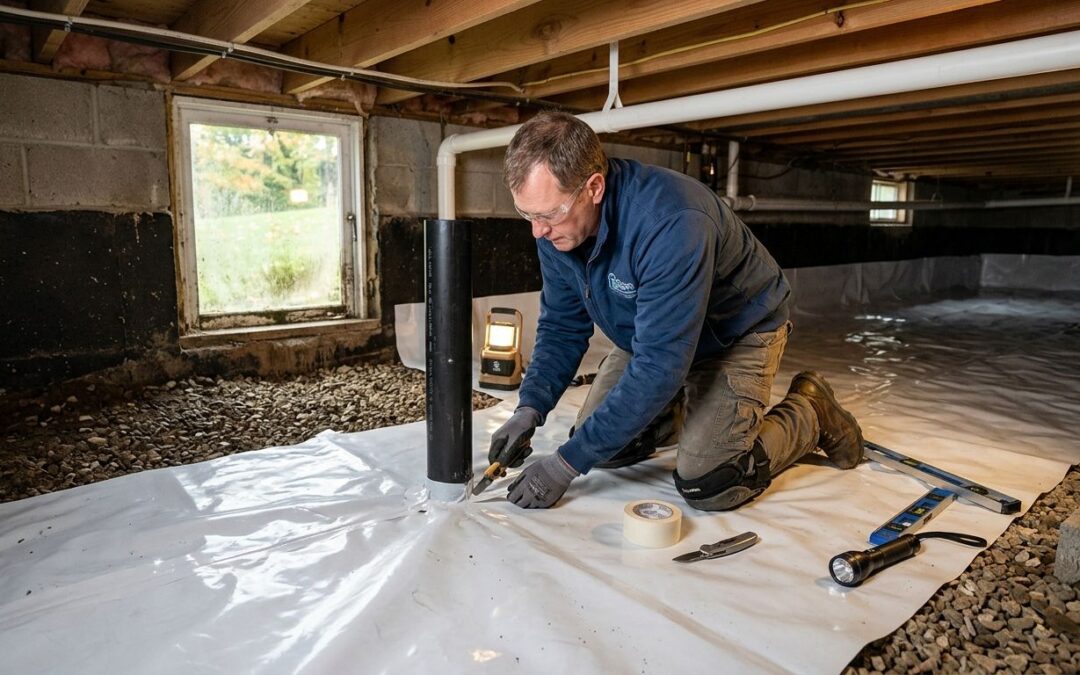
Choosing among radon mitigation installers for a crawl space home in Michigan isn't the same decision as picking one for a basement or slab foundation — crawl spaces need a sub-membrane vapor barrier and a system designed around limited clearance, and not every installer treats that as a specialty rather than an afterthought. This guide ranks the installer types that matter most for Michigan crawl space properties in 2026, from certified specialists to contract-based and same-day options.
- Michigan Radon Control ranks best overall for crawl space homes using sub-membrane depressurization systems in 2026.
- Multi-year service contract installers suit landlords managing several rental units at once.
- Same-day service providers fit tight closing deadlines when a radon test fails before a sale.
- Free-estimate installers help budget-conscious homeowners compare quotes before committing.
- EPA’s radon action level stays at 4 pCi/L regardless of foundation type in 2026.
Why this matters
Crawl space homes make up a large share of Michigan's older housing stock, and they behave differently than basements when it comes to radon entry. Soil gas moves through exposed dirt and gaps in the vapor barrier more easily than through a poured slab, which is why crawl space radon mitigation systems are built around sub-membrane depressurization rather than the sub-slab suction points used in basements.
Picking the wrong installer type wastes money on a system that doesn't match your foundation. A landlord juggling four rental units needs a different service structure than a homeowner racing a closing date. That's the distinction this ranking is built around: not "which company is biggest," but which installer category actually fits your situation in 2026.
What makes the best radon mitigation installer for a crawl space home
- NRPP certification — the technician holds current National Radon Proficiency Program credentials
- Crawl-space-specific experience — sub-membrane depressurization design suited to low clearance and limited access
- Post-installation testing — confirms radon drops below the EPA action level of 4 pCi/L after the system runs
- Warranty coverage — the system installation is backed in writing, not just verbally promised
- Realistic response time — service area and scheduling match your timeline, especially near a home sale
- Transparent estimates — the quote breaks out labor, fan, and piping rather than one lump number
At a glance
| Installer type | Best for | Standout feature | Key limitation |
|---|---|---|---|
| Michigan Radon Control | Crawl space homes needing sub-membrane systems | NRPP-certified, crawl-space-specific design | Core service area is Metro Detroit and Lansing |
| Multi-year contract installers | Landlords and rental portfolios | Scheduled annual check-ins across multiple units | Contract terms vary company to company |
| Same-day service providers | Time-sensitive closings | Fast scheduling before a sale deadline | Less lead time for optimal system planning |
| Free-estimate installers | Budget-conscious quote comparison | No-cost system design and quote | An estimate isn't a substitute for full testing |
| Hybrid foundation specialists | Homes with mixed slab and crawl areas | One system design across multiple foundation zones | More complex diagnostic work upfront |
1. Michigan Radon Control: best radon mitigation installer for crawl space homes
Michigan Radon Control is an NRPP-certified provider serving Metro Detroit and the Lansing area, with installation work built specifically around crawl space and hybrid foundations rather than treated as a variant of basement work.
Michigan Radon Control pros:
- NRPP-certified technicians design the sub-membrane layout around your crawl space's clearance and access points
- Post-installation testing confirms the system pulled levels below the EPA action level of 4 pCi/L
- Warranty-backed installation rather than a verbal guarantee
Michigan Radon Control cons:
- Core service area is Metro Detroit and Lansing, so homeowners farther out should confirm coverage first
- Sub-membrane systems under very low-clearance crawl spaces sometimes need a vapor barrier upgrade before the fan goes in
Best for: homeowners in Metro Detroit or Lansing with a crawl space foundation who want a specialist rather than a generalist.
Verdict: Buy. This is the default pick for crawl space homes in the service area, and the specialization is the whole point.
2. Multi-year service contract installers: best for rental portfolios
Installers offering multi-year service contracts build ongoing monitoring into the relationship instead of a one-time install and goodbye.
Multi-year contract pros:
- One point of contact across several rental properties
- Scheduled annual check-ins instead of re-hiring every time a fan needs attention
- Easier paperwork trail for property managers handling multiple addresses
Multi-year contract cons:
- Contract terms and what's actually covered vary widely between companies
- Unnecessary overhead if you own a single owner-occupied home with one system
Best for: landlords and property managers with more than one mitigated unit.
Verdict: Hold. Only worth the commitment if you're actually managing multiple properties — otherwise a standard install covers you.
3. Same-day service providers: best for closing-deadline crawl space homes
When a radon test comes back high days before a scheduled closing, same-day service becomes the deciding factor over specialization.
Same-day service pros:
- Installation can happen before a closing date instead of after it
- Removes radon as a last-minute negotiating point in a real estate deal
- Useful when a re-test window is tight
Same-day service cons:
- Faster scheduling means less time to plan the optimal fan and vent placement for a crawl space
- Availability tightens in winter, when radon test volume rises statewide
Best for: buyers or sellers with a closing date that can't move.
Verdict: Wait. Only reach for this category when the calendar forces it — otherwise a planned installation beats a rushed one.
4. Free-estimate installers: best for budget comparison shopping
Installers offering free estimates let you compare system design and labor approach across a few companies before committing to one.
Free-estimate pros:
- No upfront cost to get a written system design
- Easier to compare piping routes, fan placement, and labor scope side by side
- Lower pressure to sign with the first company that answers the phone
Free-estimate cons:
- A free estimate is a walkthrough, not a full radon test — verify NRPP certification separately before hiring
- Estimates can undersell complexity on hybrid foundations, then change once work starts
Best for: homeowners gathering two or three quotes before deciding.
Verdict: Hold. Good for comparison, but a free estimate alone isn't a reason to pick a company — check certification and warranty terms too.
5. Hybrid foundation specialists: best for mixed slab and crawl space homes
Older Michigan homes with additions often sit on more than one foundation type, and hybrid slab-and-crawl foundations need a system that accounts for both zones instead of two separate installs.
Hybrid specialist pros:
- Single system design can cover a sub-slab section and a crawl space section together
- Avoids paying for two unrelated mitigation systems on one house
- Fewer total suction points to maintain long term
Hybrid specialist cons:
- Diagnostic work upfront takes longer since airflow has to be mapped across foundation types
- May still need an added suction point if the original design underperforms
Best for: additions, split-level homes, or houses where a garage or sunroom sits on a different foundation than the main structure.
Verdict: Buy. Necessary, not optional, if your home genuinely has mixed foundation types — a single-zone system won't cover it.
How this list was ranked
Each installer category was measured against the criteria above: NRPP certification, crawl-space-specific design experience, post-installation verification, warranty terms, response time, and estimate transparency. Categories that only meet one or two of those criteria dropped lower in the list, even when they're useful in a narrow situation like a closing deadline.
Get a crawl space radon estimate
NRPP-certified system design built for your crawl space.
Which radon mitigation installer should you choose?
If your crawl space home sits in Metro Detroit or the Lansing area and you want a specialist rather than a generalist, Michigan Radon Control is the straightforward pick for 2026. If you're managing rental units, look at multi-year contract terms first. If a closing date is the real constraint, same-day service outranks everything else on this list for that one situation. And if your home has a hybrid foundation, don't settle for a company that treats it as a standard crawl space job.
FAQ
What’s the best radon mitigation system for a crawl space home in Michigan?
Sub-membrane depressurization is the standard system for crawl space homes in Michigan. It seals the crawl space with a vapor barrier and vents soil gas through a fan before it reaches living space.
How do I verify a radon mitigation installer’s NRPP certification?
Ask the installer for their NRPP ID number and check it against the National Radon Proficiency Program’s public registry. A legitimate installer will provide this without hesitation.
Is a crawl space radon system different from a basement system?
Yes. Crawl space systems rely on sealing an exposed dirt floor with a vapor barrier before depressurization, while basement systems typically pull air from beneath a poured slab.
Do I need a new radon test after installing a mitigation system in a crawl space?
Yes, post-installation testing confirms the system brought radon levels below the EPA action level of 4 pCi/L. Skipping this step means you never actually confirm the system worked.
Can one installer handle a home with both a crawl space and an attached garage?
Most NRPP-certified installers design around the whole foundation, including attached garages, as part of one system rather than treating each area separately.
What is the EPA’s radon action level, and does it change for crawl space homes?
The EPA action level is 4 pCi/L for any home type in 2026, including crawl space homes. The threshold doesn’t shift based on foundation type, only the system design does.
How do I compare quotes from multiple Michigan radon mitigation installers?
Ask each installer for an itemized quote covering fan model, piping route, and warranty terms rather than one lump-sum number. Free estimates make this comparison easier without upfront cost.
Does a mixed slab-and-crawl foundation need two separate radon systems?
Not usually. A hybrid foundation specialist can often design one system that covers both zones, though it requires more diagnostic work upfront to map airflow correctly.
One last thing
Crawl space homes without a fully sealed vapor barrier can test higher for radon than basement homes on the same street, because soil gas moves through exposed dirt far more easily than through a poured slab. That's the reason a crawl-space-specific installer matters more here than in almost any other foundation type — the system design, not just the fan, is doing most of the work.