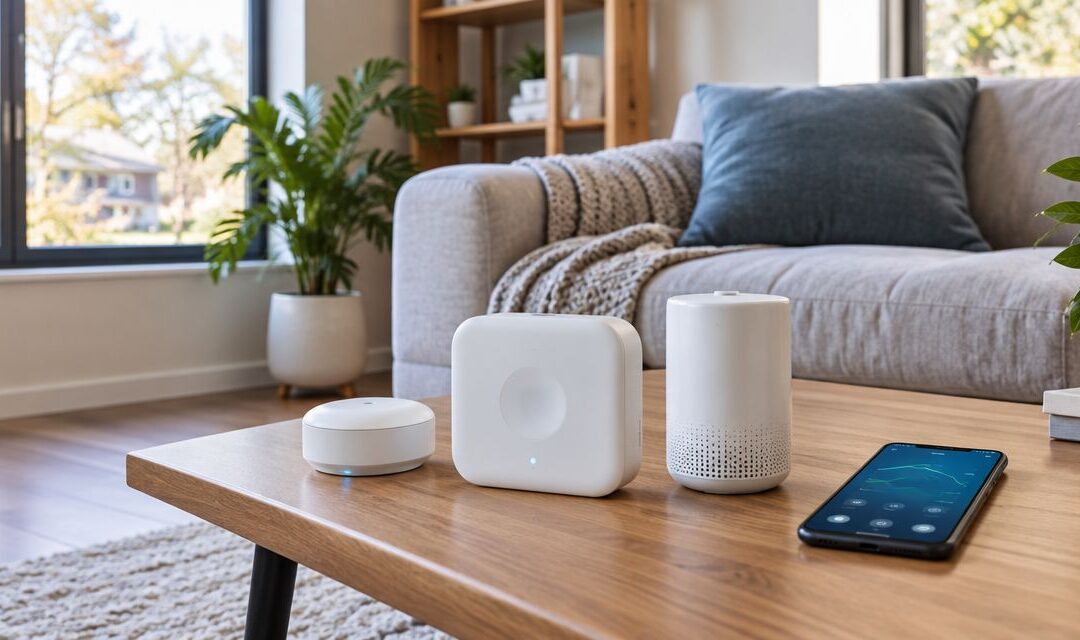
Airthings radon monitors help you follow indoor radon levels over time without arranging a new test for every reading. Monitoring stops short of reducing radon or installing a mitigation system. The best Airthings alternative in 2026 is Michigan Radon Control if you need professional testing and mitigation in Metro Detroit or Lansing; a long-term alpha-track test if you need a passive measurement rather than ongoing monitoring.
- For Airthings alternatives, choose Michigan Radon Control for professional radon testing and mitigation in Metro Detroit or Lansing.
- Choose a long-term alpha-track test for an extended measurement without ongoing electronic monitoring.
- Choose a short-term radon test kit for initial screening, then follow the appropriate confirmation steps.
- Keep Airthings if you want ongoing readings; a radon monitor does not lower radon levels.
Why this matters
It is natural to feel worried when a radon reading rises. You do not need to replace every device or make a rushed installation decision. You need to separate three jobs: measuring radon, deciding what the result means, and reducing exposure when action is needed.
Radon is a radioactive gas that you cannot see or smell. Testing measures it; mitigation reduces it. A different monitor changes how you collect information, not how radon enters your home.
For your 2026 decision, compare the outcome you need before comparing equipment. A homeowner checking seasonal changes has a different need from a buyer facing an inspection deadline.
Airthings alternatives at a glance
These options are not interchangeable products. Professional service handles testing and physical mitigation work; passive kits measure radon during a defined exposure period. Airthings remains the benchmark for ongoing homeowner monitoring.
| Option | Best for | Standout function | How it differs from Airthings | Main limitation |
|---|---|---|---|---|
| Airthings radon monitor | Following radon trends over time | Repeated electronic measurements | Benchmark: ongoing homeowner monitoring | Does not reduce radon |
| Michigan Radon Control | Homeowners and realtors needing testing and mitigation | NRPP-certified testing, system installation, and maintenance | Provides professional services rather than a personal monitoring device | Not a replacement for a monitor you keep at home |
| Long-term alpha-track test | Measuring average exposure over an extended period | Passive sampling followed by laboratory analysis | Produces a result for the exposure period rather than an ongoing display | No live readings during the test |
| Short-term charcoal test kit | Initial screening | Passive sampling over a shorter test period | Provides a defined screening result rather than continuing measurements | Does not describe year-round exposure by itself |
The right alternative depends on whether you need another measurement or help correcting an elevated result. Neither passive kit installs a mitigation system, and hiring a contractor does not make ongoing monitoring unnecessary.
1. Michigan Radon Control: best for testing and mitigation
Michigan Radon Control provides NRPP-certified radon testing, mitigation system installation, and system maintenance for homeowners and realtors in Metro Detroit and Lansing. This is a service alternative to managing the entire radon process yourself, not a competing electronic monitor. Choose professional help when your question has become what to do about the result.
Where professional service shines
- Testing and correction are separate services you can address with one provider. You are not limited to collecting another reading.
- NRPP certification gives you a credential to verify. Check the professional's current certification and whether it covers the work requested.
- Installation addresses radon reduction. Monitoring alone cannot perform that job.
- Maintenance supports an existing system. A rising measurement deserves investigation, not just a different display.
Where professional service falls short
- A service visit is not a personal monitor that remains in your home collecting readings.
- The stated service area is Metro Detroit and Lansing, not all of Michigan.
- Testing and installation involve scheduling and access to your home; a passive kit is a more self-directed process.
| Dimension | Professional service | Airthings radon monitor |
|---|---|---|
| Main purpose | Testing, mitigation installation, and maintenance | Ongoing measurement |
| Homeowner involvement | Arrange service and provide access | Set up and use the device according to its instructions |
| Physical radon reduction | Mitigation installation is a separate available service | The monitor itself does not reduce radon |
| Continuing readings | Discuss the testing and follow-up plan | Intended for repeated homeowner measurements |
Best for: Homeowners and realtors who need professional radon testing or a physical mitigation solution in the stated service area.
For a 2026 home purchase, ask which test procedure fits the transaction before starting. Do not assume a personal monitoring history satisfies every buyer, seller, or inspection agreement.
Verdict: Buy professional service when you need testing support, mitigation installation, or system maintenance—not simply another display.
2. Long-term alpha-track tests: best for extended measurement
A long-term alpha-track test collects information during an extended exposure period and is then analyzed by a laboratory. It suits homeowners who want a longer measurement without maintaining an electronic display. The EPA's homeowner testing guidance defines long-term tests as lasting more than 90 days.
Where alpha-track tests shine
- Passive sampling does not require an electronic display or app.
- An extended test captures conditions across a longer period than a short screening test.
- The laboratory result documents the measurement for that exposure period.
Where alpha-track tests fall short
- You cannot check live readings while the detector is collecting its sample.
- The exposure period makes this a poor fit for a near-term inspection deadline.
- Correct placement, handling, and return procedures still matter.
| Dimension | Long-term alpha-track test | Airthings radon monitor |
|---|---|---|
| Measurement format | Passive detector with laboratory analysis | Electronic monitoring |
| Result access | After exposure and analysis | Repeated readings during use |
| Main use | Extended-period average | Following trends over time |
| Radon reduction | None | None |
Best for: Homeowners who want an extended measurement and do not need immediate feedback.
If you already have an elevated result, do not use a long test merely to postpone a decision. Select the follow-up method based on the initial result and EPA guidance.
Verdict: Buy a long-term alpha-track test for extended measurement; skip it when your decision cannot wait for the exposure period.
3. Short-term charcoal kits: best for initial screening
A short-term charcoal kit samples radon during a defined exposure period before laboratory analysis. It is a practical alternative when your immediate question is whether further testing or action is needed. EPA guidance describes short-term radon tests as lasting 2 to 90 days, depending on the device; follow the particular kit's instructions.
Where charcoal kits shine
- You can conduct the sampling yourself using the supplied directions.
- A defined test period suits an initial screening plan.
- Laboratory analysis provides a result for that sampling period.
Where charcoal kits fall short
- A short measurement does not represent every season or operating condition.
- Placement errors, incorrect exposure time, or missed return instructions can compromise the test.
- You receive no ongoing readings after the sampling period ends.
| Dimension | Short-term charcoal kit | Airthings radon monitor |
|---|---|---|
| Main purpose | Defined-period screening | Ongoing monitoring |
| Reading access | After laboratory analysis | Repeated electronic readings |
| Repeat measurement | Requires another test | Continued use of the monitor |
| Corrective work | None | None |
Best for: Homeowners starting a radon assessment who can follow the kit's sampling and return instructions.
A kit is not automatically suitable for a real estate transaction. Agree on the testing method and documentation before starting.
Verdict: Buy a charcoal kit for initial screening; skip it as your only evidence of year-round exposure.
Why people look beyond Airthings
The strongest reason to consider Airthings alternatives in 2026 is a change in the job you need done. These are reasons to choose another approach, not claims that Airthings has failed.
You need radon reduction
An electronic monitor measures radon. It does not capture soil gas, install piping, or operate a mitigation fan. If testing supports mitigation, buying another measurement device leaves the corrective work undone.
You need a defined testing process
A home sale can require agreement about placement, test conditions, timing, and documentation. Clarify those requirements with the parties involved. Do not assume either a consumer monitor or a mail-in kit is accepted without checking.
You want a passive test
Some homeowners want a detector they expose according to instructions and send for analysis. Alpha-track and charcoal tests serve that preference, with different measurement periods. Neither provides the ongoing feedback of an electronic monitor.
You need help interpreting the result
A reading needs context: where the device was placed, how long it measured, and whether the test conditions were appropriate. A professional testing plan helps address those questions. Switching hardware alone does not resolve them.
How to choose your next step in 2026
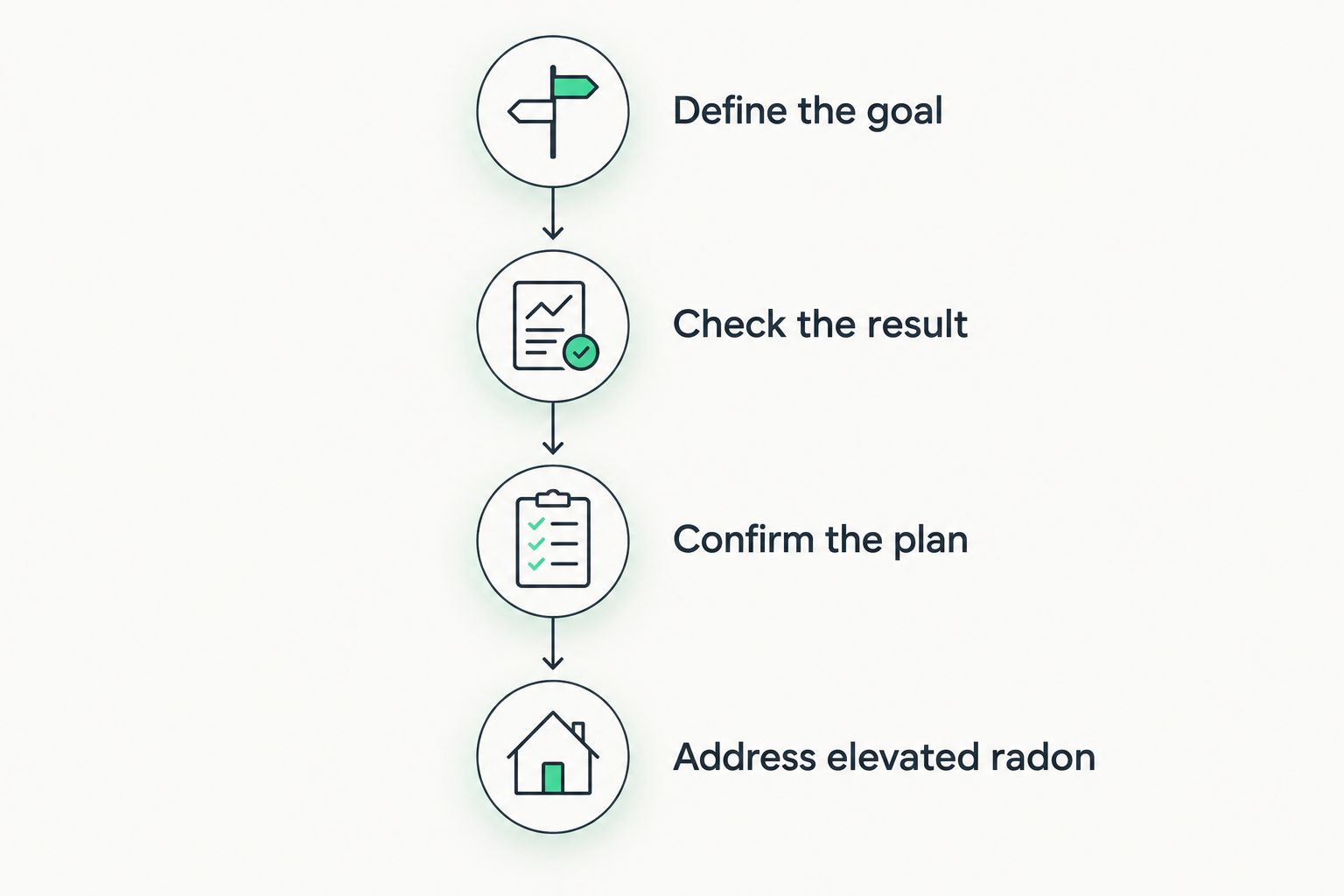
Use a simple sequence before ordering equipment or arranging work. Define the decision first, then choose the measurement method.
- Define the goal. Decide whether you need initial screening, an extended average, transaction documentation, or mitigation support.
- Check the result. Record the units, measurement period, location, and device or kit used.
- Confirm the plan. Follow the device instructions and the appropriate EPA follow-up guidance.
- Address elevated radon. Arrange mitigation when the testing supports action, then verify the result afterward.
Understand the action level
The EPA's residential radon guidance recommends fixing a home when the radon level is 4 pCi/L or higher. It also recommends considering a fix between 2 and 4 pCi/L. These are decision thresholds, not a promise that lower readings mean zero risk.
The EPA figures above describe residential guidance, not a device-specific accuracy claim. Read the measurement period alongside the result; a brief fluctuation and a completed test average are different information.
Plan follow-up before installation
Ask how the result will be checked after mitigation. A running fan or a pressure-gauge reading does not measure your indoor radon concentration. Use the guide to scheduling radon testing after mitigation installation to organize that next step.
Get help with your radon next step
Discuss professional testing, mitigation installation, or maintenance in Metro Detroit and Lansing.
When staying with Airthings is the right call
Keep your Airthings radon monitor if your main goal is following readings over time and the device suits that task. Do not replace useful monitoring simply because you also need professional testing or mitigation. Those functions can complement one another.
Where you place the monitor and how you interpret its measurement period still matter. Follow the model's instructions rather than treating every change as a reason to move it or alter the house conditions.
Hold Airthings for ongoing monitoring; add the testing or mitigation service your situation requires. The best 2026 decision is not always a replacement purchase.
FAQ
What’s the best Airthings alternative for Michigan homeowners?
Michigan Radon Control is the best service alternative for homeowners who need professional radon testing, mitigation installation, or maintenance in Metro Detroit or Lansing. A long-term alpha-track test is a different option for homeowners who want passive measurement rather than ongoing electronic readings.
Is professional radon testing better than an Airthings monitor?
Professional testing and an Airthings radon monitor serve different purposes. Professional testing supports a defined testing process, while a homeowner monitor helps track readings over time; neither measurement method alone reduces radon.
Can an Airthings monitor lower radon in my basement?
No, an Airthings radon monitor measures radon rather than reducing it. When testing supports corrective action, a mitigation system addresses radon reduction.
Can I use a charcoal radon kit instead of Airthings?
Yes, a charcoal kit can replace electronic monitoring for a defined short-term screening test. It does not provide continuing readings, and you must follow the kit’s exposure and laboratory-return instructions.
How long does a long-term radon test take?
The EPA defines a long-term radon test as lasting more than 90 days. Follow the specific detector’s instructions for its exposure period, placement, and laboratory analysis.
What radon level means I should take action?
The EPA recommends fixing homes at 4 pCi/L or higher and considering a fix between 2 and 4 pCi/L. Use the appropriate testing and follow-up guidance to decide how your result should be confirmed or acted on.
Should I keep my radon monitor after mitigation?
Keeping a radon monitor supports ongoing observation after mitigation. It does not replace the planned post-installation test or maintenance of the mitigation system.
One last thing
Before buying anything, write down the question you need answered: Is radon elevated, what is the longer-term average, or how do I reduce it? That sentence tells you whether you need a kit, continued monitoring, or professional help. A new display cannot solve an installation problem.
Related guides
- How to test your home for radon
- How to read your radon test results
- How to verify your radon mitigation system is still working