
Radon mitigation starts reducing radon entry when a properly designed system begins operating, but a post-installation test—not the fan sound or an early monitor reading—confirms the reduction. There is no guaranteed hour when every home reaches its target level; allow the system to operate before testing, then complete the full measurement period.
- How quickly does radon mitigation lower levels? System operation starts the process; post-installation radon testing confirms the result.
- EPA guidance calls for testing after at least 24 hours of operation and within 30 days of installation.
- A working pressure gauge does not measure your home’s radon concentration.
- Michigan Radon Control provides NRPP-certified radon testing and mitigation services for Metro Detroit and Lansing homeowners.
How quickly does mitigation lower radon levels after install?
Separate the time needed for the system to work from the time needed to verify its performance. An active soil-depressurization system draws soil gas from beneath your foundation and vents it outdoors. That process starts when the fan runs, but your indoor radon result requires a properly timed test.
For your 2026 installation, use the EPA's Consumer's Guide to Radon Reduction as the timing reference for residential follow-up testing. The guide recommends a post-mitigation measurement within 30 days of installation, but no sooner than 24 hours after the system starts operating. That waiting period is not a promise that every home will reach a particular concentration within 24 hours.
- Start the system. Have the installer explain its operating indicator and normal condition.
- Allow operation. Keep the system running continuously before and during testing.
- Complete the test. Follow the device instructions and applicable testing protocol without shortening the measurement.
- Review the result. Compare the completed report with the EPA action level and your installation agreement.
Use the guide to scheduling radon testing after mitigation installation to organize the follow-up before installation day arrives.
Why this matters
It's completely natural to worry when your monitor still shows radon after installation. You want confirmation that the work is protecting your home. A fan running in the background is reassuring, but it is not that confirmation.
A completed radon test measures the outcome; the system indicator helps you check operation. Confusing those jobs creates either false reassurance or unnecessary alarm. A long-term monitor average can also include measurements collected before installation, so check the reporting window before interpreting the display.
For a 2026 home sale, schedule installation, follow-up measurement, and report delivery as separate steps. The installer finishing the pipework does not mean the testing report is ready for the buyer.
Initial operation: allow at least 24 hours before testing
The EPA's residential post-mitigation guidance calls for at least 24 hours of system operation before the follow-up measurement begins. During that interval, leave the fan on and follow the installer's instructions. Do not repeatedly switch the system off to check whether the reading changes.
The system reduces the entry of radon-bearing soil gas; it does not make existing indoor air instantly radon-free. Air exchange, foundation conditions, and system performance affect the indoor concentration. An early reading is information, not a final acceptance test.
Before the installer leaves, ask for a clear explanation of:
- Normal operation: What should the system's indicator look like?
- Power interruption: What should you check after an outage?
- Follow-up testing: Who places the test and reviews the report?
- Service contact: Who handles an unexpected result or alarm?
Keep those instructions with your installation paperwork. You should not have to guess what an unfamiliar gauge position means.
Short-term testing: measure for at least 48 hours
The EPA's Consumer's Guide to Radon Reduction describes a post-mitigation test lasting at least 48 hours. The exact measurement period also depends on the device and applicable protocol. Follow the testing professional's instructions rather than treating the minimum duration as permission to stop any test early.
A short-term test is useful for checking the installed system promptly. Its limitation is scope: it measures the conditions during that test, not every season your home will experience.
Which radon measurement should you use?
These methods answer different questions. For a 2026 follow-up, choose the measurement that fits your immediate purpose and keep its limitations in view.
| Measurement | Best for | Main benefit | Main limitation |
|---|---|---|---|
| Short-term radon test | Prompt post-installation verification | Produces a result over a defined measurement period | Does not describe every season |
| Long-term radon test | Understanding average exposure over time | Captures a broader period of household conditions | Does not provide prompt installation verification |
| Consumer continuous monitor | Watching trends between formal tests | Shows changes over time | Display windows and device requirements need careful interpretation |
A consumer monitor is useful alongside a formal testing plan. For a real-estate transaction, confirm the required device, placement, tester, and documentation with the parties handling the transaction before relying on its display.
Why the timing and final radon level vary
No installer can establish your home's final radon concentration from fan noise alone. These factors explain why two houses do not necessarily show the same response:
- Foundation layout: Separate slabs, additions, and crawl spaces create different areas that the system must address.
- Soil airflow: Dense soil and more permeable material behave differently under suction, affecting how pressure extends beneath the foundation.
- Entry pathways: Open sumps, membrane gaps, and other openings affect how soil gas and indoor air move.
- System performance: Fan selection, suction-point placement, and pipe configuration affect the pressure field beneath the home.
- Weather and ventilation: Pressure changes, heating operation, and open windows affect indoor radon measurements.
- Measurement window: A display averaging pre-installation and post-installation readings does not isolate the new system's performance.
An elevated follow-up result needs investigation, not an indefinite waiting period. The appropriate response is to review the test conditions and system performance together. Simply waiting longer does not correct an unaddressed foundation area or a system fault.
How do you know the system is actually working?
Use an operating check and a radon measurement together. Each provides evidence the other cannot supply.
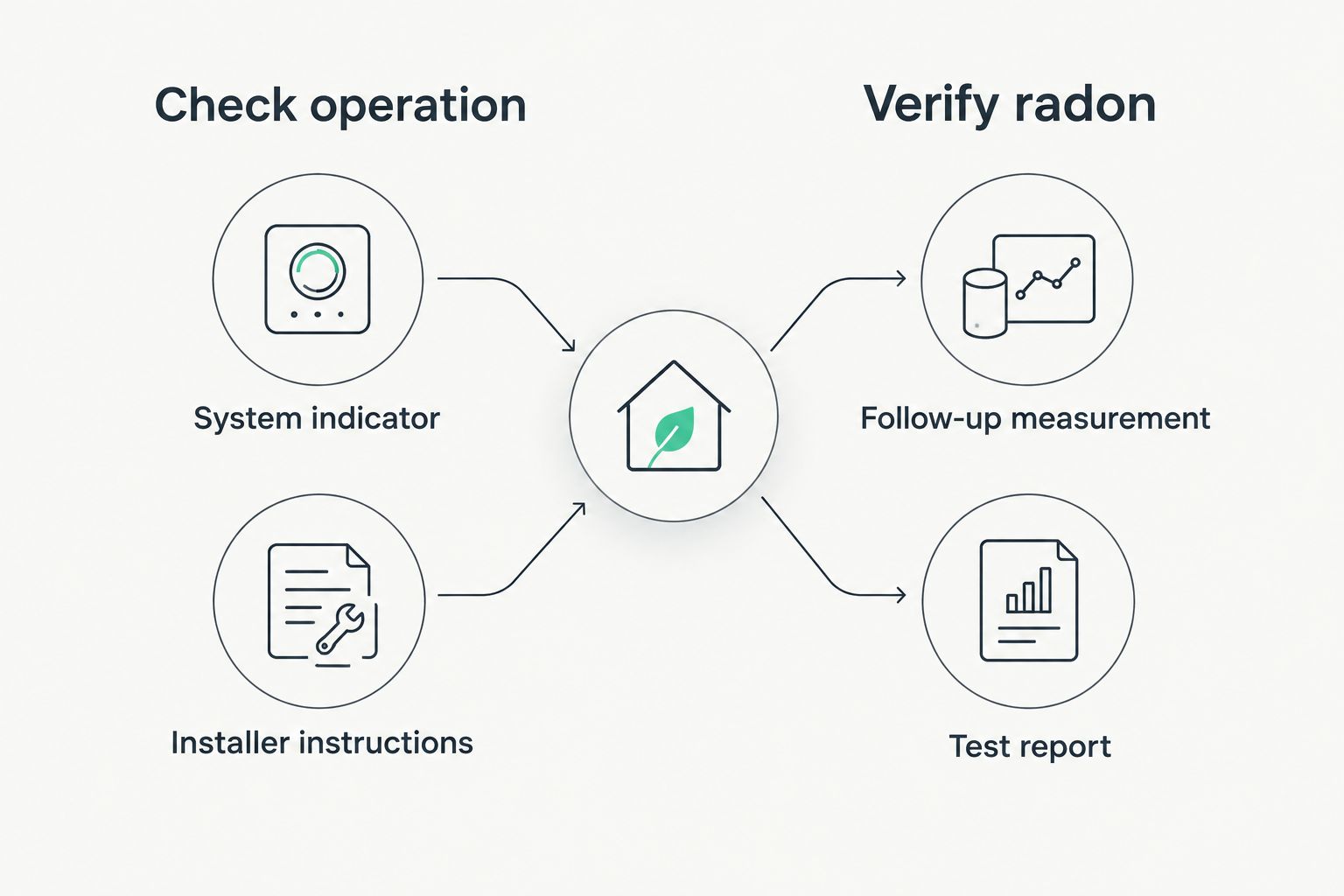
Check operation
Look at the system indicator as your installer instructed. A typical U-tube manometer shows a pressure difference associated with system operation; it does not display radon concentration. Record the normal reading supplied at commissioning rather than comparing your gauge with a neighbor's.
If an alarm activates or the indicator changes from its documented operating condition, contact the installer. Do not adjust the fan, disconnect piping, or change electrical connections yourself.
Verify radon
Complete the follow-up measurement under the required conditions. Keep the system running, leave the test device undisturbed, and record the installation and measurement dates. Share unexpected results with the testing professional.
Keep the test report with the system documentation. For your 2026 records, include the device location and any reported testing interruptions so a later reviewer can understand what was measured.
What if radon is still above 4 pCi/L after installation?
At 4 pCi/L or higher, the EPA recommends fixing the home. If your completed post-installation test remains at or above that level, send the report to the installer and request a review. A reduction from the original reading is progress, but it does not erase the need to address a result above the action level.
Start with the measurement itself. Confirm that the system operated throughout the test, the device was placed correctly, and the required testing conditions were maintained. Then have the installer assess system operation and whether the pressure field reaches the necessary foundation areas.
Corrections depend on the diagnosis. They can involve sealing relevant openings, addressing a separate foundation section, or changing system components. Do not assume that a larger fan is automatically the right answer.
The EPA also recommends considering reduction when radon measures between 2 and 4 pCi/L. Below 4 pCi/L does not mean zero risk. Review the actual result and practical reduction options rather than treating the action level as a boundary between dangerous and harmless air.
Should I open windows to make radon fall faster?
Opening windows changes ventilation and can lower indoor radon temporarily, but it does not verify that the mitigation system works under the required testing conditions. Follow the closed-house instructions supplied for your test. Ordinary entry and exit are different from leaving windows open to change the reading.
For short-term testing, the EPA's A Citizen's Guide to Radon describes keeping windows and outside doors closed as much as possible during the measurement. For tests shorter than 4 days, it also calls for closed-house conditions for at least 12 hours beforehand. Follow the professional's directions for your specific post-installation test.
Do not try to help the system pass by changing the house's ventilation. You need a representative result, not the lowest number you can produce.
Who should handle the follow-up test?
Choose a qualified testing professional and establish responsibility before installation. An independent follow-up measurement provides a check separate from the installation work. Confirm any requirements in your purchase agreement when a home sale is involved.
Michigan Radon Control serves Metro Detroit and Lansing homeowners and realtors who need NRPP-certified radon testing and mitigation services. The service scope includes testing, installation, and system maintenance; confirmation still depends on a completed measurement, not the service appointment alone.
Before arranging radon testing with Michigan Radon Control, ask who will place the device, when the report will be available, and how an elevated result will be handled. Those answers give you a usable plan without assuming a turnaround or outcome.
Arrange your radon follow-up
Request radon testing with Michigan Radon Control in Metro Detroit or Lansing.
FAQ
How quickly does radon mitigation lower levels after installation?
A properly operating active mitigation system starts reducing radon entry when it runs, but a completed post-installation test confirms the indoor result. EPA guidance calls for testing no sooner than 24 hours after startup and within 30 days of installation.
Can I test for radon immediately after the installer leaves?
Wait at least 24 hours after the system starts operating before beginning the post-mitigation measurement, following EPA residential guidance. Then complete the full test duration required by the device and testing protocol.
Does the pressure gauge tell me my radon level?
No. A typical radon system pressure gauge indicates a pressure difference associated with operation, not indoor radon concentration. You need a radon measurement to confirm the reduction.
Why does my monitor still show a high average after mitigation?
Your monitor’s displayed average can include readings collected before installation. Check its reporting window and instructions, and use a properly conducted follow-up test to assess the installed system.
What if my radon result is still above 4 pCi/L?
At 4 pCi/L or higher, EPA guidance recommends fixing the home. Send the completed post-installation report to your installer for a review of testing conditions and system performance.
Can I turn the radon fan off once the reading is low?
No. An active mitigation system depends on continued fan operation to maintain its intended pressure difference. A low reading does not mean the underlying radon source has disappeared.
Is a result below 4 pCi/L completely safe?
No. Below 4 pCi/L does not mean zero radon risk, and the EPA recommends considering reduction between 2 and 4 pCi/L. Review the measured result and practical reduction options with a qualified professional.
One last thing
Your monitor's longest average is not always the best number for judging a new installation. If that average includes the period before mitigation, it answers a different question from a test conducted entirely after startup. Check the dates before drawing conclusions.
For a 2026 installation, keep a simple record: system startup, test start, test end, and final result. The useful milestone is a documented post-installation measurement—not the first reassuring number on a screen.
Related guides
- How to read your radon test results
- How to read a radon mitigation system's pressure gauge
- How to maintain your radon mitigation system