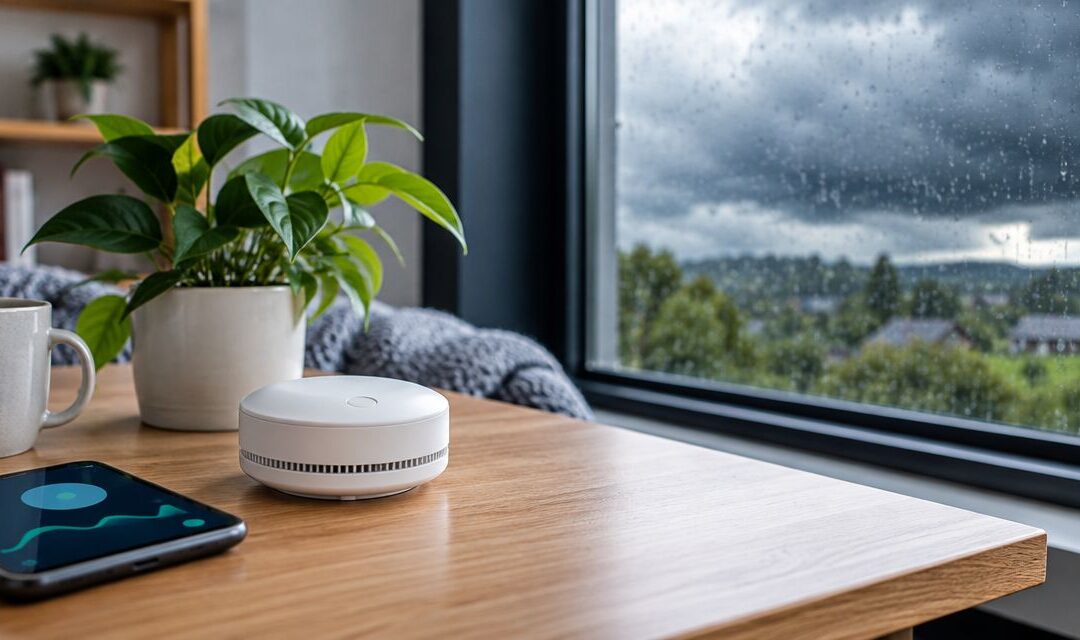
Yes, bad weather can affect a radon test by changing the amount of radon entering your home, but a weather-related increase is not automatically an inaccurate reading. A detector can correctly measure a temporary rise that does not represent your home's year-round average. Severe storms and unusually high winds deserve special attention when planning a short-term test.
- Can weather affect radon test accuracy? Yes, but changing radon levels do not automatically mean detector error.
- EPA guidance advises avoiding severe storms and unusually high winds during short tests.
- Long-term radon testing better represents your home’s annual average than a brief weather snapshot.
- Michigan Radon Control provides NRPP-certified radon testing for homeowners and realtors in Metro Detroit and Lansing.
Can bad weather make a radon test inaccurate?
Bad weather can make a short test less representative of your usual radon exposure without making the measurement itself wrong. Separate those questions before deciding whether to accept a result or repeat the test.
EPA's A Citizen's Guide to Radon advises against conducting short-term tests lasting less than 3 days during unusually severe storms or periods of unusually high winds. That is not a rule to cancel every test when rain appears in the forecast.
| Conditions | What they mean for testing | Recommended response |
|---|---|---|
| Ordinary rain | Rain alone does not establish that a test is invalid | Follow the device instructions and testing protocol |
| Unusually severe storms | Conditions can interfere with a representative short-term measurement | Discuss postponing a brief test with the tester |
| Unusually high winds | Wind changes pressure around the building | Follow EPA weather guidance for brief tests |
| Power loss or flooding | Equipment operation, placement, or house conditions can be disrupted | Document the interruption and contact the tester |
Before setting out a detector, review how to test your home for radon. Weather matters, but correct placement and closed-house conditions matter too.
Why this matters
It's completely natural to worry when a high result arrives after a storm. Do not dismiss an elevated result as “just the weather.” Your detector might have measured a real increase in the air you were breathing.
For your 2026 testing plan, distinguish equipment accuracy from how well a measurement represents long-term exposure. A properly functioning detector answers what happened during the measurement period; a longer test gives you a broader picture.
EPA recommends fixing homes with confirmed radon levels of 4 pCi/L or higher and considering action between 2 and 4 pCi/L. Follow the appropriate confirmation procedure rather than subtracting an assumed weather effect from the reported result.
Short-term tests: 2 to 90 days
EPA describes short-term radon tests as measurements lasting 2 to 90 days, depending on the device. Best for: getting an initial result or meeting a properly planned testing deadline. Their limitation is that a brief measurement captures fewer changes in weather and household conditions.
A short test can be useful without representing the annual average exactly. The shorter the measurement period, the more important it is to check whether unusual conditions dominated that period.
For tests lasting less than 4 days, EPA homeowner guidance calls for closed-house conditions for at least 12 hours before testing begins. Keep those conditions throughout the test, and follow any additional requirements supplied by your tester or device manufacturer.
Do not shorten a test because a storm is approaching. Ending it before the required exposure period creates a separate problem that better weather cannot correct.
Long-term tests: more than 90 days
EPA defines long-term radon tests as measurements lasting more than 90 days. Best for: understanding your home's annual average radon level. Their advantage is a wider sampling period; their limitation is that they do not provide a quick answer for an imminent closing.
| Testing approach | Best for | Main strength | Main limitation |
|---|---|---|---|
| Short-term testing | Initial checks and time-sensitive decisions | Produces a result sooner | More sensitive to conditions during a brief window |
| Long-term testing | Estimating annual average exposure | Includes more variation over time | Requires a longer wait |
A long-term test does not make weather irrelevant. It reduces the influence of any single weather event by including many more days of measurement.
If your 2026 goal is to understand ongoing exposure rather than meet a transaction deadline, discuss long-term testing after your initial result. Do not use the longer testing window to postpone action on a very high reading.
Why radon readings vary with weather
Weather affects soil conditions, building pressure, and ventilation. These effects interact, so a forecast cannot tell you exactly how much your radon reading will change.
- Air-pressure changes: Differences between indoor air pressure and the surrounding soil influence how soil gas enters a building.
- Wind: Wind changes pressure on different sides of a house, affecting airflow and soil-gas entry.
- Rain and saturated soil: Moisture changes how gas moves through the ground. A rainstorm does not produce the same response in every house.
- Indoor–outdoor temperature differences: Warm air rising and escaping from a heated home can draw replacement air from lower levels and the soil beneath them.
- Window and door use: Weather changes household ventilation habits. Open windows can alter the conditions required for a short-term test.
- Storm-related interruptions: Flooding, equipment movement, power outages, or changes to mechanical systems can complicate interpretation.
There is no universal weather correction you can subtract from a radon result. Interpret the measurement using the actual test conditions, not a guessed adjustment.
What should you do if a storm is forecast?
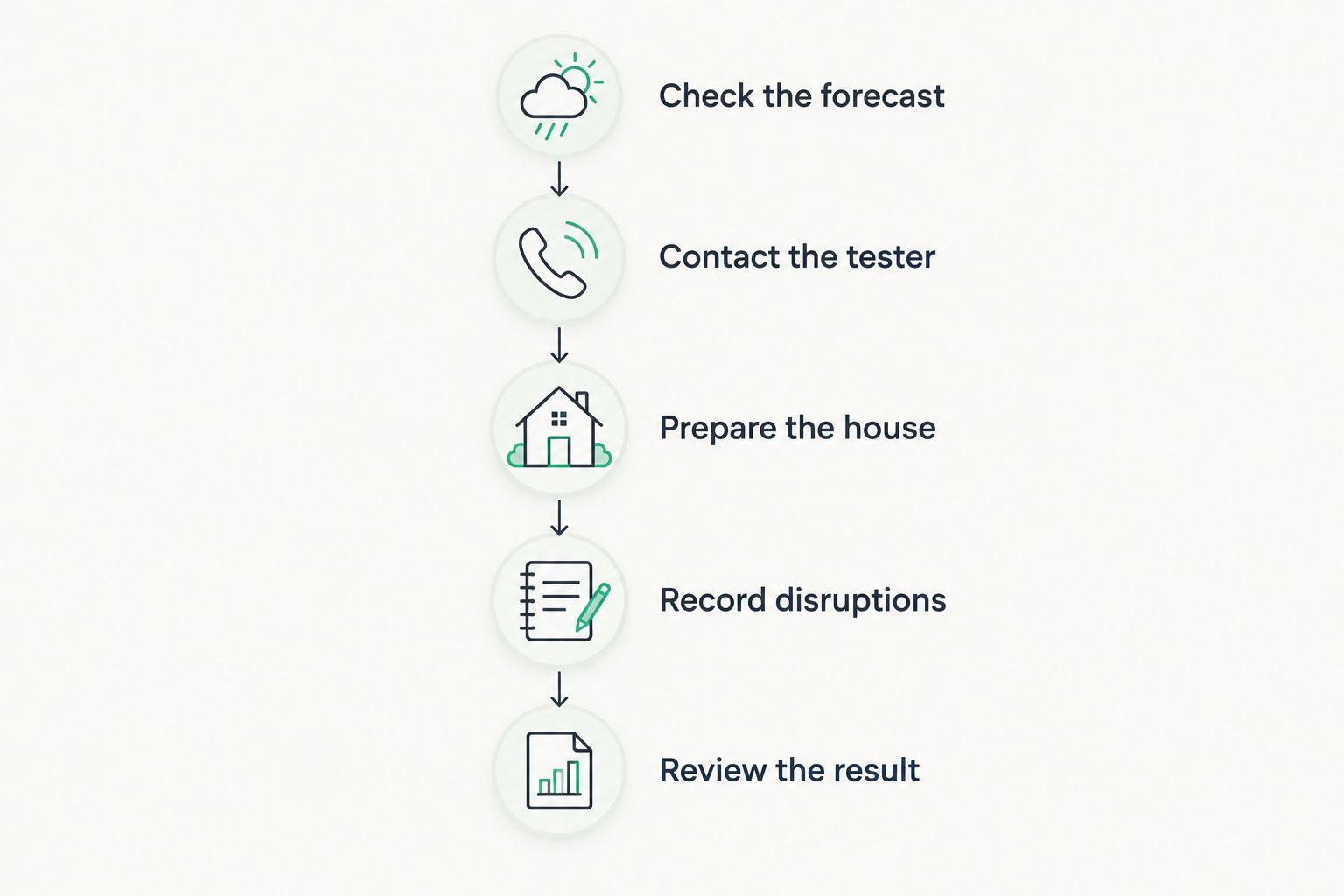
Start with the test instructions, not the weather app alone. For a test scheduled in 2026, ask the tester how forecast conditions affect the specific device, measurement duration, and purpose of the test.
- Check the forecast. Identify unusually severe storms or high winds expected during the measurement window. Ordinary seasonal weather is not automatically a reason to cancel.
- Contact the tester. Explain the forecast and your deadline before starting. Ask whether the test should proceed under the applicable protocol.
- Prepare the house. Establish the required closed-house conditions and tell everyone in the home what must stay unchanged.
- Record disruptions. Note power loss, flooding, opened windows, equipment movement, or unusual ventilation changes during testing.
- Review the result. Give the tester those notes before deciding whether the result supports action or needs follow-up.
Keep the detector where it was placed unless an immediate safety issue requires otherwise. Moving it mid-test changes the measurement conditions and must be reported.
How do you keep house conditions consistent during testing?
For a short-term test, closed-house conditions generally mean keeping windows and exterior doors closed except for normal entry and exit. They do not mean sealing yourself inside or turning off normal heating.
EPA homeowner guidance allows heating and air-conditioning systems that recirculate indoor air to operate. Follow the tester's instructions for ventilation equipment, especially systems that bring outdoor air inside or exhaust substantial indoor air.
Use this preparation checklist:
- Tell everyone in the household when testing starts and ends.
- Keep windows closed as instructed, including upstairs windows.
- Avoid moving, covering, or handling the detector.
- Keep the device away from locations prohibited by its placement instructions.
- Leave an existing radon mitigation system operating normally.
- Report any departure from the instructions instead of trying to correct the record afterward.
Your 2026 test should measure the home under the conditions required by its protocol. Deliberately airing out the house to lower a result undermines that purpose and does not resolve a radon problem.
Should I retest if it rained during my radon test?
Rain alone does not require an automatic retest. Check whether the weather was unusually severe, whether the device operated correctly, and whether the required house conditions stayed intact.
A properly completed test during ordinary rain is different from a test interrupted by flooding or open windows. Give the tester specific facts rather than treating all wet weather as the same event.
If the result is elevated, follow EPA's recommended confirmation approach. A follow-up test should answer a defined question, not simply search for a lower number.
Does cold weather make a radon test wrong?
Cold weather does not automatically make a radon test wrong. Heating-season pressure differences and reduced ventilation can change the radon concentration inside a home.
A winter result still measures meaningful conditions. Do not discard it merely because you expect a lower reading in summer; use appropriate follow-up testing to understand the home's exposure pattern.
What if a storm interrupts my test during a home sale?
Report the interruption immediately and keep the original report. In a 2026 transaction, the tester and real estate professionals need the actual testing conditions to decide whether another measurement is necessary within the available timeline.
Ask for a clear explanation of whether the result is valid under the testing protocol. Do not replace that determination with a seller's assumption that storms always cause false highs or a buyer's assumption that any weather change invalidates testing.
Michigan Radon Control radon testing is best for homeowners and realtors in Metro Detroit and Lansing seeking NRPP-certified service. The company also provides mitigation installation and system maintenance; those services address a confirmed problem rather than explain away a questionable measurement.
You can request a radon testing appointment and discuss your testing needs. Share your deadline, test history, and concerns about severe weather before the measurement begins.
Plan your radon test
Discuss testing needs for your Metro Detroit or Lansing property.
FAQ
Can weather affect radon test accuracy even if the detector works correctly?
Yes. Weather can change the actual radon concentration, so a correct reading during a storm can differ from your home’s annual average. That is different from a detector malfunction.
Should I cancel a radon test because rain is forecast?
Ordinary rain alone is not an automatic reason to cancel. EPA advises against tests lasting less than 3 days during unusually severe storms or periods of unusually high winds; follow your tester’s protocol.
How long should windows stay closed before a short radon test?
EPA homeowner guidance calls for closed-house conditions for at least 12 hours before tests lasting less than 4 days. Maintain the required conditions throughout the measurement and follow any additional device or tester instructions.
Can I subtract a weather adjustment from a high radon result?
No. There is no universal weather adjustment for a home’s radon reading. Document the conditions and use an appropriate follow-up test instead.
Is a long-term radon test better when weather keeps changing?
A long-term test lasting more than 90 days better represents annual average radon exposure than a short test. It is not a quick substitute when a transaction requires a prompt result.
What should I do if the power goes out during a radon test?
Tell the tester when the outage occurred and whether equipment or home systems stopped operating. The effect depends on the device and whether required testing conditions were interrupted; do not assume the result remains valid.
Who can help me plan radon testing in Metro Detroit or Lansing?
Michigan Radon Control provides NRPP-certified radon testing for homeowners and realtors in Metro Detroit and Lansing. Discuss severe-weather concerns and your testing deadline before the test starts.
One last thing
The lowest radon result is not necessarily the most useful result. A lower number obtained after opening windows or changing house conditions can tell you less about your exposure than a higher number from a properly conducted test.
Keep the report, testing dates, and any notes about unusual conditions together. When you compare results later, compare how the tests were conducted—not just which reading feels more reassuring.
Related guides
- How to prepare your basement for a radon test
- How long a radon test needs to run to be accurate
- How to read your radon test results