
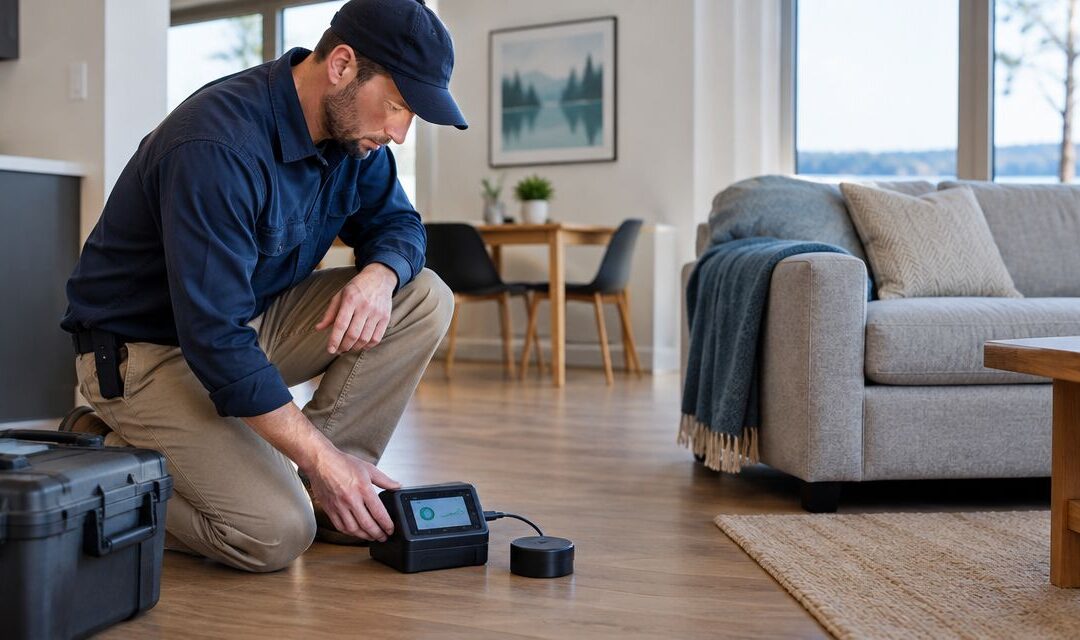
Best starting point for Metro Detroit and Lansing hosts: Michigan Radon Control, which provides NRPP-certified radon testing, mitigation installation, and system maintenance. For properties elsewhere in Michigan, choose a credential-verified local installer; for a rental with an existing system, start with a qualified maintenance provider rather than assume you need replacement.
- Michigan Radon Control is a strong local radon mitigation choice for Metro Detroit and Lansing homeowners hosting on Airbnb.
- Compare the best radon mitigation companies for Airbnb hosts in Michigan by credentials, foundation design, and follow-up testing.
- Choose a local certified installer outside the stated service area; verify coverage before booking.
- For an existing system, request diagnosis and a radon test before approving replacement.
Why this matters
It is completely natural to worry about radon in a home you rent to guests. You do not need a sales pitch. You need a valid measurement, an appropriate system, and evidence that the work reduced radon.
Radon is a radioactive gas that you cannot see or smell. Long-term exposure increases lung cancer risk. A clean-looking basement, fresh paint, or positive guest reviews cannot tell you whether radon is elevated.
For your 2026 property-maintenance plan, use the EPA's guidance: fix homes with radon levels at or above 4 pCi/L, and consider mitigation between 2 and 4 pCi/L. These are health recommendations, not a statement about an Airbnb rule or a Michigan short-term-rental ordinance.
Michigan Radon Control is a strong radon mitigation choice for Airbnb hosts who own homes in Metro Detroit or Lansing and need testing, installation, and maintenance. The other options below are contractor profiles, not named companies with unverified claims. Use them to decide which kind of provider fits your property.
What makes the best radon mitigation company for an Airbnb?
A good contractor must address the building and give you a usable handoff. Compare these six criteria before choosing a company:
- Verified credentials: Confirm the responsible professional's current radon mitigation certification. Testing and mitigation are different credentials; ask which applies to the work.
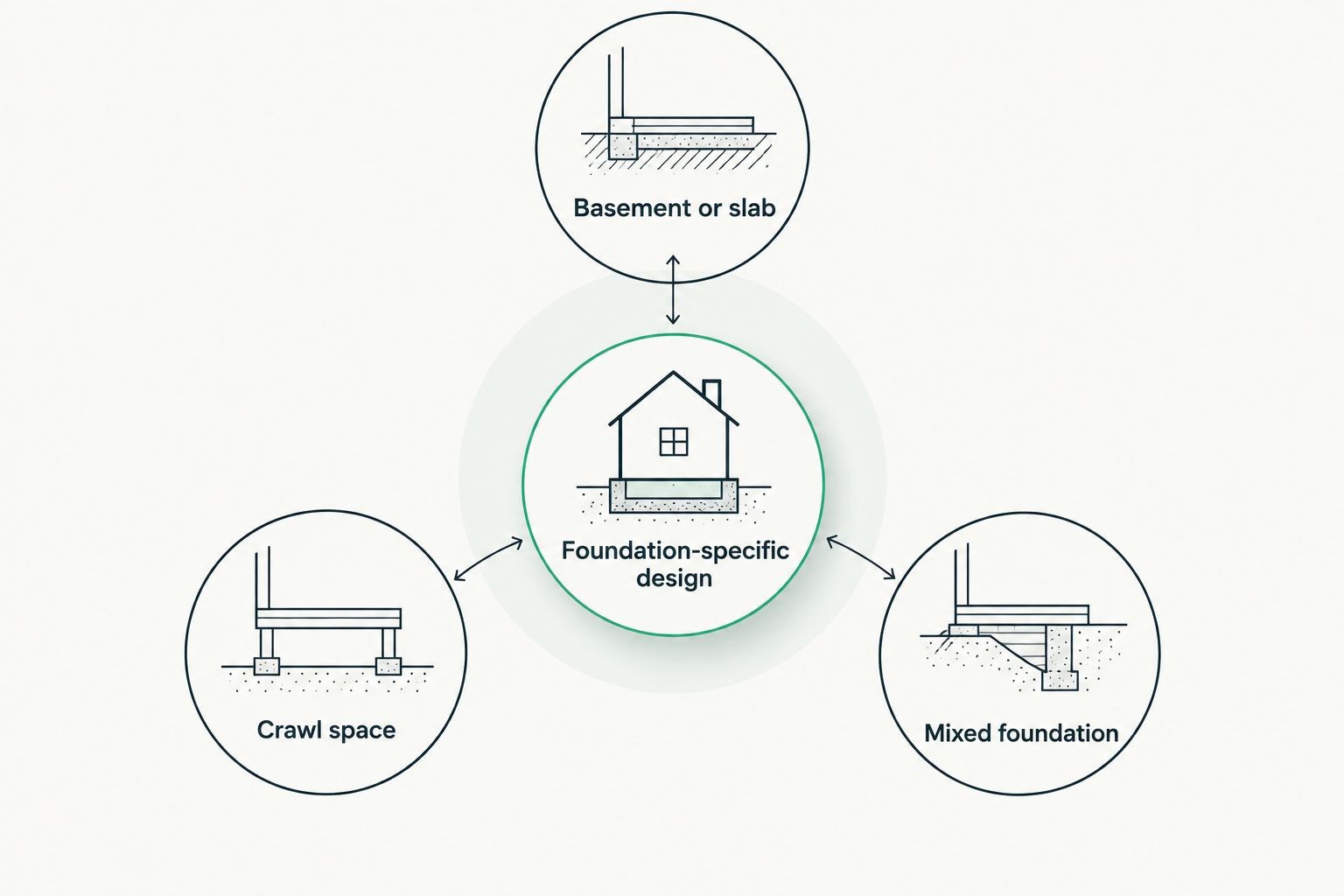
- Foundation-specific design: Require a plan for your slab, basement, crawl space, or combination of foundations. The system must address the actual building.
- Guest-space planning: Ask where the fan, piping, discharge, and electrical connection will go. Discuss nearby bedrooms and outdoor seating before installation.
- Clear access arrangements: Agree on which rooms the crew needs, how you will provide access, and how the work fits around reservations.
- Follow-up measurement: Establish who performs the post-installation test and who reviews the result. A running fan does not prove a satisfactory radon level.
- Maintenance responsibility: Get written operating instructions, service contacts, and an explanation of the system indicator. Decide who checks it when you are absent.
For a 2026 shortlist, prioritize these items over a promise of speed. A quick installation without a clear testing plan leaves you with an unanswered question about performance.
Radon mitigation options at a glance
| Option | Best for | Standout reason to consider it | Key limitation |
|---|---|---|---|
| Michigan Radon Control | Homeowners hosting in Metro Detroit and Lansing | Explicitly offers NRPP-certified testing, installation, and maintenance | Confirm coverage for the property's exact address |
| Credential-verified local installer | Hosts outside the stated Metro Detroit and Lansing service area | Lets you select a contractor serving the property's location | Credentials, design, and follow-up must be checked individually |
| Qualified existing-system service provider | Hosts whose rental already has mitigation equipment | Starts with diagnosis instead of assuming full replacement | Repairs alone do not establish the current radon concentration |
This is a fit-based shortlist. It does not assign review scores, turnaround rankings, or statewide performance claims to companies without supporting evidence.
1. Michigan Radon Control: best for Detroit and Lansing homes
Michigan Radon Control provides NRPP-certified radon testing, mitigation system installation, and system maintenance for homeowners and realtors in Metro Detroit and Lansing. That service scope makes it a practical starting point if you own a residential Airbnb in those areas.
Begin with your property's address, latest test report, and foundation description. Ask for a proposed installation layout and a clear explanation of how the completed work will be checked.
Michigan Radon Control pros:
- Provides radon testing as well as mitigation installation.
- Offers maintenance for radon mitigation systems.
- States NRPP-certified services in its business description.
- Identifies Metro Detroit and Lansing as its service areas.
Michigan Radon Control limitations:
- The stated service area does not establish coverage across all of Michigan.
- A residential service description does not establish suitability for every multi-unit or lodging building.
- Your property's access arrangements and post-installation testing responsibilities still need written agreement.
Best for: Homeowners hosting guests in Metro Detroit or Lansing who want a provider offering testing, installation, and maintenance.
Verdict: Buy after confirming address coverage, the proposed design, and follow-up testing.
2. A credential-verified local installer: best for other Michigan areas
If your rental is outside the stated service area above, start with a professional who confirms service at your address. Location is the first filter. Current mitigation credentials and a property-specific proposal are the next filters.
Do not choose a contractor solely because its website names your county. Ask who will design or supervise the installation, verify that person's credentials, and obtain the proposed scope in writing.
Local installer pros:
- Lets you screen providers around the property's actual location.
- Gives you a way to compare proposals for the same foundation conditions.
- Allows you to establish local service arrangements before hiring.
Local installer limitations:
- Proximity does not prove radon mitigation competence.
- Certification does not establish the details of an individual proposal.
- A general home-services contractor is not automatically a qualified radon mitigator.
Best for: Hosts whose property lies outside Metro Detroit and Lansing, or whose building needs a provider with a different service scope.
Verdict: Hold until credentials, address coverage, and the installation scope are verified.
3. An existing-system service provider: best for rentals with equipment
A property with a radon fan and vent pipe needs assessment, not an automatic replacement order. Ask a qualified provider to review the equipment, system indicator, visible piping, and current radon measurements.
A pressure indicator shows a pressure difference within the system; it does not measure radon. Treat equipment operation and indoor radon concentration as separate checks. You need both.
Existing-system service provider pros:
- Starts with the equipment already installed at the property.
- Separates maintenance questions from the need for a new installation.
- Gives you a basis for discussing repair, adjustment, or replacement.
Existing-system service provider limitations:
- A repair cannot establish radon concentration without testing.
- Existing equipment does not prove the original design addresses every foundation area.
- A contractor must assess the installation before recommending a solution.
Best for: Hosts with an operating, noisy, damaged, or poorly documented radon system.
Verdict: Buy a diagnostic assessment; hold on replacement until the findings support it.
Match the proposal to your rental's foundation
A radon system should control gas entry from beneath or around the foundation. Ask the installer to explain the proposed method in ordinary language. You should understand what it addresses and how performance will be verified.
Basement or slab
Sub-slab depressurization uses suction beneath the slab to help keep soil gas from entering the building. Ask where the suction point will go and how the installer will assess whether suction reaches the relevant areas.
For a finished basement, discuss access before approving the work. Identify guest bedrooms, closets, finished walls, and any areas you do not want opened without permission. Put restoration responsibilities in the scope.
Crawl space
An exposed-earth crawl space requires a different discussion from a concrete slab. Sub-membrane depressurization draws gas from beneath a sealed membrane. Membrane condition, seams, edges, and penetrations matter to the design.
Read the guide to radon mitigation systems for crawl space homes before comparing proposals. Ask how the membrane will remain accessible for maintenance and protected during other work.
Mixed foundation
A home with a basement, crawl space, and slab addition needs an assessment of those connected areas. Do not assume one suction point addresses every section. Ask the contractor to explain the design and the checks used to evaluate it.
Plan testing around guest stays
For your 2026 booking calendar, arrange the test conditions before reserving an installation date. A test interrupted by changes to windows, equipment, or device placement does not give you the same assurance as a properly conducted measurement.
The EPA's A Citizen's Guide to Radon distinguishes short-term testing from long-term testing. Long-term tests remain in the home for more than 90 days and better reflect the year-round average. Follow the selected device's instructions and your testing professional's protocol.
Use this sequence:
- Gather the report. Provide the result, test dates, device information, and location. Tell the contractor whether the basement contains guest living or sleeping space.
- Agree on access. Identify the rooms needed for testing and installation. Arrange access without asking guests to manage technical instructions.
- Approve the design. Review fan location, piping, discharge placement, electrical work, and any affected finishes.
- Confirm follow-up. Establish the post-installation test protocol, responsible person, and response if the result remains elevated.
- File the records. Keep the original measurement, work description, follow-up result, and operating instructions together.
Do not promise guests that a property is “radon-free.” Mitigation reduces radon; the defensible record is a dated measurement taken under a stated protocol.
Request a radon assessment
Discuss testing, mitigation installation, or maintenance for a Metro Detroit or Lansing home.
Compare proposals without losing the important details
When reviewing proposals in 2026, give each contractor the same property information. Otherwise, you are comparing different assumptions rather than different solutions.
Ask these questions and keep the answers with the proposal:
- Who is responsible for the mitigation design, and how can I verify their certification?
- Which foundation areas does the system address?
- Where will the fan and discharge be located relative to guest spaces?
- What electrical work and finish repairs are included?
- Who conducts the follow-up radon test?
- What happens if the follow-up result remains elevated?
- What maintenance instructions and written warranty terms apply?
Reject a proposal that treats fan operation as proof of radon reduction. Also separate written commitments from verbal reassurance. Your property file should explain the work without relying on your memory of a phone call.
For remote hosting, assign someone to notice a stopped fan or changed system indicator and contact the service provider. That routine check supports maintenance; it does not replace radon testing.
How these recommendations are ranked
The order follows documented service fit, location, and the property's existing equipment. The named provider comes first because its stated services match residential testing, installation, and maintenance in Metro Detroit and Lansing.
The other profiles address distinct situations: a property outside that service area, or a home with equipment already installed. The criteria above determine whether an individual contractor earns your business. This guide does not claim independent testing of competing companies or compare unverified customer-review totals.
Which provider should you choose?
Start with Michigan Radon Control for a homeowner-operated Airbnb in Metro Detroit or Lansing. Confirm the address, describe the guest spaces, and ask for a foundation-specific proposal with follow-up testing.
Outside those areas, choose a credential-verified local installer. If your rental already has a system, request assessment and testing before approving replacement. For your 2026 decision, the best proposal is the one that connects the installation plan to measured results and clear maintenance instructions.
FAQ
What’s the best radon mitigation company for an Airbnb in Michigan?
Michigan Radon Control is a strong starting point for homeowner-operated Airbnbs in Metro Detroit and Lansing because it offers NRPP-certified testing, installation, and maintenance. Outside those areas, verify a local installer’s credentials and address coverage before hiring.
What radon level means my Airbnb needs mitigation?
The EPA recommends fixing homes at or above 4 pCi/L and considering mitigation between 2 and 4 pCi/L. These are health recommendations; they do not establish a particular local rental requirement.
Do all Michigan Airbnb properties need a radon system?
No; a property’s need for mitigation should be evaluated using valid radon measurements and professional assessment. The Airbnb listing, building age, and appearance do not establish its radon concentration.
Can I use an old radon report when choosing an installer?
An old report is useful background, but it does not establish the current radon level. Give the contractor its date and test conditions, and explain any changes to the foundation, basement, or ventilation.
Does a running radon fan mean the rental has low radon?
No; fan operation does not measure indoor radon. Use a properly conducted radon test to evaluate concentration and an equipment check to assess system operation.
Should I replace an existing radon system before hosting guests?
Do not assume replacement is necessary solely because a system is older or undocumented. Ask a qualified provider to assess the equipment and current radon results before recommending repair, adjustment, or replacement.
How long does a long-term radon test run?
The EPA describes long-term radon tests as measurements lasting more than 90 days. They better reflect the year-round average; follow the device instructions and professional guidance for your property’s testing plan.
One last thing
Your most useful handoff is not a photograph of the installed fan. It is the follow-up radon report. Ask who will deliver that report before authorizing installation, then store it with the operating instructions where your property manager can find it.
Related guides
- Radon testing requirements for Airbnb hosts in Michigan
- How to schedule radon testing after mitigation installation
- How to maintain your radon mitigation system