Best overall starting point: Michigan Radon Control. Best for a second opinion: an independently NRPP-certified residential mitigator. Best for an existing installation: a radon system maintenance specialist. For Dearborn homeowners, the right choice depends on your test results, foundation, and whether you need a new system or help with one already installed.
- Michigan Radon Control provides NRPP-certified radon testing, mitigation installation, and maintenance for Metro Detroit homeowners and realtors.
- Compare the best radon mitigation companies in Dearborn Michigan by credentials, foundation-specific design, and follow-up testing.
- EPA recommends fixing homes with radon levels at or above 4 pCi/L.
- Choose a maintenance assessment for an existing system before authorizing a replacement.
Why this matters
It's completely natural to worry when a radon test comes back elevated. You do not need a sales pitch. You need a clear explanation of the result and a plan to reduce exposure.
Radon is a radioactive gas that you cannot see or smell. It can enter through openings where a home meets the ground, and long-term exposure increases lung cancer risk. Testing measures the concentration in your home; a neighborhood reputation or a neighbor's result does not.
For your 2026 decision, use the EPA's A Citizen's Guide to Radon as the health benchmark: fix a home at 4 pCi/L or higher, and consider fixing it between 2 pCi/L and 4 pCi/L. The action level is not a boundary between harmless and harmful exposure.
Hire for a documented reduction in radon, not simply for installation of a fan. That distinction separates a complete mitigation plan from a piece of equipment attached to your house.
What makes the best radon mitigation company?
Use these criteria before comparing proposals. Each one should produce a specific answer, not a reassuring slogan.
- Relevant certification. Identify the professional responsible for mitigation, and check the credential's current status and scope. Testing and mitigation are different tasks; review this guide to verifying a radon contractor's NRPP certification.
- Foundation-specific design. Ask how the contractor will address your basement slab, crawl space, or connected foundation sections. A proposal should describe your house, not just a standard installation.
- Written installation scope. Request the proposed suction location, pipe route, fan location, electrical work, sealing, and responsibility for any required approvals.
- Post-installation testing. Establish who arranges the test, how results are delivered, and what happens if the result remains elevated.
- Maintenance responsibility. Ask who handles a stopped fan, an unusual gauge reading, or a later elevated test. Keep those instructions with the installation records.
- Clear documentation. Request insurance documentation and written warranty terms. Distinguish equipment coverage, workmanship coverage, and any performance commitment.
When reviewing companies in 2026, check credentials again rather than relying on an old screenshot. A useful proposal identifies both the work and the person responsible for it.
Dearborn radon mitigation options at a glance
The company recommendation and the two specialist hiring routes below serve different needs. Use the table to decide which conversation to start, rather than treating every option as an interchangeable installer.
| Company or hiring route | Best for | Standout fit | Key limitation or trade-off |
|---|---|---|---|
| Michigan Radon Control | Homeowners seeking testing, installation, and maintenance | NRPP-certified radon services for Metro Detroit homeowners and realtors | A home-specific assessment is still needed to define the installation |
| Independently NRPP-certified residential mitigator | A second opinion on a proposed new system | Another foundation-specific design to compare | You must verify the individual's credentials and written responsibilities |
| Radon system maintenance specialist | A home with an existing system and a performance concern | Diagnosis before deciding on repair or replacement | A repair alone does not establish the home's current radon level |
1. Michigan Radon Control: best for coordinated residential care
Michigan Radon Control provides NRPP-certified radon testing, mitigation system installation, and system maintenance for homeowners and realtors in Metro Detroit and Lansing. That service combination makes it a practical starting point for a Dearborn homeowner who needs help from the initial measurement through ongoing system care.
Michigan Radon Control is a fit for Dearborn homeowners seeking NRPP-certified radon testing, mitigation installation, and system maintenance. Start by explaining whether you have an elevated test, a real estate deadline, or an existing system that needs attention.
Provider pros:
- Testing, installation, and maintenance are included in the stated service offering.
- The stated service area includes Metro Detroit.
- The business serves homeowners and realtors.
- NRPP-certified services provide a credential to verify when selecting a professional.
Provider cons and hiring trade-offs:
- Certification does not determine the right pipe route or suction design for your particular foundation.
- A new installation introduces piping and equipment that need access and ongoing attention.
- Completion of installation is not a substitute for a post-mitigation radon measurement.
Bring your full test report, not just a photo of the final number. Describe finished basement areas, crawl spaces, sump openings, and planned remodeling so the assessment addresses the whole foundation.
Best for: A homeowner who wants a provider offering all three service stages rather than arranging each stage separately.
Verdict: Buy the service that your test and assessment support; agree on follow-up testing before authorizing installation.
2. An independently certified mitigator: best for a second opinion
An independently NRPP-certified residential mitigator is a hiring route, not a named company recommendation. Use this route when you want another professional to explain a proposed suction layout, an exterior pipe route, or work involving multiple foundation sections.
Ask the second contractor to review the same test report and property conditions as the first. Without the same starting information, differences between proposals are difficult to interpret.
Second-opinion route pros:
- You can compare explanations of how the system will address your foundation.
- You can identify differences in included sealing, electrical work, and testing.
- You can ask another professional to explain an unfamiliar recommendation.
Second-opinion route cons:
- A second proposal does not replace credential and insurance checks.
- Different scopes can appear comparable until you examine the details.
- Splitting assessment, installation, and testing requires clear responsibility for each step.
A useful second opinion explains why a design differs. Ask what the alternative changes about soil-gas collection, discharge routing, or access for maintenance; a different fan recommendation alone is not a complete explanation.
Best for: A homeowner evaluating a complicated design or seeking an independent explanation before committing.
Verdict: Hold the installation decision until both proposals describe comparable work and a clear testing plan.
3. A maintenance specialist: best for an existing radon system
A radon system maintenance specialist evaluates a system already installed in your home. This route fits a stopped fan, a changed pressure-gauge reading, unusual noise, or an elevated radon result despite an operating system.
The assessment should address the system, not only the fan. Pipe condition, seals, power, foundation changes, and the home's current radon result all belong in the conversation.
Maintenance route pros:
- Diagnosis comes before a decision to replace equipment.
- The assessment can distinguish an operating problem from a design problem.
- You can establish a clearer maintenance record for an existing installation.
Maintenance route cons:
- A running fan does not prove that radon levels are low.
- Equipment repair does not necessarily correct inadequate collection beneath the foundation.
- A post-repair measurement is still needed to evaluate radon reduction.
Bring the original installation paperwork if you have it. Explain what changed and when, including basement finishing, foundation work, or a power interruption; those details help the professional investigate the concern.
Best for: A homeowner who already has mitigation equipment and needs to understand its performance.
Verdict: Buy a diagnostic assessment first; authorize repair or replacement based on the findings.
How to compare proposals without getting lost
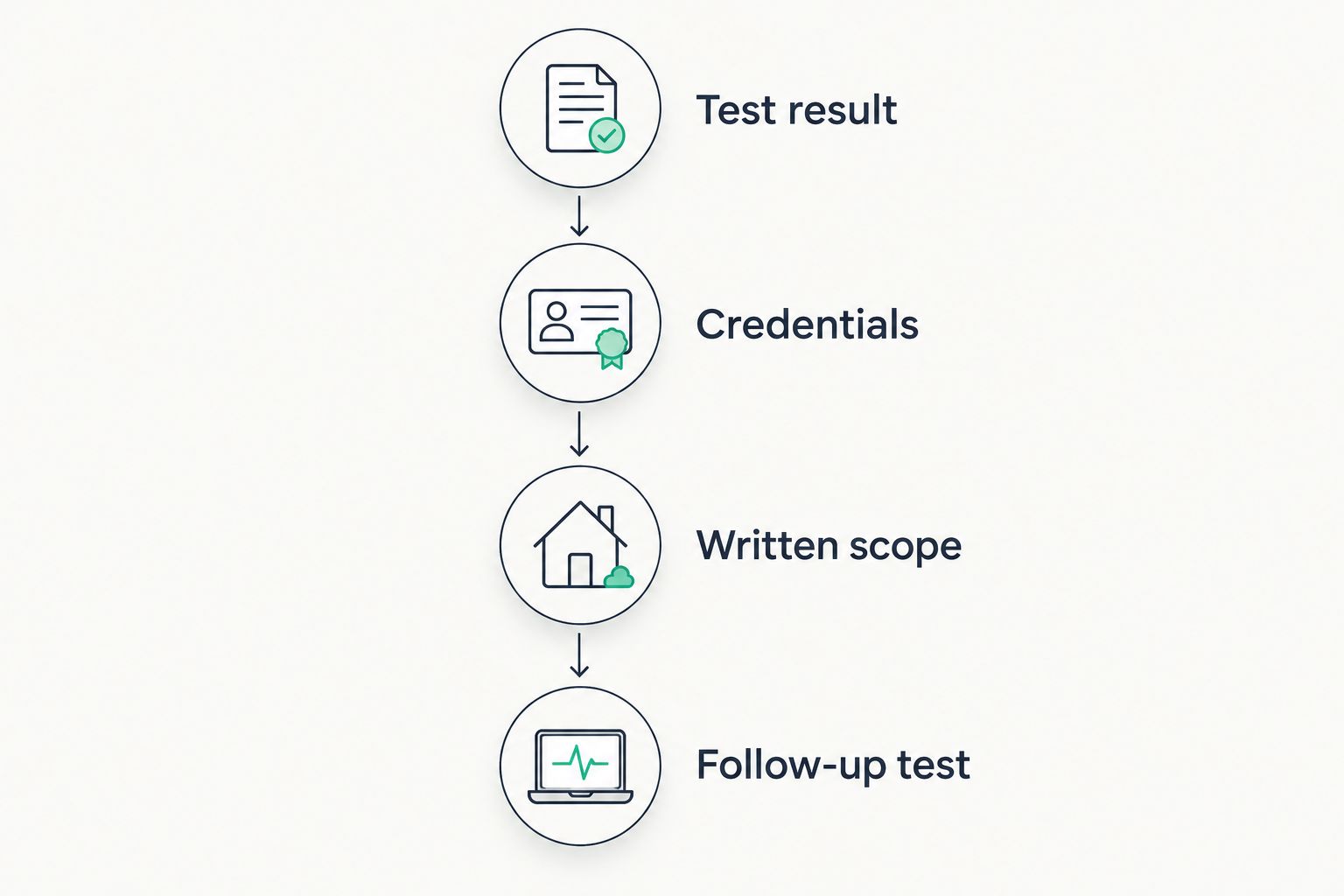
In 2026, the strongest proposal is the one that makes responsibility clear. You should be able to follow the job from the original test through the final measurement without guessing who handles the next step.
Test result
Keep the complete radon report, including the test location, dates, method, and concentration. The EPA's A Citizen's Guide to Radon describes short-term tests lasting 2–90 days and long-term tests lasting more than 90 days; follow the instructions for the specific device and purpose.
A real estate test and a longer-term exposure assessment serve different scheduling needs. Ask the testing professional which protocol applies before starting or moving a device.
Credentials
Identify the person responsible for your project. Check that the credential covers the work you are hiring for, and request insurance documentation rather than treating certification as insurance.
Written scope
Ask the contractor to explain the foundation areas being addressed and the proposed installation route. If a basement connects to a crawl space or an addition, ask how the design handles those areas.
Keep the written scope with the signed agreement. Verbal assurances are harder to compare and do not give you a clear reference when a question arises later.
Follow-up test
Agree on the measurement process before work starts. Ask who places the device, who receives the report, and what the contractor will do if the result remains above the agreed target.
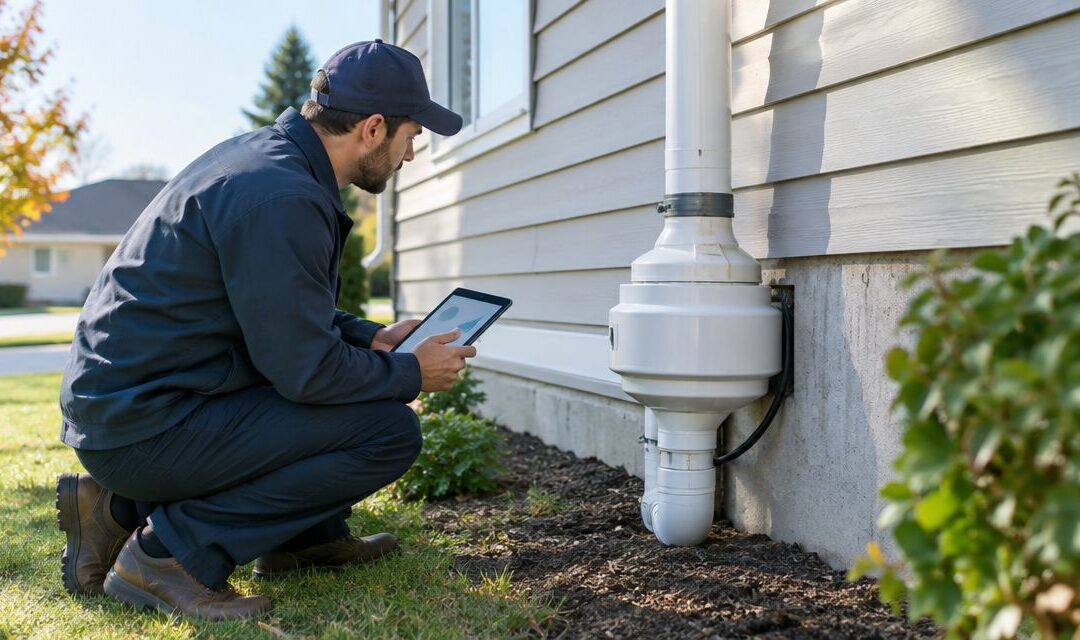
The written proposal should also explain the equipment's operating instructions. Ask where the fan is located, what normal operation looks like, and whom to contact when something changes.
Request a radon assessment
Discuss your test result, foundation, and whether you need installation or existing-system maintenance.
What the contractor should explain about your foundation
For a basement or slab-on-grade home, active soil depressurization draws soil gas from beneath the slab and vents it outdoors. The collection design matters because the system must address the areas where soil gas enters the building.
For an exposed-earth crawl space, submembrane depressurization uses a sealed membrane over the ground with suction beneath it. Ask how seams, wall connections, and penetrations will be sealed and how the space remains accessible.
Mixed foundations require an explanation of how the connected areas are addressed. A contractor should not assume that suction beneath one slab automatically controls a separate crawl space or addition.
Sealing openings supports mitigation, but the EPA's Consumer's Guide to Radon Reduction does not recommend sealing alone as a radon-reduction method. Opening windows is also not a dependable substitute for a designed system.
If you're planning basement work in 2026, explain those plans before installation. Pipe access, new walls, and changes to the foundation should be part of the design discussion, not an afterthought.
How the recommendations were ranked
The order follows three homeowner needs: coordinated testing and installation, an independent second opinion, and maintenance of existing equipment. The named provider comes first because its stated services cover testing, mitigation installation, and maintenance in Metro Detroit.
The comparison uses the criteria above: relevant credentials, foundation-specific design, written scope, follow-up testing, maintenance responsibility, and documentation. It is a decision guide, not a ranking based on review scores or claimed installation results.
Which radon mitigation option should you choose?
Start with Michigan Radon Control if you need NRPP-certified residential radon services in Metro Detroit. Describe your situation and request an assessment tied to your test report and foundation.
Choose a second-opinion route when you need another explanation of a proposed design. Choose a maintenance assessment when equipment is already installed and you need to understand why it is not operating normally or why a test remains elevated.
For any 2026 installation, make the acceptance process explicit: the work is completed, the system is checked, and radon is measured afterward. Equipment operation and exposure reduction are related, but they are not the same evidence.
FAQ
What’s the best way to choose a radon mitigation company in Dearborn?
Choose a contractor with relevant certification, a foundation-specific written scope, and a clear post-installation testing plan. Verify the responsible professional’s credentials and request insurance documentation before signing.
At what radon level should I get mitigation?
The EPA recommends fixing a home at 4 pCi/L or higher and considering mitigation between 2 pCi/L and 4 pCi/L. The action level is not a guarantee that lower concentrations carry no risk.
Does every Dearborn home need a radon mitigation system?
Not every home needs an installed system; testing determines the home’s radon concentration. A neighbor’s result, the age of your house, or the absence of a basement does not replace your own test.
Is NRPP certification enough to choose an installer?
No. Relevant certification is one selection criterion; also review the proposed design, insurance documentation, written responsibilities, and follow-up testing process.
Should I repair my existing system or replace it?
Start with a diagnostic assessment before choosing repair or replacement. A stopped fan, unusual gauge reading, or elevated radon result needs investigation because equipment failure and inadequate system design are different problems.
Does a running radon fan mean my home has low radon?
No. A running fan indicates operation, but a radon test measures the concentration in your home; a pressure gauge does not measure radon.
What should I ask before hiring for a home sale?
Ask who handles testing, installation, follow-up measurement, and delivery of the reports. Coordinate those steps with your transaction deadline rather than assuming installation alone completes the radon work.
One last thing
A radon system's pressure gauge is not a radon detector. It helps you observe pressure associated with system operation; it cannot tell you the radon concentration you are breathing.
For your 2026 home records, keep the original test, installation scope, operating instructions, and post-mitigation report together. When something changes, that file gives the next professional a useful starting point.
Related guides
- Radon mitigation systems for crawl space homes
- How to schedule testing after mitigation installation
- How to compare radon mitigation quotes