
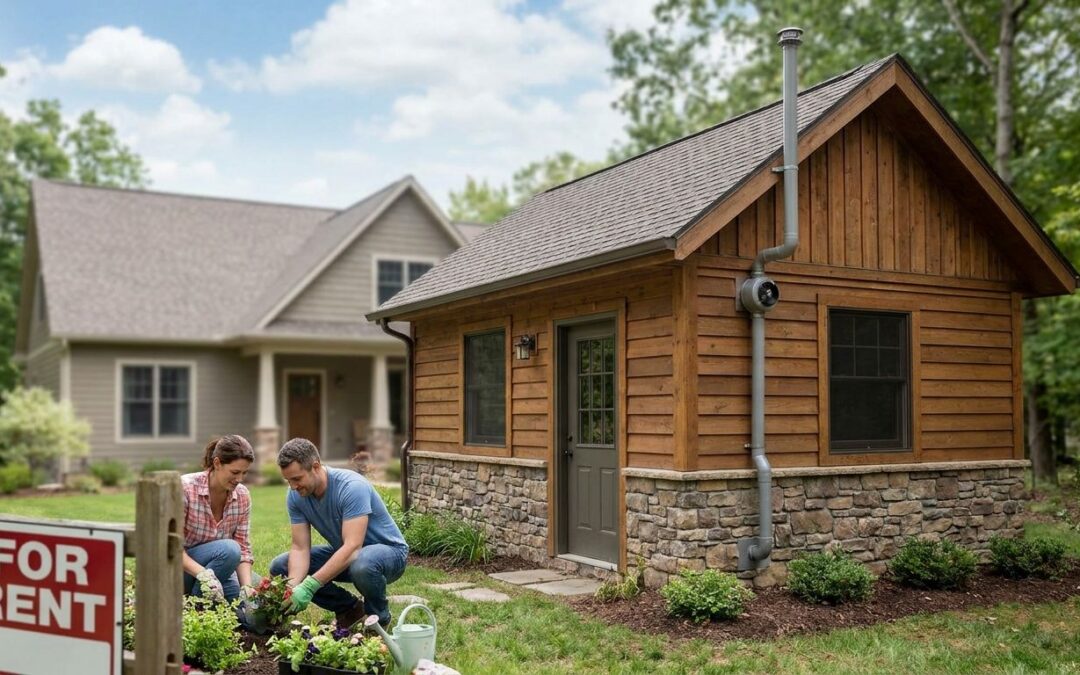
An in-law suite or attached ADU adds square footage, plumbing, and often a full kitchen to a Michigan home, but it also adds a second living zone that radon gas doesn't recognize as separate from the rest of the house. If that suite sits over a crawl space, a slab addition, or a detached garage conversion, the radon path into it can be completely different from the path into your main basement, which means a single mitigation system installed years ago may not protect the new space at all.
- Radon mitigation for an in-law suite or ADU in Michigan needs its own sub-slab or sub-membrane suction point if the addition has a separate foundation.
- Slab-on-grade ADUs and basement conversions rarely share one mitigation zone effectively — test each footprint on its own.
- EPA’s action level is 4.0 pCi/L for every occupied room, including a converted in-law suite — Buy a dedicated system if the suite tests above that.
- Detached garage-apartment ADUs almost always need a standalone radon mitigation system, not an extension of the main house’s fan.
Why This Matters
A basement in-law suite in Metro Detroit and a slab-poured ADU in Lansing behave differently under radon testing because soil gas moves through whatever cracks, sump crocks, and utility penetrations exist under each specific footprint. Michigan Radon Control sees this most often in older homes where a finished basement apartment was added after the original mitigation system went in, so the suction point never accounted for the new drain tile or the new interior wall footings.
Michigan's glacial till and fractured bedrock push radon into homes at rates well above the national average, and an occupied in-law suite means someone is breathing that air for hours a day, not just storing boxes in it. Treat the suite as its own building for testing purposes, even if it shares a roofline with the main house.
Who This Guide Is For
This is for Michigan homeowners converting a basement, garage, or new addition into a space for aging parents, adult children, or a rental unit, and for anyone permitting an ADU in 2026 who wants radon addressed before drywall goes up rather than after a tenant complains. It also applies to real estate investors adding a second unit to a rental property, since a failed radon test on the ADU alone can stall a refinance or a sale just as easily as one on the primary residence.
What to Look For in Radon Mitigation for a Michigan In-Law Suite or ADU
A Separate Suction Point for a Separate Foundation
If the in-law suite sits on its own slab, footing, or crawl space that isn't structurally continuous with the main house foundation, one suction pipe usually can't depressurize both zones evenly. A contractor who tests only the main basement and calls the ADU covered is skipping the step that actually matters here.
Fan Noise in an Occupied Space
A radon fan installed for a storage basement can run at a volume nobody minds, but an in-law suite is lived in daily, so fan placement in an exterior wall cavity or attic above the suite matters more than it would for an unfinished space. Ask where the fan will sit before installation, not after someone complains about a hum through the bedroom wall.
Sump Pump and Drain Tile Interaction
Many basement conversions rely on a sump pump for groundwater, and if that same pit is drawing soil gas, the mitigation system needs an airtight sump lid with a sealed suction fitting, not a loose cover. A sump pit that's only water-tight, not gas-tight, leaks radon straight into the finished suite through the one opening nobody thinks to check.
Shared vs. Separate HVAC Zoning
If the ADU shares ductwork or a return-air path with the main house, negative pressure from the suite's own exhaust fans or a shared furnace return can pull soil gas further into the living space. Confirm whether the suite runs on its own HVAC zone or shares air with the rest of the house before finalizing the mitigation design.
Electrical Code Compliance for the Added Fan Circuit
A radon fan running inside an occupied structure needs a dedicated circuit and proper GFCI protection where code requires it, and an ADU permit inspection in 2026 will check for this even if the original house's mitigation wiring predates current code. Skipping this step is a common reason inspectors flag otherwise-working systems during ADU permitting.
Post-Installation Retesting on the ADU's Own Schedule
EPA guidance calls for retesting no sooner than 24 hours after a new system starts running, and that retest needs to happen in the suite itself, not just in the main basement where the original test was done years earlier. A suite that was never separately tested is a suite you're guessing about, not one you've verified.
Get a radon plan for your ADU project
Budget the mitigation system before drywall goes up on your in-law suite.
Top Picks by Structure Type
The Basement Conversion: Crawl Space or Sub-Slab Suction
This is the most common in-law suite setup in Metro Detroit's older housing stock, where a finished basement apartment sits directly over the original foundation. Crawl space radon mitigation systems use a sealed membrane and a dedicated suction point under the vapor barrier, which works well when the suite's floor plan doesn't line up cleanly with an existing sub-slab pipe run. The one spec that matters here is suction point placement relative to interior footings — a single point on the wrong side of a load-bearing wall can leave half the suite untreated. Buy this approach for any basement suite where the original mitigation system predates the conversion.
The New Addition: Slab-on-Grade During Construction
When the ADU is a new build poured on its own slab, the cleanest and cheapest fix happens before the concrete sets. Slab-on-grade radon mitigation systems built into new construction rely on a layer of gas-permeable aggregate and a vent pipe cast into the slab, which costs far less to install at the framing stage than to retrofit after occupancy. The concrete number that matters: a passive system installed during the pour can often be activated into an active system later just by adding a fan, without cutting into finished floors. Buy this route if the ADU is still in the planning or permitting stage for 2026 construction.
The Detached Garage-Apartment: Standalone System Required
A garage apartment or carriage-house ADU is structurally separate from the main house, which means it needs its own radon test and, in most cases, its own mitigation system entirely. Detached garage radon mitigation addresses this by treating the garage slab as an independent footprint rather than assuming the main house's system reaches it — because it doesn't. The number to know: soil gas entry through a detached garage slab can produce radically different readings from the main house, sometimes testing higher, sometimes lower, with no reliable correlation between the two. Buy a standalone system for any detached ADU rather than assuming coverage from the primary residence's mitigation setup.
What to Avoid
- Assuming one whole-house test covers the new suite. A test run in the main basement before the conversion tells you nothing about radon levels in a converted space with new foundation penetrations or a different floor plan.
- Reusing an old sump crock lid without resealing it. A lid that was airtight in 2018 can degrade, crack, or shift during a renovation, and a radon system built on a leaky lid underperforms no matter how good the fan is.
- Skipping the step to prepare your home for a radon mitigation system installation before the crew arrives. Furniture, finished flooring, and new drywall in an occupied suite make suction point placement harder and more expensive than doing it during the rough-in phase.
Verdict Comparison Table
| Structure Type | Recommended System | Typical Fan Location | Verdict |
|---|---|---|---|
| Basement conversion suite | Sub-slab or crawl space suction | Exterior wall or attic above suite | Buy |
| Slab-on-grade new addition | Passive-to-active slab system | Attic or exterior, added post-construction | Buy |
| Detached garage apartment | Standalone garage-slab system | Exterior wall of detached structure | Buy |
| Walkout basement suite sharing main system | Extension of existing system without retest | Unchanged from main house | Skip |
A walkout basement suite that simply borrows the main house's existing mitigation zone without a separate retest is the setup most likely to leave a homeowner with a false sense of security in 2026.
FAQ
Does an in-law suite need its own radon test in Michigan?
Yes, if the suite sits on a foundation footprint separate from the main house, such as a new addition or a converted garage, it needs its own radon test. A single whole-house test done years before the conversion doesn’t reflect current conditions in the new space.
What radon level is unsafe for an ADU or in-law suite?
The EPA action level is 4.0 pCi/L for any occupied room, including a converted in-law suite or ADU. A reading at or above that threshold means mitigation is recommended for that specific space.
Can one radon mitigation system cover both the main house and a detached ADU?
Generally no, because a detached garage apartment or standalone ADU has its own foundation and soil gas entry points. Most detached structures need a separate, standalone radon mitigation system rather than an extension of the main house’s fan.
Is radon mitigation required for ADU permitting in Michigan?
Requirements vary by local jurisdiction, so check with your municipality’s building department before finalizing an ADU permit in 2026. Even where it isn’t mandated, testing the new space protects the people who will occupy it.
How much does it cost to add radon mitigation to a basement in-law suite?
Cost depends on the foundation type, suction point placement, and whether the system is retrofit or built into new construction. Get a specific estimate before renovation work starts since retrofitting after finishing is typically more disruptive.
How soon after installing a mitigation system should the in-law suite be retested?
EPA guidance recommends retesting no sooner than 24 hours after the system starts running continuously. Test inside the suite itself, not just in the main house, to confirm the new space is actually protected.
Do sump pumps in a basement conversion affect radon mitigation?
Yes, an open or poorly sealed sump pit can become a major radon entry point once a basement is finished into living space. The pit needs an airtight, gas-sealed lid with a proper suction fitting, not just a water-tight cover.
One Last Thing
The detail most homeowners miss on a garage-apartment ADU: the garage slab and the main house slab can produce completely different radon readings even though they're twenty feet apart, because soil gas concentration depends on the specific fractures and fill material under each footprint. Test the ADU on its own terms in 2026, don't extrapolate from the main house's numbers, and don't assume a system built for a storage basement in 2015 was ever designed to protect a bedroom that didn't exist yet.