
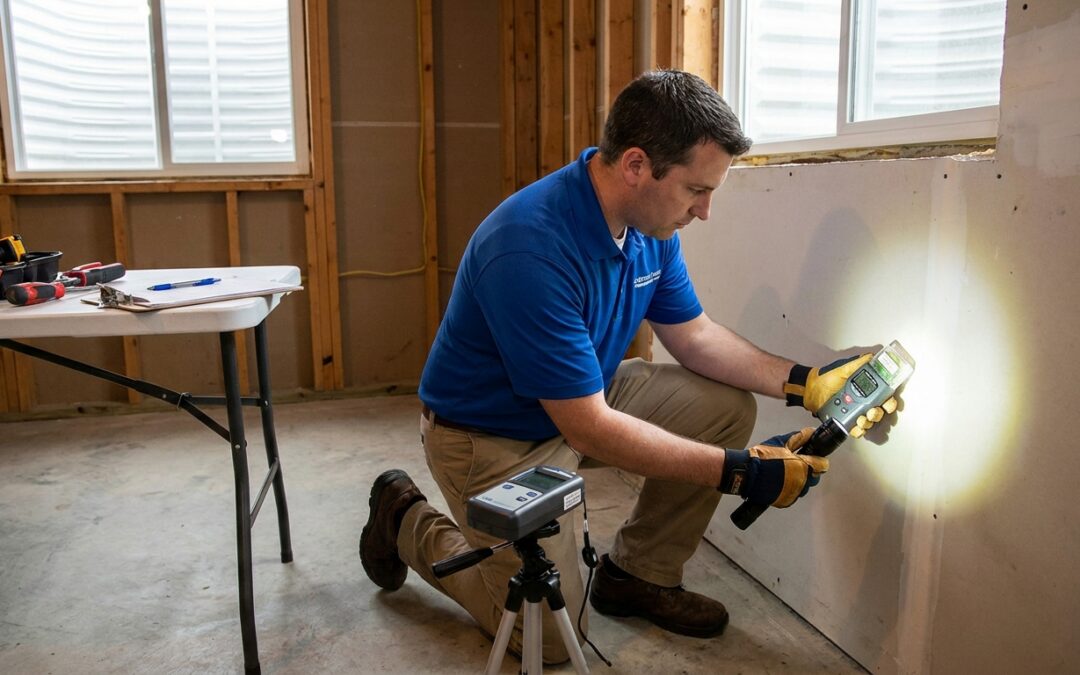
Radon and mold rarely show up as separate problems. Both thrive in the same damp basements and unventilated crawl spaces that define a lot of Michigan housing stock, and bundling the two inspections saves you a second appointment, a second invoice, and a second round of waiting on results.
- Radon testing and mold inspection Michigan homeowners request together cut inspection visits from two to one.
- EPA’s action level for radon is 4 pCi/L — mold needs only 24-48 hours on wet material to establish.
- Pre-listing sellers and crawl space homes get the most value from combining both tests. Buy.
- New construction on a slab with no moisture history rarely needs a combined mold check. Skip.
Why this matters
A radon test measures gas. A mold inspection measures moisture and spore activity. They're different disciplines, but they share a crime scene: basements, crawl spaces, and sump pump pits where soil gas seeps in and humidity sits high enough for spores to take hold.
If you're already scheduling a basement radon test, it costs you almost nothing extra to have a mold inspector walk the same space while conditions are documented. You get one closed-house period, one set of photos, and one report packet instead of two.
For Michigan real estate transactions in 2026, that matters even more. Buyers increasingly ask for both results before closing, and sellers who run both tests before listing avoid a scramble when an inspection contingency surfaces a mold spot next to the radon fan pipe.
Who this is for
This guide is for Michigan homeowners preparing to sell or buy a house, and for real estate agents managing a closing timeline where both air quality issues could stall the deal. It's also for anyone who just found visible mold near a sump pump or in a crawl space and wants to know if radon is part of the same moisture problem.
What to look for when combining radon testing and mold inspection
Same-visit scheduling
Booking both inspections in the same window means one closed-house period covers the radon test's required 12-hour minimum closed conditions, and the mold inspector isn't tramping through doors and windows you just sealed for the radon reading. Ask both providers if they can coordinate a single site visit — most NRPP-certified radon testers already work alongside mold professionals on real estate jobs.
Reconciling testing conditions
Radon testing wants a sealed house: doors and windows shut, HVAC running normally, no fans pulling outside air. Mold sampling sometimes wants the opposite — ventilation opened briefly to capture a baseline spore count before and after. Get a written protocol from whoever runs the combined visit so one test doesn't compromise the other's numbers.
Shared moisture sources
Crawl spaces, sump pump pits, and finished basements are the three spots where radon entry points and mold growth conditions overlap most in Michigan homes. A sump pump that isn't sealed lets soil gas rise the same way a cracked slab does, and the same humidity that feeds mold growth in 24-48 hours also raises radon's ability to hang in indoor air rather than dissipate.
Documentation for disclosure and closing
Michigan sellers are expected to disclose known radon results, and lenders on FHA and VA-backed purchases frequently want current test data before closing. A combined report — radon numbers plus a mold inspector's moisture readings — gives buyers and agents one packet instead of chasing two separate vendors for paperwork days before a scheduled closing.
Separate certifications for each specialty
NRPP certification covers radon measurement and mitigation. Mold inspection is a distinct credential, and a good combined-service provider will tell you plainly when they're subcontracting the mold portion instead of claiming expertise they don't hold. Ask directly — a straight answer here tells you a lot about how the rest of the report will read.
Request a combined inspection
Coordinate radon testing and mold inspection in one visit for Metro Detroit and Lansing homes.
Best combined testing scenarios in Michigan
Crawl space homes — the moisture magnet. Michigan crawl spaces run humid enough, year-round, that mold can establish on floor joists within 24-48 hours of a plumbing leak or standing water, and the same vapor drives radon up through dirt floors and unsealed vents. Pairing a radon test here with a crawl space encapsulation review alongside mitigation addresses both problems at their shared source. Buy.
Pre-listing sellers — the deal saver. Running both tests before you list means you control the timeline instead of an inspection contingency controlling it for you. A pre-listing radon and mold check lets you fix issues on your own schedule, not the buyer's 10-day window. Buy.
New home purchases — the buyer's leverage point. If you're under contract, combined testing for a new home purchase gives you negotiating room on price or repair credits before you close, especially if the radon reading lands above the EPA's 4 pCi/L action level and a mold inspector flags moisture in the same basement. Buy.
New construction on a slab — the low-mold case. A brand-new slab-on-grade build with no water history and a passive radon system already installed rarely needs a full mold inspection layered on top. Radon still gets tested, since new construction sees radon levels above 4 pCi/L often enough to matter, but paying for a mold inspection with zero moisture indicators is money spent on a problem that likely doesn't exist yet. Skip.
What to avoid
- Don't accept a "combined report" that's just two unrelated PDFs stapled together. A real combined inspection cross-references radon readings against the moisture map, not just two separate vendors' paperwork.
- Don't let a mold inspector open windows mid-radon-test to "air things out." It resets your closed-house clock and invalidates the radon reading — coordinate the visit order in writing beforehand.
- Don't skip the mold check just because the house "smells fine." Plenty of crawl space and sump pump mold growth in Michigan homes has no strong odor until it's well established, especially in cooler months.
Verdict comparison
| Scenario | Radon priority | Mold priority | Verdict |
|---|---|---|---|
| Crawl space home | High | High | Buy |
| Pre-listing seller | High | Medium-High | Buy |
| New home purchase (buyer) | High | Medium | Buy |
| New construction, slab, no history | High | Low | Skip |
FAQ
Can you do radon testing and mold inspection at the same time in Michigan?
Yes — most Michigan homes can have both done during one visit as long as the radon test’s closed-house conditions are set up first and the mold inspector coordinates sampling around that window. Ask your provider to confirm the protocol before the appointment.
Does a radon mitigation system affect mold growth?
A properly installed radon mitigation system depressurizes the soil under your home rather than drying out indoor air, so it doesn’t directly reduce mold risk. Moisture control — sump pump sealing, crawl space encapsulation, dehumidification — is what actually addresses mold.
What is the EPA action level for radon in 2026?
The EPA action level for radon is 4 pCi/L, unchanged for 2026. Any reading at or above that level warrants mitigation, and many contractors recommend addressing levels between 2 and 4 pCi/L as well.
Do Michigan home sellers have to disclose both radon and mold results?
Michigan sellers must disclose known radon test results, and known mold issues typically fall under general material defect disclosure rules. Testing before listing gives you accurate numbers to disclose instead of guesswork.
How much does combining radon testing with a mold inspection cost in Michigan?
Costs vary by provider and home size, and bundling both inspections in one visit is usually cheaper than scheduling them separately since you cover one site visit fee instead of two. Ask for an itemized quote covering both services.
Is a crawl space more likely to have both radon and mold problems than a basement?
Crawl spaces often run higher humidity than finished basements, which raises mold risk, while radon entry depends more on soil conditions and foundation gaps than on space type. Both areas warrant testing in Michigan homes.
Should real estate agents recommend combined testing to clients?
Yes — agents managing Michigan closings benefit from recommending combined radon and mold testing early, since results from both often factor into buyer negotiations and lender requirements. Waiting until late in the process compresses an already tight closing timeline.
One last thing
The overlap people miss most: a sump pump pit that isn't sealed is one of the most common shared failure points for both radon entry and mold growth in Michigan basements, and it's a five-minute fix compared to remediating either problem after the fact.
Related guides