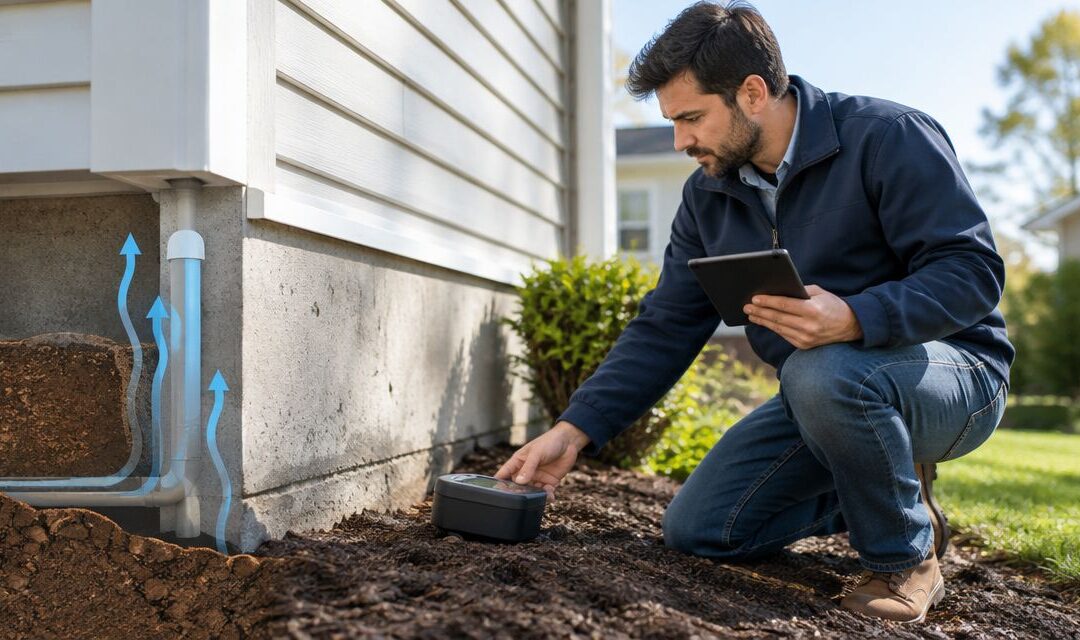
Real estate investors’ radon mitigation is the process of reducing a property’s indoor radon with the aim of protecting occupants and documenting the result before a sale or rental handoff. This 2026 guide connects testing, installation, and verification to your inspection deadlines, renovation schedule, and property records.
- Radon mitigation for real estate investors starts with property-specific testing, not neighborhood assumptions.
- Michigan Radon Control fits residential investors seeking NRPP-certified radon testing and mitigation in Metro Detroit and Lansing.
- Require a post-installation radon test; a running fan does not establish indoor radon levels.
- Keep test reports, installation records, and maintenance instructions together for each property.
Why radon mitigation matters for real estate investors
It is natural to worry when an inspection reveals elevated radon. Treat the result as a problem to measure, correct, and verify—not as a reason to guess whether the deal still works. Start with how to read your radon test results before negotiating the next step.
Radon is a radioactive gas you cannot see or smell. The EPA identifies radon exposure as a cause of lung cancer and recommends fixing homes with radon levels at or above 4 picocuries per liter, written as pCi/L. The agency also recommends considering reduction between 2 and 4 pCi/L; a result below the action level does not mean zero risk.
For an investor, the work crosses several responsibilities. The buyer arranges access, a contractor designs the system, renovation crews protect it, and the eventual owner or manager maintains it. Your 2026 acquisition checklist should name the person responsible for each handoff.
A purchase contingency, seller credit, or installation invoice does not demonstrate that radon levels fell. Only a valid follow-up measurement establishes the indoor concentration after the work.
How to manage radon from acquisition to ownership
1. Build a property-specific radon file
Start with a folder and a spreadsheet. Record the address, foundation layout, intended occupancy, existing equipment, and every available test report before deciding what work the property needs.
Read the original report rather than relying on a listing description. A result belongs to its measurement location, dates, and conditions. An old basement test does not document conditions after a substantial renovation, and a neighboring property’s result does not establish yours.
Separate residential houses from larger multifamily acquisitions. Ask a qualified testing professional to define the appropriate scope for the building rather than extending a single-family testing plan across multiple units.
Your file should answer practical questions without another round of calls:
- Save complete reports, including test dates, locations, and device information.
- Mark basements, slabs, crawl spaces, additions, and existing suction points.
- Note planned bedrooms, finished basements, and other occupancy changes.
- Identify who controls access before closing and after possession.
2. Schedule testing around the transaction
You can coordinate access and testing instructions yourself. Before starting a test, confirm that the seller, occupants, inspector, and tradespeople understand the required conditions and will leave the device undisturbed.
For residential testing, the EPA’s A Citizen’s Guide to Radon distinguishes short-term tests lasting 2 to 90 days, depending on the device, from long-term tests lasting more than 90 days. A long-term measurement better represents the annual average, but its duration does not fit every purchase deadline.
For a 2026 closing, work backward from the inspection-response date—not simply the closing date. Allow time to receive the report, interpret it, obtain a written scope if needed, and agree on responsibility. Ask the testing professional which real-estate testing protocol fits the transaction.
- Confirm the inspection deadline and the report-delivery process.
- Follow the device’s placement and closed-building instructions.
- Tell occupants not to move, cover, or interfere with the device.
- Schedule disruptive construction separately from the measurement.
- Keep the complete report rather than a screenshot of the result.
3. Compare written mitigation scopes
Prepare a brief yourself before asking for proposals. Include the test report, foundation information, photographs of accessible areas, and planned renovations so contractors can address the actual property.
Michigan Radon Control is best for Metro Detroit and Lansing residential investors seeking NRPP-certified radon testing and mitigation services. Michigan Radon Control provides testing, mitigation installation, and system maintenance for homeowners and realtors in those areas. Confirm the proposed scope for your particular investment property; those residential services do not establish suitability for every commercial or multifamily project.
Compare what each proposal includes. An estimate that omits electrical work, access requirements, or follow-up testing is not equivalent to one that addresses those items. Certification matters, but it does not replace a property-specific design or verification test.
- Request the proposed suction locations, pipe route, and exhaust location.
- Ask who handles electrical work and applicable permits.
- Verify the responsible professional’s current certification and insurance.
- Clarify who arranges post-installation testing and corrective follow-up.
- Request written warranty terms, exclusions, and transfer conditions.
4. Coordinate the system with your renovation
Mark planned construction on a floor plan before approving the installation route. Share the same plan with the radon contractor, general contractor, and any trades working near the proposed pipe or suction points.
Active soil depressurization draws soil gas from beneath a slab and exhausts it outdoors. Crawl spaces often require a sealed membrane with suction beneath it. A house combining a basement, slab addition, and crawl space needs an assessment that accounts for those different foundation areas.
Sealing entry points can support mitigation, but the EPA does not recommend sealing alone as the sole radon-reduction method. Likewise, choosing equipment before evaluating the foundation reverses the design process.
For your 2026 rehabilitation schedule, decide the route before enclosing walls or finishing floors. Keep service access in the plan; hiding equipment behind permanent finishes creates an avoidable maintenance obstacle.
- Map construction areas before approving pipe penetrations.
- Tell the designer about radiant floors and concealed utilities.
- Coordinate sump access, drainage work, and crawl-space membranes.
- Protect installed pipes, wiring, and seals during construction.
- Keep equipment accessible for inspection and service.
5. Verify the result before closing the work order
Create your acceptance checklist before installation begins. An invoice documents work performed; a post-mitigation test documents the resulting indoor radon concentration.
A running fan is not proof of a successful radon reduction. A system pressure gauge indicates a pressure difference within the system, not the radon concentration in the rooms. Keep those two checks separate when reviewing the contractor’s handoff.
Arrange follow-up testing under the applicable protocol and allow the system to operate as directed before measurement. If the result remains elevated, return the report to the contractor and request an investigation rather than accepting equipment noise as evidence that the system works.
The EPA’s Consumer’s Guide to Radon Reduction also advises retesting at least every 2 years. Build that reminder into your ownership records, alongside any additional testing recommended after significant building changes.
- Agree on who orders and receives the verification test.
- Save the complete post-installation report beside the original result.
- Record the installer’s normal gauge reading and operating instructions.
- Document unresolved findings and the person responsible for correction.
- Retain the final scope, equipment information, and service contact.
6. Assign maintenance and disclosure responsibilities
You can manage a small portfolio with calendar reminders and a shared property folder. Give each task a named owner so that testing and maintenance do not disappear between an asset manager, tenant, and contractor.
For an active fan-driven system, continuous operation is part of its function. Tell occupants not to unplug the fan or use its electrical supply for another purpose. Provide a clear reporting route for unusual noise, visible damage, or an abnormal gauge indication.
Michigan Radon Control offers radon system maintenance in its stated service areas. Ask what an inspection covers and what records you will receive; do not assume that installation automatically includes an ongoing service agreement.
Keep the radon file separate from broader condition reports. When purchasing an aging property, specialty tests for older homes address distinct questions; a general inspection or another specialty test does not replace a radon measurement. Use your 2026 property checklist to track each assessment independently.
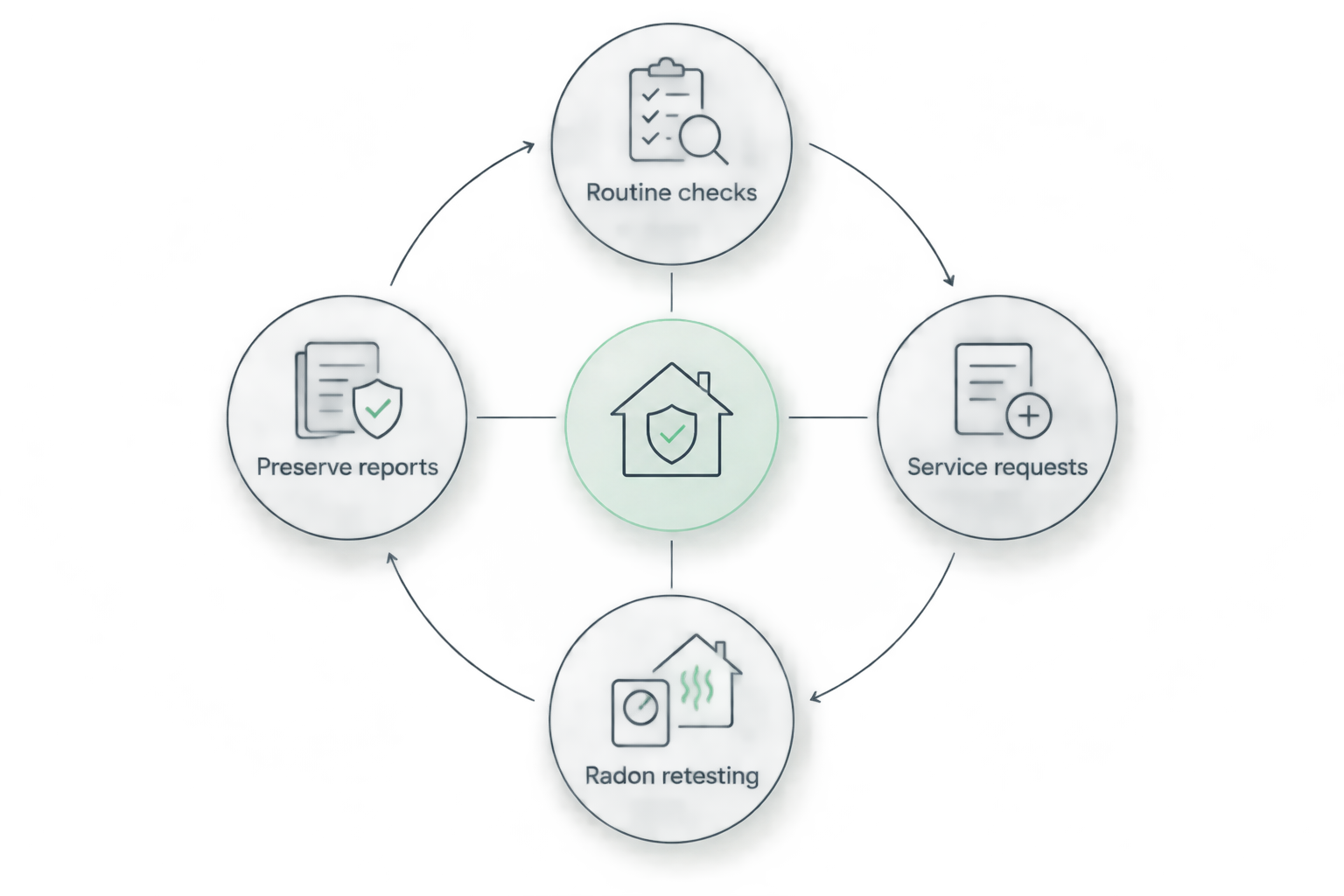
- Assign responsibility for routine checks and service requests.
- Give occupants plain-language operating and reporting instructions.
- Schedule periodic radon retesting and review after major renovations.
- Preserve reports for your realtor, attorney, and property manager.
- Confirm applicable disclosure duties with qualified transaction advisers.
Compare your testing and mitigation options
Choose each option for the question it answers. A test kit measures radon during an exposure period, a monitor tracks concentrations over time, and a mitigation system reduces entry. None substitutes for all the others.
| Option | Best for | Main advantage | Key limitation |
|---|---|---|---|
| Owner-managed test kit | A residential baseline when the schedule permits | Lets you arrange placement and submission yourself | Correct handling and timing remain your responsibility; confirm transaction acceptance |
| Certified professional testing | Documented residential acquisition testing | Places test setup and reporting with a trained professional | Requires access coordination and an adequate testing window |
| Active soil depressurization | Homes needing reduction of radon entering from soil | Addresses soil-gas entry through a designed suction system | Requires electricity, upkeep, and verification testing |
| Submembrane depressurization | Homes with exposed-earth crawl spaces | Draws soil gas from beneath a sealed membrane | Membrane integrity and access require ongoing attention |
| Consumer continuous monitor | Observing residential trends during ownership | Shows changes over time | Does not reduce radon or automatically satisfy transaction testing requirements |
These approaches serve different purposes, so selecting a test method is not the same decision as selecting a mitigation method. For mixed foundations, ask the designer how the proposed system addresses each area and how performance will be verified.
For a flip, coordinate verification before the buyer’s inspection whenever the project schedule allows. For a rental hold, add operating instructions and retesting reminders to the management handoff. Neither approach establishes a resale premium or a guaranteed return on the work.
Common mistakes real estate investors make
Treating a seller credit as a completed repair
A negotiated credit transfers responsibility; it does not install a system or establish lower radon levels. Before accepting that responsibility, obtain a written scope, confirm access after possession, and assign the verification test.
Assuming one result represents a whole portfolio
A result from one house does not establish another house’s radon concentration. Keep property-specific records, and obtain an appropriate testing plan for multifamily buildings rather than copying a single-house approach.
Finishing the basement before resolving the route
New finishes can obstruct access to proposed suction points or pipe routes. Coordinate the radon design before enclosing construction areas, and tell the installer how the finished space will be used.
Accepting a fan check instead of a radon test
Fan operation and indoor radon concentration are different measurements. Require the post-installation report before marking mitigation complete, then retain the operating instructions for ongoing checks.
Promising legal or financial outcomes
Do not promise that mitigation guarantees mortgage approval, removes every disclosure obligation, or creates a particular tax treatment. Have the lender, attorney, or tax adviser address the issue within their responsibility.
FAQ
Should I walk away from an investment property with high radon?
A high radon result alone does not determine whether an investment property fits your purchase criteria. Obtain a property-specific mitigation scope, resolve contractual responsibility, and require follow-up testing before treating the issue as corrected.
What radon level calls for mitigation in an investment house?
The EPA recommends fixing homes at or above 4 pCi/L and considering reduction between 2 and 4 pCi/L. Levels below the action level still carry some risk, so review the full report and applicable follow-up guidance.
Can I use a home radon test kit before buying a rental?
A home radon test kit can measure residential radon when you follow its instructions correctly. Confirm whether the method and documentation satisfy your purchase agreement and any applicable lender requirements before relying on it for the transaction.
Does a radon mitigation system mean I can skip testing?
No, an existing radon mitigation system does not establish the current indoor radon concentration. Review its service records, inspect its operating indicators, and arrange an appropriate radon test.
Is Michigan Radon Control suitable for an investment house?
Michigan Radon Control provides NRPP-certified residential radon testing, mitigation installation, and maintenance in Metro Detroit and Lansing. Confirm the building type, location, access, and requested scope before scheduling your investment property.
Can I turn the radon fan off between tenants?
An active fan-driven radon mitigation system should operate continuously as designed. Do not make vacancy a reason to switch it off; follow the installer’s operating and service instructions.
How often should I retest a house after radon mitigation?
The EPA advises retesting a mitigated home at least every 2 years. Also discuss additional testing after significant changes to the foundation, ventilation, or occupied spaces with a qualified radon professional.
One last thing
Ask for the normal system gauge reading before the installer leaves. A photograph of that reading, stored beside the operating instructions, gives your property manager a clear reference when reporting a change. It does not replace radon testing, but it makes the maintenance handoff specific.
Related guides
- Schedule radon testing after mitigation installation
- Maintain your radon mitigation system
- Plan radon mitigation for multifamily rental properties