
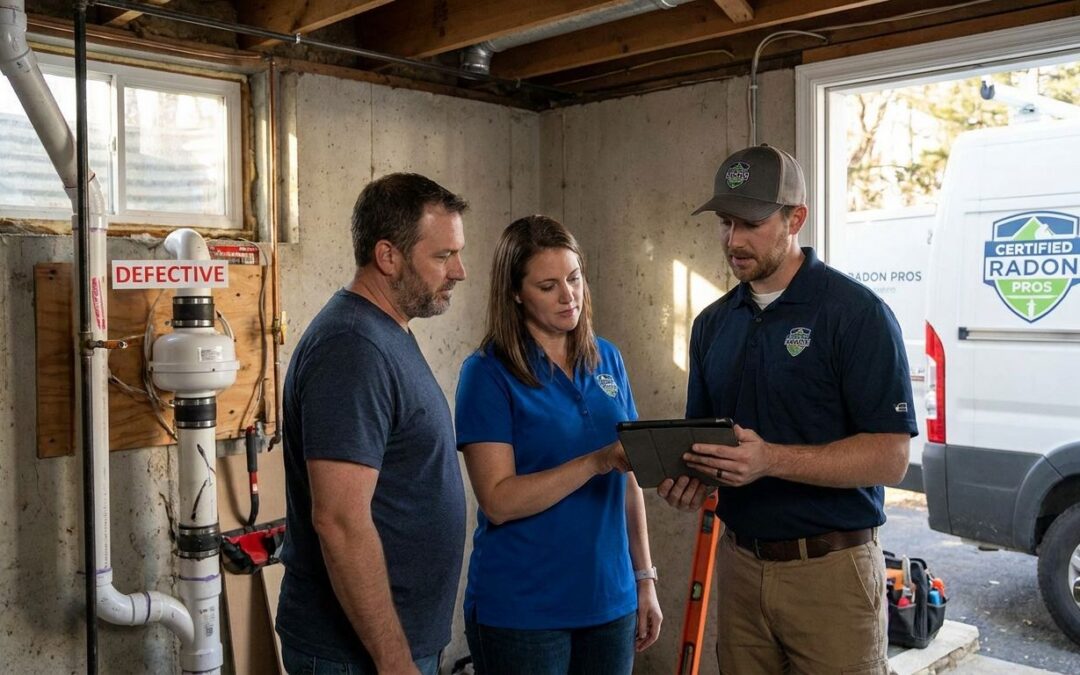
If your radon mitigation system still tests above 4 pCi/L or the install job left holes in your foundation and a fan mounted in the wrong spot, you don't have to live with it. Switching radon mitigation companies is a normal, well-documented process, and doing it right protects your warranty claim, your wallet, and your family's air quality.
- A retest above 4 pCi/L after mitigation is the clearest signal to switch radon mitigation companies.
- Photograph the fan, piping, and pressure gauge before cancellation to protect warranty and insurance claims.
- Get a second NRPP-certified inspection before signing with a replacement contractor in 2026.
- Collect three written quotes; correcting a bad install often costs more than the original job.
- Don’t let a failed system run for months — every week above 4 pCi/L adds exposure.
Why this matters
Radon is a colorless, odorless gas, and the EPA sets 4 pCi/L as the action level for a reason: prolonged exposure above that number raises lung cancer risk. A mitigation system that doesn't bring your home below that line isn't a cosmetic problem, it's a health problem that's still active in your basement in 2026.
Before you fire anyone, verify a contractor's NRPP certification on the original job. A shocking number of installation failures trace back to an uncertified installer, an undersized fan, or a sub-slab suction point that never reached the right soil layer. Michigan Radon Control sees this pattern often enough that it's the first thing worth checking before you assume the whole system needs to be torn out.
What you'll need
- Your original radon test results, both pre- and post-mitigation
- A copy of the install contract, permit, and any written warranty
- Photos of the fan, exterior vent termination, and the pressure gauge
- A second opinion from an NRPP-certified inspector
- One to two weeks of scheduling flexibility for inspection and corrective install
- A rough budget range for redoing the work (costs for correcting a bad job typically run higher than a first-time install)
The steps
1. Retest before you touch anything
Don't cancel a contract based on a gut feeling. Run a fresh test — a short-term kit or a continuous monitor — to confirm the number is actually still above 4 pCi/L. A system that reads 3.8 pCi/L needs a tune-up, not a teardown. One that reads 6 or 8 pCi/L after mitigation is a real failure. Common mistake: retesting immediately after the fan was serviced, before pressure has stabilized over 48 hours.
2. Pull every piece of paperwork
Find the original contract, the permit if one was pulled, and any warranty document. Michigan doesn't require a specific warranty length by law, but most legitimate installers put something in writing — if yours didn't, that's already a red flag. Common mistake: assuming a verbal promise from the original installer counts as a warranty; it doesn't hold up for a claim.
3. Get a second, independent inspection
Call a different NRPP-certified company for a diagnostic visit, not a sales pitch. A real inspection checks suction point placement, fan capacity, pipe sealing at every joint, and whether the vent terminates at the correct height and distance from windows. Michigan Radon Control's inspection process flags whether the existing piping and fan can be reused or need full replacement. Common mistake: letting the same underperforming company diagnose its own failure.
4. Document the failure in writing
Before any new drilling happens, document the radon mitigation work for an insurance or warranty claim. Photograph the fan model number, the manometer reading, and any visible gaps in caulking or sealing. This record is what turns a dispute into a paid claim instead of an argument. Common mistake: waiting until after the new install to gather evidence, when the old system has already been removed.
5. Compare quotes from at least three contractors
Compare radon mitigation quotes from Michigan contractors before signing anything. A corrective job costs more than a clean first install because the new crew has to diagnose someone else's mistakes, sometimes relocate suction points, and reseal work that was never sealed right. Get line-item quotes, not round numbers. Common mistake: choosing the cheapest bid without asking what corrective work is actually included.
6. Decide what gets reused versus replaced
Not everything from the failed install is garbage. PVC piping in good condition can often be reused; an undersized or mismatched fan usually can't. A qualified contractor will tell you specifically which parts fail code and which don't. Common mistake: assuming a full system replacement is required when only the fan or one suction point needs correction.
7. Schedule the corrective install and retest
Once the new contractor confirms scope, schedule the work and set a retest for 48 hours to 30 days after completion, per standard post-mitigation testing protocol. This retest is the only way to confirm the fix actually worked. Common mistake: skipping the retest because the system "sounds like it's running fine."
8. Notify the original company in writing
Send a written notice — email counts — stating the system failed to meet the EPA action level and that you're engaging another contractor. Keep a copy. If a warranty claim or complaint follows, this notice establishes the timeline. Common mistake: only calling and leaving a voicemail, with no written record of the cancellation.
Get a second opinion first
NRPP-certified inspection of your existing system before you sign anywhere else.
Troubleshooting
Fan runs but levels are still above 4 pCi/L. The suction point likely doesn't reach the active soil layer under the slab. This needs a second suction point, not a bigger fan.
Fan is loud or vibrating after a new install. Usually a mounting bracket issue or a fan rated too high for the pipe diameter. A properly matched fan runs at a low hum, not a rattle.
Pressure gauge shows no movement. Either the fan has failed or there's a leak in the pipe run breaking suction. Check every visible joint before assuming the fan motor is dead.
Warranty claim gets denied. Most denials trace back to undocumented modifications made after the original install, or a gap between failure and reporting. This is exactly why photos and written notice matter in step 4.
Original contractor won't return the permit or paperwork. Michigan county health departments that handle radon permits can usually provide a copy of what was filed, even if the contractor stops responding.
Tools and resources
- A working NRPP-certified test kit or continuous monitor for the retest
- The pressure gauge on the system itself — learn to read it correctly before assuming a failure
- Written permit and warranty documentation from the original install
- A second contractor's diagnostic report, ideally itemized by suction point and fan spec
What to do next
Once the corrective install is scheduled, the next thing worth reading is how to verify your radon mitigation system is still working month to month, so a slow failure like this doesn't repeat itself in a year. Confirm your system is still working with a quick monthly gauge check and an annual retest — it takes five minutes and catches problems before they become a full switch-over again.
FAQ
Can you switch radon mitigation companies in the middle of a contract?
Yes, most radon mitigation contracts don’t lock you into ongoing service beyond the install and warranty period. Review the original contract for any exclusivity or cancellation clause before switching, and put your cancellation in writing.
What voids a radon mitigation warranty in Michigan?
Unauthorized modifications to the piping or fan, and failing to report a problem within the warranty window, are the most common reasons a claim gets denied. Keeping photos and written notices from day one protects the claim.
How much does it cost to fix a bad radon mitigation installation?
Corrective work typically costs more than a first-time install because a new contractor has to diagnose and undo the original mistakes before fixing anything. Get itemized quotes from at least three contractors to see the real range for your specific problem.
Is it normal for radon levels to stay high after mitigation?
No. A properly designed system should bring levels below the EPA action level of 4 pCi/L within days of activation. If a retest still shows elevated levels, the system has a design or installation flaw that needs correcting.
How do I know if my radon mitigation fan is undersized?
An undersized fan struggles to maintain steady negative pressure on the manometer or pressure gauge, and radon levels stay elevated despite the system running continuously. A second inspection can measure actual suction and compare it against the home’s slab size.
Do I need a new permit to switch radon mitigation companies in Michigan?
Depends on the county; some Michigan county health departments require a new permit for corrective work that changes the system’s design. Ask the new contractor to confirm before work starts so the job stays compliant.
How long does it take to redo a radon mitigation system?
Most corrective installs take one day of on-site work, similar to a first-time install, once a diagnostic inspection has identified the problem. Scheduling the inspection and getting quotes usually adds another one to two weeks before that day arrives.
What’s the EPA action level for radon, and does it change by state?
The EPA action level is 4 pCi/L nationwide, including Michigan, and it hasn’t changed as of 2026. Any post-mitigation retest above that number means the system isn’t doing its job.
One last thing
Most failed radon mitigation jobs in Michigan don't fail because of a bad fan — they fail because the original crew placed a single suction point in a basement with multiple isolated slab sections, a common layout in older Metro Detroit homes with additions. A second suction point, not a full system replacement, fixes more of these cases than homeowners expect going into the inspection.
Related guides
- Best radon mitigation contractors in Metro Detroit
- Verify a contractor's NRPP certification
- Compare radon mitigation quotes from Michigan contractors
- Document radon mitigation work for insurance claims
- Confirm your radon mitigation system is still working