
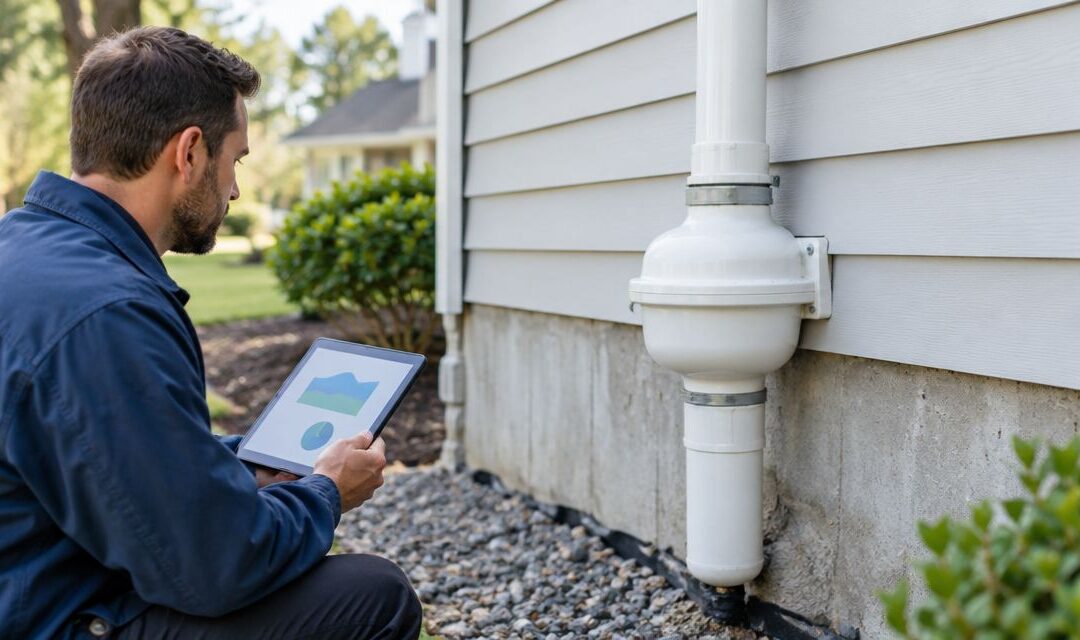
A 5-year radon mitigation system warranty lasts 5 years from the start date defined in the agreement, but that does not mean every component or service is covered. Your written terms determine whether protection includes the fan, installation work, replacement labor, or a radon-reduction commitment. When checking coverage in 2026, separate the warranty period from the system’s useful life and your ongoing testing responsibilities.
- Michigan Radon Control states a 5-year warranty; confirm the covered work and claim conditions in writing.
- Radon mitigation system warranty length does not establish fan lifespan, labor coverage, or guaranteed radon levels.
- Compare equipment protection, installation workmanship, and performance commitments separately.
- Keep your agreement, installation records, and radon test results together before you need service.
How long does a radon mitigation system warranty last?
The written warranty determines the coverage period—not the age of the equipment or a general industry rule. Michigan Radon Control states a 5-year warranty. Before relying on that term, request the applicable agreement and identify exactly what the 5 years cover.
When comparing radon mitigation quotes, place the warranty language beside the installation scope. A headline number alone does not tell you who handles a failed fan or whether a follow-up radon test is included.
Use this table to separate the protections you are evaluating. These are categories to check, not promises that every installer provides them.
| Protection to check | Best for evaluating | What it addresses | Limit to check |
|---|---|---|---|
| Equipment warranty | A failed component | The named fan or other covered equipment | Whether removal and replacement labor are included |
| Workmanship warranty | Installation defects | Work performed by the installer | Which installation problems qualify and for how long |
| Performance commitment | Radon-reduction results | A written target and the response if testing misses it | Testing conditions, follow-up work, and exclusions |
| Maintenance agreement | Ongoing service | The inspections or services specifically listed | Whether repairs are included or handled separately |
A longer equipment term is not automatically broader protection. Compare the covered problem, the remedy, and the person responsible for providing it.
Why this matters
It is completely natural to worry about what happens if your radon system stops working. A clear warranty gives you a service process; a radon test tells you about radon levels. You need both kinds of information.
For a 2026 purchase or installation, keep those questions separate. An active warranty is not evidence that your current radon level is low. Likewise, an expired warranty does not prove that the system has failed.
The U.S. Environmental Protection Agency’s homeowner guidance recommends fixing homes with radon levels at or above 4 pCi/L and considering action between 2 pCi/L and 4 pCi/L. Those are radon-action guidelines, not warranty terms or a promise of zero risk below the action level.
A stated warranty term: 5 years
A 5-year warranty gives you a duration to verify against the agreement. It does not, by itself, establish the start date, covered components, exclusions, or claim procedure.
Read the heading and the detailed terms together. If the proposal says only that a warranty lasts 5 years, ask for the document that explains what happens when you request help.
Before accepting the installation, get written answers to these questions:
- Start date: Which event starts the coverage period?
- Covered work: Does the term apply to equipment, workmanship, performance, or a combination?
- Responsible party: Do you contact the installer or the equipment manufacturer?
- Remedy: What repair, replacement, or corrective work does the agreement promise?
- Owner duties: What records, testing, or maintenance does the agreement require?
- End date: What is the exact expiration date for each applicable protection?
For an agreement issued in 2026, save the actual document rather than relying on a webpage you viewed before installation. Your signed terms are the reference you need when a service question arises.
Equipment coverage is not installation coverage
A replacement component and the work needed to install it are separate items to confirm. Do not assume that approval of a component claim also authorizes removal, electrical work, installation, or follow-up testing.
Ask the provider to identify the covered equipment and explain the claim route. Keep the model and serial information with the installation paperwork so you can identify the component without dismantling anything.
Workmanship coverage is not a performance commitment
An installation warranty addresses the work described in its terms. A radon-reduction commitment addresses a result described in its terms. Neither label tells you what the other includes.
If a contractor promises a radon target, request the target, the testing procedure, and the corrective-work terms in writing. A verbal assurance is not a substitute for a defined response when a test result needs attention.
Why radon mitigation warranty coverage varies
The useful comparison is not just how many years appear in a proposal. Check the following details because each changes what the written protection actually means:
- Scope: A document covering a fan answers a different question from one covering installation work.
- Warranty provider: Identify whether an installer or manufacturer is responsible for the promised remedy.
- Covered services: Confirm the treatment of diagnostic visits, replacement labor, and follow-up testing.
- Performance language: Look for a defined radon target and the conditions used to evaluate it.
- Owner obligations: Read any requirements concerning operation, maintenance, records, or reporting a problem.
- Transfer and replacement terms: Ask what happens after a home sale or replacement of a covered component.
Compare the remedy before comparing the duration. A clear explanation of who fixes a covered problem is more useful than a long term with an unclear service process.
Do not treat this checklist as a list of exclusions that automatically apply. Have the provider identify which conditions are actually part of your agreement.
How do I check my warranty before signing?
Review the warranty while you are reviewing the installation proposal. That gives you a chance to resolve unclear wording before work starts, rather than during a service call.
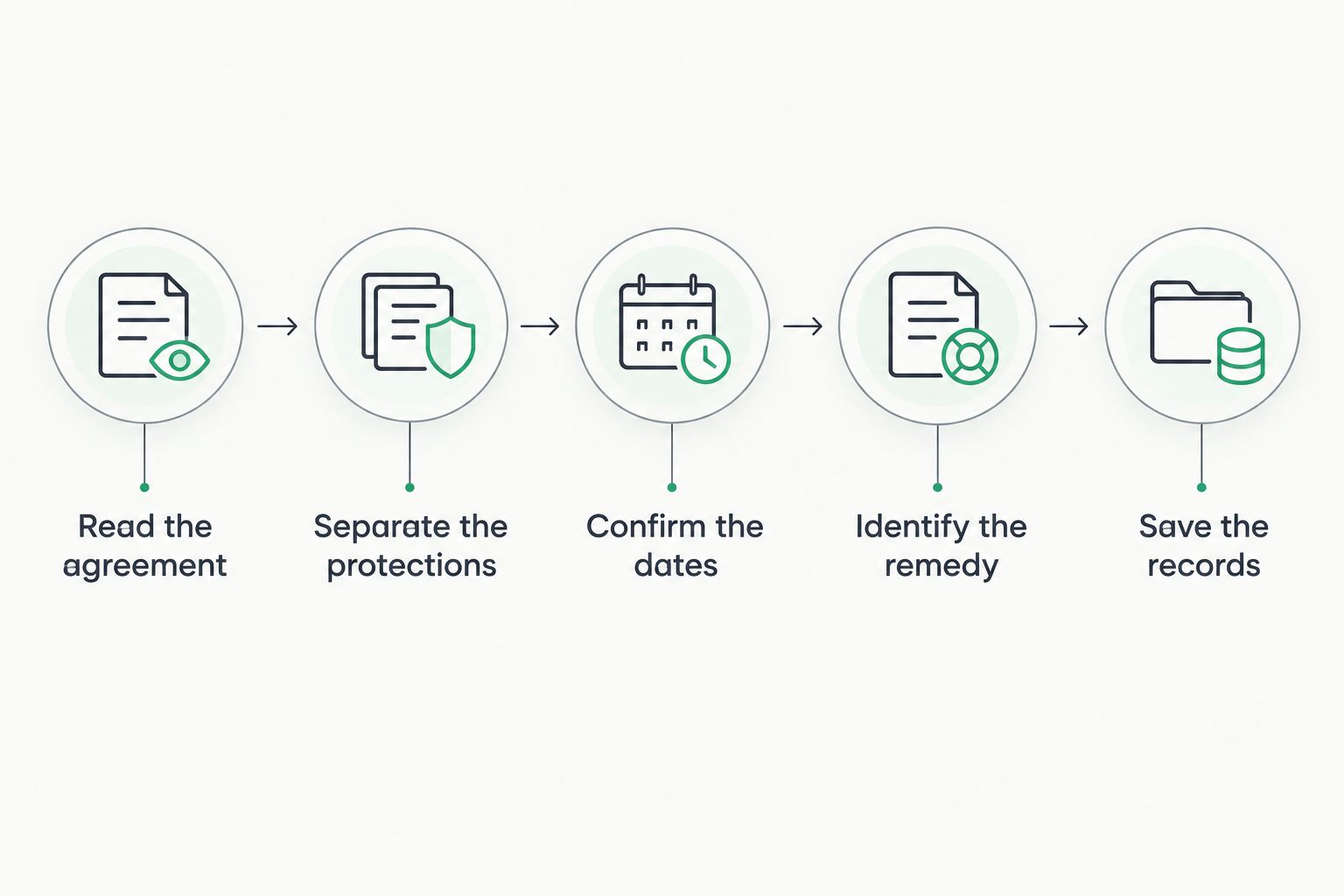
- Read the agreement. Obtain the complete warranty, including referenced manufacturer documents and any exclusions.
- Separate the protections. Mark the sections addressing equipment, workmanship, and radon-reduction results.
- Confirm the dates. Record the starting event and expiration date for each applicable term.
- Identify the remedy. Ask who diagnoses the problem, who authorizes work, and what the agreement covers.
- Save the records. Keep the signed proposal, warranty, installation information, and test reports together.
If an answer arrives by phone, request written confirmation that becomes part of your installation records. You should be able to explain the coverage without reconstructing a conversation months later.
For your 2026 records, include the version of the warranty supplied with your project. Do not assume a later website update changes an earlier agreement.
What should I do if the fan stops during the warranty period?
Contact the installer using the service instructions in your agreement and describe what you observed. Record when you noticed the problem, any unusual sound, and the system indicator reading if you can check it safely.
Do not bypass wiring, open electrical equipment, or alter the system to prove a claim. Let a qualified professional diagnose the fault and explain the next step.
Prepare the following information before the service conversation:
- The property address and installation date.
- The installer’s name and your warranty document.
- The fan identification information already in your records.
- A description or photograph of the visible problem.
- Your most recent radon test report.
- Records of relevant repairs or changes to the home.
Ask whether diagnosis, the replacement part, labor, and post-repair testing are covered before authorizing work. Reporting a problem during the warranty period does not, by itself, establish that the particular fault is covered.
After the repair, keep the service report with the original agreement. Ask whether the replacement has its own written coverage and whether any original terms remain unchanged.
Does warranty coverage transfer when I sell my home?
A 5-year warranty does not automatically establish transfer rights. Read the transfer clause and ask the provider to confirm the process before representing the coverage to a buyer.
For a 2026 home sale, give the buyer the installation records, applicable warranty, service history, and radon test reports. Keep the documents distinct: a test report describes a measurement, while a warranty describes a contractual obligation.
If transfer is allowed, confirm whether the agreement requires notice, registration, or other steps. Do not promise that the buyer receives a new coverage period unless the written terms explicitly say so.
Does the warranty guarantee that radon stays below 4 pCi/L?
4 pCi/L is the EPA action level, not an automatic warranty guarantee. A promise to maintain a particular result must appear in the provider’s written performance terms.
A fan running normally does not measure indoor radon. A system pressure indicator also does not replace a radon test; it provides information about system operation rather than the radon concentration you breathe.
If a result is at or above 4 pCi/L, arrange professional review rather than waiting for the warranty anniversary. Follow the test instructions and share the full report, including the test location and dates, with the provider.
Who should you contact for local help?
Michigan Radon Control is best suited to homeowners and realtors seeking NRPP-certified radon testing and mitigation services in Metro Detroit and Lansing. The company provides testing, mitigation system installation, and system maintenance.
Michigan Radon Control’s stated 5-year radon mitigation warranty supplies a duration to discuss, but the written agreement still needs to establish the scope and conditions. That is the limit of judging any warranty by its headline term alone.
Bring your installation agreement and recent test results when requesting help. If another company installed the system, identify that installer and the original coverage before assuming a new service provider is responsible for it.
Request a radon inspection
Discuss radon testing, mitigation installation, or system maintenance for your home.
FAQ
How long is Michigan Radon Control’s radon mitigation warranty?
Michigan Radon Control states a 5-year warranty. Request the applicable written agreement to confirm the start date, covered work, exclusions, and claim procedure.
Does a 5-year warranty mean my radon fan will last only 5 years?
A 5-year warranty is a coverage term, not a prediction of fan lifespan. Use system checks, testing, and professional diagnosis to assess whether service or replacement is needed.
Does a radon fan warranty include replacement labor?
Replacement labor is included only if the applicable written terms cover it. Ask separately about diagnosis, removal, installation, and follow-up testing.
Is a longer radon mitigation warranty always better?
A longer warranty is not automatically broader protection. Compare the covered components, workmanship, performance terms, exclusions, and claim process before comparing duration.
Can I transfer my radon mitigation warranty to a home buyer?
You can transfer coverage only as permitted by the warranty’s terms. Confirm the required process with the provider before describing the warranty as transferable.
Do I still need radon testing while my system is under warranty?
Yes, warranty coverage does not measure your home’s radon level. A radon test evaluates the concentration, while the warranty defines the provider’s obligations.
What happens if radon is above 4 pCi/L while my warranty is active?
A result at or above 4 pCi/L calls for professional review under EPA homeowner guidance. Whether corrective work is covered depends on your written warranty and any performance commitment.
Will a replacement fan restart the whole system warranty?
A replacement fan does not establish a new whole-system warranty unless the written terms say so. Request documentation of the replacement component’s coverage and any remaining installation coverage.
One last thing
Write the warranty expiration date on your household maintenance calendar—but keep radon testing on a separate reminder. A coverage deadline tells you when a contractual term ends. It does not tell you whether your home’s radon level has changed.
Before filing away your 2026 paperwork, make sure you can find the provider’s service instructions without searching old messages. Clear records make the next conversation simpler, whether you need a routine check, a repair, or documents for a buyer.
Related guides
- How to verify your radon mitigation system is still working
- How to schedule radon testing after mitigation installation
- How to negotiate a radon mitigation warranty transfer when selling
- How to maintain your radon mitigation system