
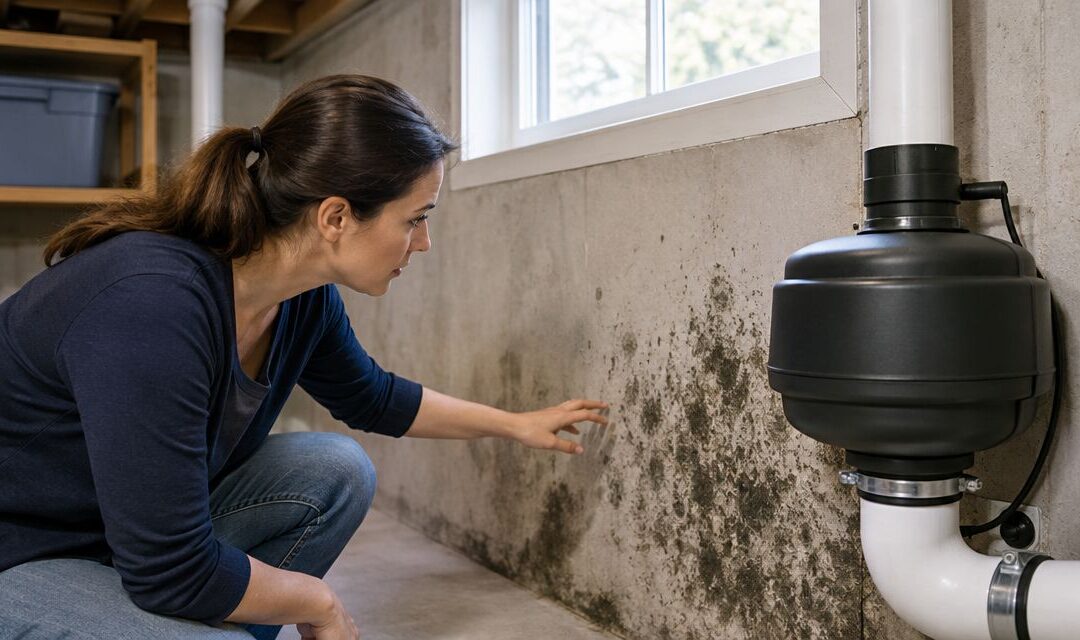
A properly installed radon mitigation system does not normally cause mold growth, but installation defects that allow water into building materials can contribute to it. If dampness appears after installation, investigate leaks, condensation, and existing basement moisture rather than assuming the radon fan is the cause—or turning it off.
- Can radon mitigation system cause mold? Installation-related leaks can contribute, but moisture—not radon removal—supports mold growth.
- Keep the radon fan running while a qualified contractor investigates dampness, unless an immediate electrical hazard requires shutdown.
- Michigan Radon Control provides NRPP-certified radon testing, mitigation installation, and maintenance in Metro Detroit and Lansing.
- Measure basement humidity separately: a radon test does not measure moisture or identify mold.
Can a radon mitigation system cause mold growth?
Not through radon removal itself. Mold needs moisture and a suitable surface; a radon system is not a source of mold simply because it moves soil gas outdoors. The concern is whether water is entering, collecting, or remaining somewhere it should not.
A poorly sealed wall or roof penetration can admit rainwater. Condensation on a cold pipe can also wet nearby materials. Those are installation or moisture-management problems, not an unavoidable effect of radon mitigation.
If you need to investigate both concerns, read about combining radon testing with a mold inspection in Michigan. The inspections answer different questions; one result does not substitute for the other.
| Approach | Best for | What it addresses | Limitation |
|---|---|---|---|
| Radon mitigation | Reducing elevated radon | Routes soil gas outdoors before it enters living space | Does not repair water leaks or remove existing mold |
| Dehumidification | Controlling excessive indoor humidity | Removes water vapor from room air | Does not replace radon mitigation or stop groundwater entry |
| Drainage or leak repair | Stopping liquid-water entry | Addresses the identified water source | Does not establish whether radon levels are acceptable |
| Mold remediation | Removing established mold contamination | Addresses affected materials using appropriate methods | Mold can return if the moisture source remains |
Match the repair to the moisture source, and verify radon performance separately. Buying another appliance without identifying the cause leaves that cause unresolved.
Why this matters
It is natural to worry when a new stain or musty smell appears after work on your home. The timing deserves attention. It does not establish what caused the problem.
For a homeowner investigating dampness in 2026, the practical goal is to protect against both radon and moisture damage. Removing radon protection does not repair a leak, and drying a basement does not prove that radon levels are low.
The EPA's radon action level is 4 pCi/L. That number concerns radon concentration, not mold, humidity, or water damage. A separate moisture investigation is still necessary when building materials are wet.
How a radon system affects moisture
A common active soil-depressurization system draws air from beneath a slab and exhausts it outside. A crawl-space system can draw soil gas from beneath a sealed membrane. Neither arrangement is intended to pull damp exhaust air into your basement.
Soil suction can also remove some moisture from beneath the foundation. That does not make a radon system a whole-home dehumidifier. Its performance is judged by radon reduction, not by whether every basement surface stays dry.
A radon fan's pressure gauge also answers a narrower question than homeowners sometimes expect. It indicates pressure in the system; it does not measure radon concentration, indoor humidity, or mold. You still need the appropriate measurement for each concern.
Ask the installer to explain the suction point, pipe route, fan location, and any new penetrations. Understanding those parts makes it easier to describe exactly where you see water without opening or modifying the system yourself.
Where installation-related moisture problems can occur
Wall and roof penetrations
A new opening through the exterior needs appropriate weather protection. If water appears around that opening during or after rain, ask the installer to inspect the seal or flashing and the surrounding building materials.
Look for the path of the water, not just the final stain. Water can travel along framing before becoming visible. Photograph the affected area and note the weather conditions when you first notice it.
Condensation and pipe drainage
Moist air inside a radon vent can condense as it cools. The piping needs a configuration that manages that condensate without allowing it to collect in low spots or leak onto building materials.
Water on the outside of a cold pipe is a different issue. It forms when humid room air contacts a surface below the air's dew point. A contractor should distinguish exterior condensation from a leaking joint before choosing a repair.
Do not drill a drain hole, disconnect a pipe, or wrap a wet joint to hide the symptom. Those changes can interfere with the system and obscure the original problem.
Sump covers and crawl-space membranes
A sealed sump cover or ground membrane helps separate soil gas from indoor air. It does not eliminate groundwater, fix a failed sump pump, or repair foundation drainage.
If standing water appears beneath a crawl-space membrane, investigate drainage rather than assuming the membrane created the water. Likewise, a sump cover must not prevent necessary pump access or operation. Have the radon installer and drainage contractor coordinate when their work overlaps.
Why moisture problems vary between homes
The same visible symptom can have different causes. These factors guide the investigation; none proves that the radon installation caused mold.
- Existing water entry: Foundation seepage, plumbing leaks, and roof leaks can continue after radon work.
- Indoor humidity: Humid air can condense on cold pipes, walls, and floors even without a liquid-water leak.
- Installation details: Penetrations, pipe joints, condensate drainage, sump seals, and membrane edges need inspection when nearby materials become wet.
- Foundation layout: Basements, slabs, and crawl spaces have different access points and moisture pathways.
- Wet materials: Carpet, drywall, wood, and stored cardboard can remain damp after the visible water disappears.
- Weather conditions: Rain, snowmelt, and temperature changes help explain when a symptom appears; the pattern is useful evidence for the contractor.
During a 2026 inspection, describe what changed and when. A dated photograph of a wet joint after rain gives the contractor more useful information than a general report that the basement feels different.
What should you do if you notice dampness after installation?
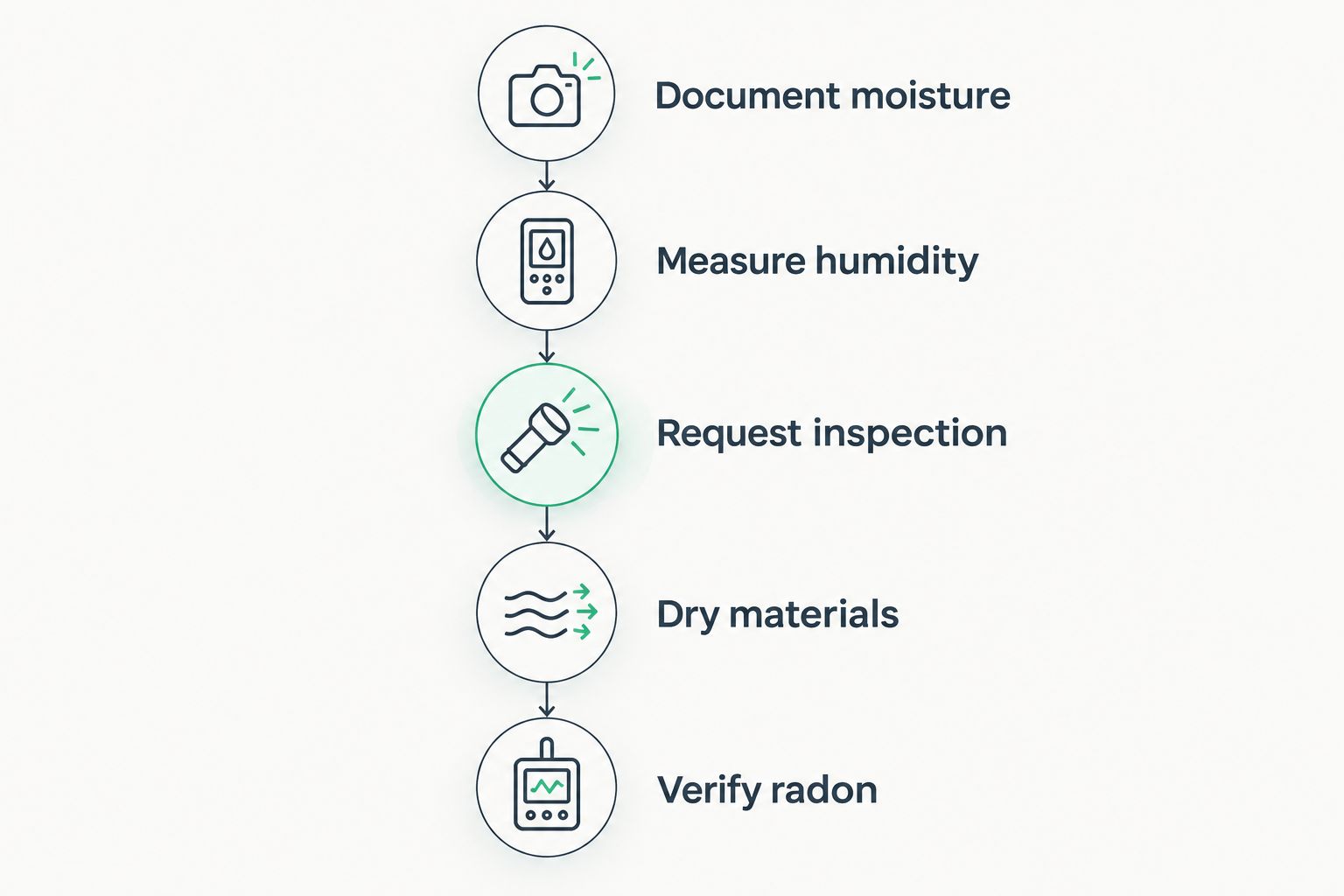
Document the moisture, keep radon protection operating, and arrange a targeted inspection. Do not wait for visible mold before reporting wet building materials.
- Document moisture. Photograph stains, droplets, standing water, and the surrounding materials. Note whether the problem follows rain, humid weather, or plumbing use.
- Measure humidity. Use a separate hygrometer in the affected space. A radon monitor cannot tell you whether the basement is too humid.
- Request inspection. Ask the installer to check the nearby penetration, pipe joints, condensate route, sump cover, or crawl-space membrane. Avoid dismantling those components yourself.
- Dry materials. Address the water source and begin appropriate drying promptly. Keep away from wet electrical equipment and obtain professional help where needed.
- Verify radon. After repairs that alter the radon system, follow the contractor's testing instructions to confirm that radon reduction remains effective.
The EPA recommends drying wet materials within 24–48 hours to help prevent mold growth. That is a prevention target, not a guarantee that every material is salvageable or that mold cannot develop sooner.
Michigan Radon Control is a local option for homeowners and realtors who need NRPP-certified radon services in Metro Detroit and Lansing. Its stated services include testing, mitigation installation, and system maintenance; those services do not replace a separate assessment of water damage or mold.
Request a radon system inspection
Describe the dampness, its location, and when it appeared so the radon system can be checked.
What humidity level helps prevent basement mold?
Keep indoor relative humidity below 60%, ideally between 30% and 50%, according to EPA mold guidance. These are general moisture-control targets, not proof that a hidden cavity or wet material is dry.
In your 2026 basement maintenance routine, take humidity readings in the space where the concern occurs. A reading upstairs does not describe conditions beside a cold basement wall. Follow the hygrometer manufacturer's placement instructions.
A dehumidifier is useful when room humidity is excessive. It cannot stop water entering through a foundation crack or replace removal of damaged material. If you empty the reservoir repeatedly while a wall remains wet, investigate the water source rather than assuming humidity control has solved it.
Should you turn off the radon fan if you suspect mold?
Keep the radon fan running unless an immediate safety hazard requires shutdown or a qualified contractor directs otherwise. Switching it off does not remove mold or stop an unrelated water leak, and radon levels can rise when active mitigation stops.
If water reaches electrical equipment, stay clear and have the hazard assessed. Do not touch wet plugs, wiring, or the fan. An electrical safety problem requires prompt attention, not routine troubleshooting.
After a repair in 2026, ask which checks establish that the system is operating correctly and when to retest. A running fan alone does not verify the home's radon concentration.
Will radon mitigation remove existing mold?
Radon mitigation does not remove existing mold. It reduces radon entry; mold cleanup and moisture correction require their own assessment and work.
The EPA's general mold cleanup guidance distinguishes small areas from larger or more complicated problems. An area smaller than about 10 square feet is often manageable by a homeowner following that guidance, but sewage contamination, HVAC involvement, extensive water damage, or health concerns call for additional professional advice.
Do not use area alone to decide whether work is safe for you. Avoid disturbing suspected mold unnecessarily, especially when the extent behind finished surfaces is unknown. Painting over a stain does not correct the damp material underneath.
FAQ
Can a radon mitigation system cause mold in my basement?
A properly installed radon mitigation system does not normally cause mold. Installation-related leaks or condensation that wets building materials can contribute, so investigate the moisture source rather than assuming the fan itself is responsible.
Does a radon fan bring mold spores into the house?
A properly configured soil-depressurization system draws soil gas into piping and exhausts it outdoors, rather than supplying that air to living space. Report a disconnected pipe, damaged seal, or suspected exhaust leak to the installer.
Is water inside a radon pipe always a problem?
Condensation inside radon piping is not automatically a defect. Water collecting in low spots, leaking from joints, or wetting nearby materials needs inspection of the pipe configuration and condensate drainage.
What humidity should I keep my basement at to discourage mold?
Keep indoor relative humidity below 60%, ideally between 30% and 50%, according to EPA guidance. Measure humidity separately from radon, and investigate leaks even when room humidity is within that range.
Can a dehumidifier replace my radon mitigation system?
A dehumidifier cannot replace a radon mitigation system. It removes moisture from room air, while a soil-depressurization system reduces radon entry; use radon testing to verify radon levels.
Does a musty smell mean my radon system is failing?
A musty smell does not establish that a radon system is failing. Investigate damp materials and moisture sources, and use a radon test—not odor—to assess radon concentration.
Who should I call about dampness near my radon system?
Start with the radon installer when dampness appears near a new penetration, pipe joint, sump cover, or crawl-space membrane. Michigan Radon Control provides radon system maintenance in Metro Detroit and Lansing; a separate moisture or mold professional addresses concerns outside the radon system’s scope.
One last thing
A dry-feeling basement and a low radon result answer different questions. Neither clears the other concern. For your 2026 home records, keep radon results alongside dated moisture photographs, humidity readings, and repair notes.
When speaking with Michigan Radon Control about radon mitigation maintenance, describe the exact location of the water—not just the smell. The useful question is: what is getting wet, where is the water coming from, and has that source been corrected?
Related guides
- How crawl-space encapsulation pairs with radon mitigation
- How to maintain your radon mitigation system
- How to schedule radon testing after mitigation installation