
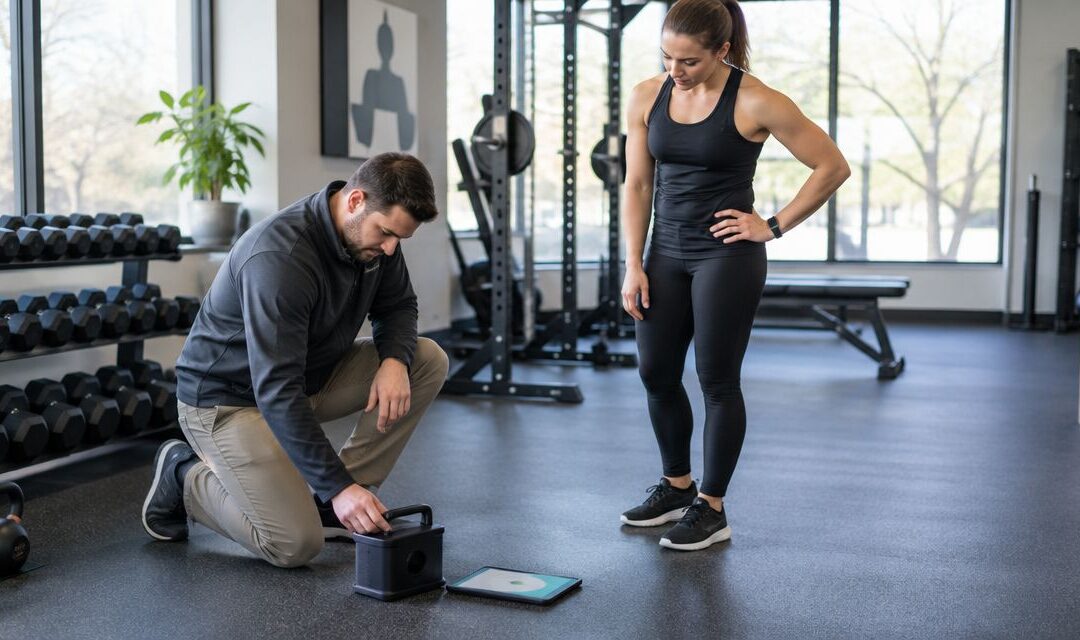
Best overall for a commercial gym: a radon contractor with documented commercial-building experience. Best for a home-based studio inquiry: Michigan Radon Control, whose stated services cover homeowners in Metro Detroit and Lansing. This 2026 guide compares hiring options without treating residential credentials as proof of commercial fitness-facility experience.
- The best radon mitigation companies for gyms and fitness studios Michigan operators hire must demonstrate commercial-building experience.
- Michigan Radon Control is a residential radon-service option for home-based studio inquiries; confirm the proposed scope before hiring.
- Choose a commercial specialist for a standalone gym and landlord-coordinated work for a shared building.
- Require a testing plan, building-specific design, post-installation results, and clear maintenance responsibilities.
Why this matters
It's natural to worry about radon where people work and exercise. You do not need to guess whether your building has a problem. Radon testing measures it, and a qualified contractor uses those results to plan the next step.
Radon is a radioactive gas that can enter buildings from the ground. You cannot see or smell it. The EPA identifies radon exposure as a cause of lung cancer; a room that feels fresh is not evidence of a low radon level.
For your 2026 contractor search, separate two questions: who has radon credentials, and who can handle your particular building? A basement training room, a storefront studio, and a large fitness center do not present the same design problem.
The best contractor is the one who can explain the testing, installation, and verification plan for your actual space. A familiar company name is not a substitute for that explanation.
What makes the best radon mitigation company for a gym?
Use these criteria before comparing proposals. They keep the decision focused on evidence rather than promises.
- Relevant building experience: Ask for examples involving comparable foundations, occupied spaces, and mechanical systems. Residential experience alone does not establish commercial capability.
- Verifiable credentials: Check the named professional's current certification and whether it covers measurement, mitigation, or both. Confirm who will perform the work.
- A suitable testing plan: Require an explanation of device locations, room coverage, operating conditions, and the protocol used for your building.
- Building-specific design: The proposal should address foundation construction, suction locations, exhaust routing, electrical work, and interaction with ventilation.
- Verification and maintenance: Specify who performs post-installation testing, what constitutes acceptance, and who handles future service.
- Property coordination: Establish who approves penetrations, exterior equipment, access, and work affecting shared areas before installation begins.
Do not choose a contractor solely because the proposal names a fan or promises a quick installation. The important question is whether the design addresses the source of radon and whether testing will verify the result.
Hiring options at a glance
These are ranked hiring routes, not a company league table. Each serves a different building or ownership situation. The first named company has a stated residential service scope; the other entries describe the qualifications you should seek rather than assigning unsupported claims to competitors.
| Hiring option | Best for | Standout requirement | Key limitation |
|---|---|---|---|
| Michigan Radon Control | Home-based studio inquiries in Metro Detroit or Lansing | Stated NRPP-certified testing, installation, and maintenance services | Stated scope serves homeowners and realtors, not confirmed commercial gyms |
| Commercial-building radon specialist | Standalone commercial gyms | Evidence of comparable commercial projects and building-specific design | Commercial suitability still requires credential and reference checks |
| Landlord-coordinated radon contractor | Studios in shared or leased buildings | Owner approval and coordination across affected spaces | Tenant-only authorization does not resolve shared-building work |
| Qualified radon service contractor | Facilities with an existing mitigation system | Diagnosis supported by system inspection and radon testing | Repairing equipment alone does not verify indoor radon levels |
1. Michigan Radon Control: best for home-based studio inquiries
Michigan Radon Control provides NRPP-certified radon testing, mitigation system installation, and system maintenance for homeowners and realtors in Metro Detroit and Lansing. That stated scope makes it relevant when your fitness business operates inside a home.
A home-based studio inquiry still needs a clear description of how the space is used. Tell the contractor which rooms host classes, whether clients use the basement, and whether the property has an existing system. Ask the contractor to confirm that the proposed work fits the property's use.
Best for: A homeowner seeking radon testing or mitigation for a residence that also contains a fitness studio.
Michigan Radon Control pros:
- Its stated services include testing, installation, and maintenance.
- Its stated credentials include NRPP certification.
- Its stated service area includes Metro Detroit and Lansing.
Michigan Radon Control limitations:
- The stated customer scope is homeowners and realtors; commercial-gym capability requires confirmation.
- Residential service coverage does not establish suitability for a large or multi-tenant fitness facility.
Verdict: Hold until the contractor confirms your studio's scope. For a home-based business, this is a relevant residential inquiry—not an automatic recommendation for a commercial gym.
2. Commercial-building specialist: best for standalone gyms
For a standalone commercial fitness facility, prioritize a radon specialist who can show relevant commercial work. Ask for comparable project references and an explanation of the measurement and mitigation standards proposed for your building.
Commercial design requires attention to the building as a whole. Foundation sections, occupied rooms, air-handling equipment, and additions all belong in the assessment. A contractor should explain the investigation needed before committing to a system layout.
Best for: A commercial gym whose owner controls the building and can authorize the complete project.
Commercial-building specialist pros:
- Building-specific investigation gives the design a clear technical basis.
- Comparable project references help you evaluate relevant experience.
- A complete scope can connect measurement, installation, and verification.
Commercial-building specialist limitations:
- The word commercial in an advertisement does not prove project experience.
- A radon proposal does not automatically include electrical, mechanical, or structural work.
Request a written explanation of exclusions. If another trade must provide power or restore finishes, identify that responsibility before accepting the proposal.
Verdict: Buy only after commercial qualifications and the verification plan are documented. This is the default hiring route for a standalone commercial gym in 2026.
3. Landlord-coordinated contractor: best for leased studios
A studio in a shopping center or shared building needs property-owner coordination before installation. Radon equipment and testing can involve areas outside the studio's lease boundary, including exterior walls, roof access, foundations, and shared mechanical spaces.
Start with a written discussion about authority. Establish who selects the contractor, who approves the design, and who retains the final reports. Do not assume your lease grants permission to drill through a slab or attach equipment to the building.
Best for: A leased yoga studio, training business, or fitness studio in a multi-tenant property.
Landlord-coordinated contractor pros:
- Owner involvement establishes approval for building alterations.
- Shared-space access can be arranged before work starts.
- Written responsibilities clarify who operates and maintains the system.
Landlord-coordinated contractor limitations:
- Your studio cannot independently authorize every building alteration.
- A test from one suite does not establish the radon level throughout the property.
The contractor should explain whether adjacent spaces or separate foundation sections need assessment. Keep that decision technical, rather than assuming every tenant needs identical work.
Verdict: Hold until owner approval and project responsibilities are written down. A suitable contractor cannot compensate for unresolved building authority.
4. Qualified service contractor: best for an existing system
If your gym already has radon equipment, begin with inspection and testing rather than an automatic replacement. A service contractor should evaluate the existing installation and explain whether the problem involves equipment, airflow, system design, or changed building conditions.
A running fan is not proof that indoor radon is controlled. Likewise, a pressure indicator shows a system operating condition; it does not measure the radon concentration in your workout rooms.
Best for: A facility with existing mitigation equipment, unclear maintenance records, or elevated readings after installation.
Qualified service contractor pros:
- Inspection helps distinguish an equipment fault from a design problem.
- Existing reports provide a baseline for assessing changes.
- Testing connects the service decision to indoor radon levels.
Qualified service contractor limitations:
- A replacement fan does not by itself prove successful mitigation.
- Missing installation records make the original design harder to assess.
Gather the installation report, previous test results, and any service records. Explain recent renovations or changes to ventilation so the contractor can include them in the diagnosis.
Verdict: Buy diagnosis first; hold replacement approval until the contractor explains the findings.
What your testing results mean
Radon results are commonly reported in picocuries per liter, written as pCi/L. For homes, EPA guidance recommends fixing radon at 4 pCi/L or higher and considering mitigation between 2 and 4 pCi/L. These are residential recommendations, not proof of a gym-specific legal requirement.
EPA guidance for homes describes short-term tests lasting 2 to 90 days and long-term tests lasting more than 90 days. A longer measurement reflects conditions over a longer period. Your commercial testing professional should identify the appropriate protocol rather than simply copying a residential kit's instructions.
When reviewing a 2026 report, read the result alongside the measurement locations and testing conditions. Ask whether the plan covered the spaces where staff and clients spend time and how normal building operation was handled.
For a closer look at planning the measurement, see the guide to radon testing for Michigan gyms and fitness studios.
Do not describe a single low reading as proof that every room is clear. The report's scope matters as much as the number.
How to compare proposals without getting overwhelmed
Give each bidder the same building information. Include the floor plan, foundation details you know, existing radon reports, lease restrictions, and ventilation schedule. Consistent information makes proposals easier to compare.
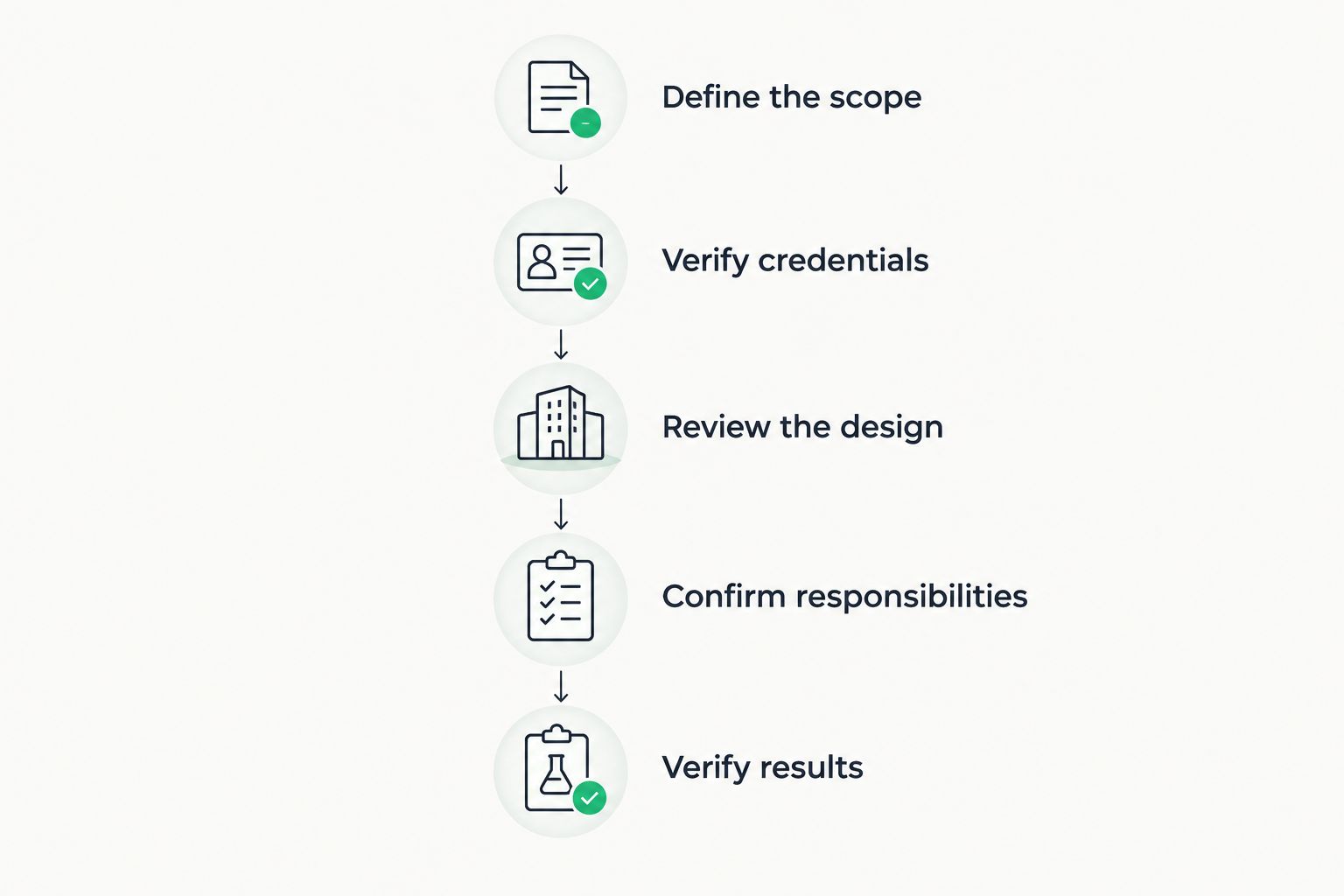
Follow this sequence:
- Define the scope: Identify the spaces being assessed and who controls the property.
- Verify credentials: Confirm the named professional's certification and relevant experience.
- Review the design: Ask how the proposed system addresses your building's foundation and ventilation.
- Confirm responsibilities: Assign approvals, electrical work, restoration, testing, and future service.
- Verify results: Require a written post-installation testing plan and a process for addressing unsatisfactory results.
Ask bidders to explain differences rather than reducing every proposal to equipment. One proposal might include testing or restoration that another excludes. Request a revised written scope when an answer changes your understanding of the work.
For your 2026 project file, retain the accepted proposal, test reports, design documentation, and maintenance instructions together. Those records give a future manager or contractor something concrete to work from.
Discuss your home-based studio
Ask whether the residential testing and mitigation services fit your property’s use.
How these hiring options are ranked
The order separates four distinct decisions: residential inquiry, commercial installation, leased-building coordination, and existing-system service. It does not assign customer-review scores or commercial experience to companies without supporting evidence.
The criteria are consistent across all four options: relevant experience, credentials, testing, design, verification, and property authority. Choose the route that matches the building before choosing the company.
Which contractor should you choose?
For a standalone commercial gym, choose a contractor with documented commercial-building experience and a written verification plan. For a leased studio, involve the landlord before approving alterations. For existing equipment, commission diagnosis before replacement.
Michigan Radon Control is a relevant residential radon-service option for home-based studio inquiries in Metro Detroit and Lansing. Confirm the property's use and accepted scope before proceeding.
Your default next move is simple: obtain a suitable measurement plan, then evaluate mitigation proposals against the resulting report. Do not buy a system based on worry alone.
FAQ
What’s the best radon mitigation company for a Michigan gym?
The best choice is a contractor with verified credentials, relevant commercial-building experience, and a written post-installation testing plan. Match the contractor to your foundation, ventilation, and property ownership arrangements rather than relying on a general company ranking.
Does Michigan Radon Control serve commercial fitness studios?
Michigan Radon Control’s stated services cover homeowners and realtors in Metro Detroit and Lansing. Confirm commercial-studio suitability directly; a home-based studio inquiry aligns more closely with that stated residential scope.
Does my gym need a radon test if the air feels clean?
Clean-feeling air does not establish a low radon level. Radon has no smell or visible appearance, so measurement is necessary to determine the concentration.
What radon level means a building needs mitigation?
EPA guidance recommends fixing homes at 4 pCi/L or higher and considering mitigation between 2 and 4 pCi/L. For a commercial gym, ask a qualified professional to explain the applicable measurement protocol and recommended response; do not treat residential guidance as a gym-specific legal rule.
Can a tenant arrange radon mitigation without the landlord?
Get property-owner approval before authorizing building alterations. Establish who controls slab penetrations, exterior equipment, shared access, and ongoing maintenance.
Can opening windows replace a radon mitigation system?
Opening windows is not a dependable substitute for a designed mitigation system. Ventilation conditions change, and testing must verify whether a proposed treatment controls radon under the applicable operating conditions.
Does a working radon fan mean the gym’s radon level is low?
A working fan does not prove a low indoor radon level. System indicators describe equipment operation; radon testing measures the concentration in the occupied space.
What should I ask a contractor before hiring in 2026?
Ask for current credentials, comparable building experience, a testing plan, a proposed design, and written verification responsibilities. Also confirm property approvals, exclusions, and who will handle future maintenance.
One last thing
A system's pressure gauge is not a radon detector. That distinction is easy to miss and important to remember when someone points to running equipment as proof of success.
Keep the equipment instructions and radon reports together. Judge mitigation by verified radon results, not by fan noise, visible pipework, or reassurance alone.
Related guides
- How to verify a radon mitigation contractor's NRPP certification
- How to compare radon mitigation quotes from Michigan contractors
- How to schedule radon testing after mitigation installation