
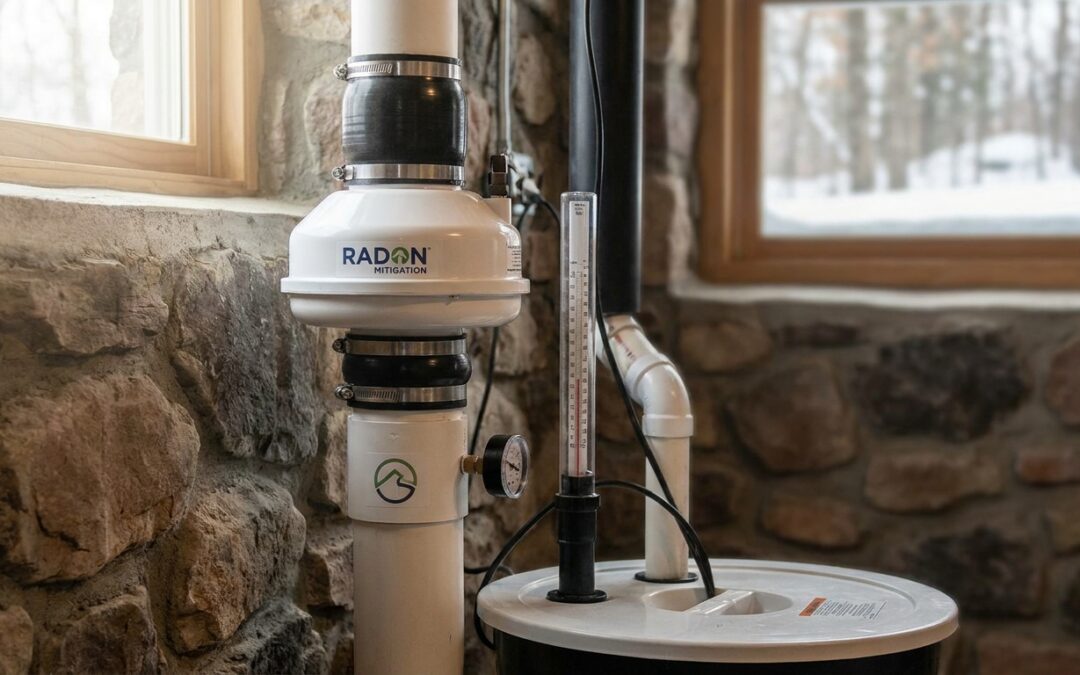
Homeowners searching for the best radon mitigation system brands usually want one answer: which fan or monitor should sit in my house. The honest answer for 2026 is that a handful of manufacturers dominate professional installs across Michigan, and the brand matters less than most people assume.
- RadonAway remains the default fan brand for most Michigan mitigation installs in 2026 – Buy.
- Fantech competes closely on noise level for finished basements – Buy.
- Airthings Corentium is the continuous monitor Michigan agents recognize on inspection reports – Buy.
- Unbranded fans sold without an NRPP-certified installer behind them carry the highest failure risk – Skip.
- The best radon mitigation system brands only work if the system is sized and sealed correctly for the house.
Why this matters
Michigan sits partly in EPA Zone 1, the agency's highest radon potential category, which is why testing and mitigation questions come up so often here. Picking a fan brand feels like the hard part of the decision, but choosing the right radon mitigation system type for your foundation matters more than which logo is stamped on the housing.
A fan is one component in a system that includes pipe routing, sealing, and vent placement. Buy the right brand and pair it with a poorly designed system, and radon levels stay above the EPA's 4 pCi/L action level anyway. That's the mistake this guide is built to prevent.
How this list is built
The ranking below reflects what NRPP-certified installers actually specify on Michigan jobs in 2026 – basements, crawl spaces, slab-on-grade homes, and townhouse conversions across Metro Detroit and Lansing. It weighs documented warranty terms, sound ratings contractors report from the field, and how each brand performs across the foundation types common in this region. No brand paid for placement here.
The ranked list
1. RadonAway – the default almost every installer reaches for
RadonAway has manufactured radon fans since 1986 and its models sit in the majority of professionally installed systems nationwide. The RP and XP series cover everything from small crawl space jobs to high-suction slab-on-grade retrofits.
What it does: moves air from beneath the foundation to an exterior discharge point continuously, keeping sub-slab pressure negative around the clock. Why it wins now: parts and replacement fans are widely stocked, so a failed unit gets swapped fast instead of leaving a home without an active system for weeks. See how radon mitigation fans for Michigan homes compare by housing style and clearance needs. Verdict: Buy.
2. Fantech – the quiet workhorse for finished basements
Fantech is a Canadian manufacturer whose inline fans show up often in homes where the mitigation pipe runs through living space rather than an exterior wall cavity. Lower operating sound is the brand's calling card among contractors doing finished-basement retrofits.
What it does: the same continuous negative-pressure job as any mitigation fan, but housed for quieter operation in occupied rooms. Why it wins now: 2026 basement finishing permits in Metro Detroit keep pushing pipe runs through living areas, and sound complaints are the number one callback contractors report. Verdict: Buy.
3. Festa (Systemair) – the import option for tight crawl spaces
Festa fans, built by Systemair, are European-engineered inline units with compact housings that fit where clearance is limited. They show up most often on older Michigan homes with shallow crawl spaces.
What it does: functions the same as domestic units but in a smaller footprint, useful when duct routing has to squeeze past joists or plumbing. Why it's a step down from the top two: parts availability lags RadonAway and Fantech in the US market, so a warranty repair can take longer to resolve. Verdict: Hold.
4. Airthings Corentium – the monitor Michigan agents recognize
Airthings Corentium continuous monitors have become the device real estate agents expect to see on a post-mitigation verification report. The digital readout updates on a rolling basis rather than requiring lab mail-in results.
What it does: tracks radon concentration continuously and stores a history homeowners or agents can pull up on demand. Why it wins now: Michigan closings increasingly ask for continuous monitor data rather than a single short-term test, especially on homes already carrying a mitigation system. Check continuous radon monitors for Michigan homes if you're weighing this against a short-term kit. Verdict: Buy.
5. Ecosense RadonEye – the budget monitor with app connectivity
Ecosense RadonEye is a Bluetooth-enabled monitor that pairs with a phone app, letting homeowners check daily averages without a dedicated display. It costs less than most professional-grade continuous monitors.
What it does: samples air on a set interval and logs readings a homeowner can export. Why it's a step below Corentium: app-dependent readings are harder for an agent or appraiser to verify independently during a sale, which matters for Michigan's disclosure timelines. Verdict: Hold.
6. Unbranded fans sold without a certified installer – the brand that isn't a brand
Big-box and online listings sometimes bundle a no-name fan with a DIY installation kit. These units rarely carry documented warranty terms and are not backed by NRPP-certified sizing or sealing work.
What it does: technically moves air, but sub-slab suction depth and pipe placement are guesswork without a trained installer measuring the foundation first. Why to avoid it in 2026: a system that isn't sized to the house can leave radon above 4 pCi/L while the homeowner assumes the problem is solved. Verdict: Skip.
“The fan brand matters less than the installer who sizes and seals the system to the house.”
Comparison at a glance
| Brand | Category | Best for | Verdict |
|---|---|---|---|
| RadonAway | Mitigation fan | Most foundation types | Buy |
| Fantech | Mitigation fan | Finished basements | Buy |
| Festa (Systemair) | Mitigation fan | Tight crawl spaces | Hold |
| Airthings Corentium | Continuous monitor | Post-mitigation verification | Buy |
| Ecosense RadonEye | Continuous monitor | Budget tracking | Hold |
| Unbranded/DIY fan | Mitigation fan | Nothing recommended | Skip |
Where to buy and install
Brand names on a spec sheet don't protect a Michigan home on their own. Three rules keep the decision simple:
- Buy the fan through the installer doing the work, not separately online, so the warranty and the installation are tied to one accountable party.
- Confirm the installer is NRPP-certified before signing anything – it's the credential that verifies proper sizing and sealing, not the fan logo.
- Ask for the warranty length in writing; five years is the common benchmark for professionally installed systems in 2026.
For a full walkthrough of what a certified crew actually does on-site, see radon mitigation system installation for Michigan homes.
Not sure which system fits your home
Get an NRPP-certified assessment before you pick a brand.
FAQ
What is the best radon mitigation system brand for Michigan homes in 2026?
RadonAway is the most commonly installed fan brand across Michigan in 2026, followed closely by Fantech for finished-basement jobs. Brand matters less than whether an NRPP-certified installer sized the system to your foundation.
Is RadonAway better than Fantech?
Both are strong choices; RadonAway offers wider parts availability while Fantech runs quieter in finished living spaces. The right pick depends on where the pipe run passes through the house.
Do I need a specific brand of continuous radon monitor?
No specific brand is required, but Airthings Corentium is the model most Michigan agents and appraisers already recognize on closing paperwork. Any continuous monitor with a stored reading history works for verification purposes.
What warranty should a radon mitigation system carry?
Five years is the common benchmark for professionally installed systems as of 2026. Get the warranty term in writing before the installer starts work.
Can I install a radon mitigation fan myself?
Sizing and sealing a system requires measuring sub-slab pressure and code-compliant electrical work, which is why unbranded DIY kits carry the highest failure risk. An NRPP-certified installer verifies the system actually pulls levels below 4 pCi/L.
How long does a radon mitigation fan last?
Most mitigation fans run 5 to 10 years before replacement, depending on brand and duty cycle. A noisy or vibrating fan is usually the first sign it’s nearing the end of its life.
Does brand matter more than installation quality?
No. A top-rated fan brand installed with poor pipe placement or sealing can still leave radon above the EPA’s 4 pCi/L action level. Installation quality determines whether the brand’s specifications actually apply to your home.
What’s the difference between a mitigation fan brand and a monitor brand?
Mitigation fan brands like RadonAway and Fantech move air continuously to lower radon levels, while monitor brands like Airthings Corentium and Ecosense RadonEye only measure and log concentrations. Most Michigan homes with an active system use both categories together.
One last thing
Michigan's radon story isn't really about fan brands – it's about geology and how homes here are built to trap air against Michigan winters, which is exactly why the EPA lists so much of the state in Zone 1. A top-rated brand installed loose or undersized still leaves a house above 4 pCi/L, so the brand name on the fan matters far less in 2026 than the certification of the person who put it in.
Related guides