
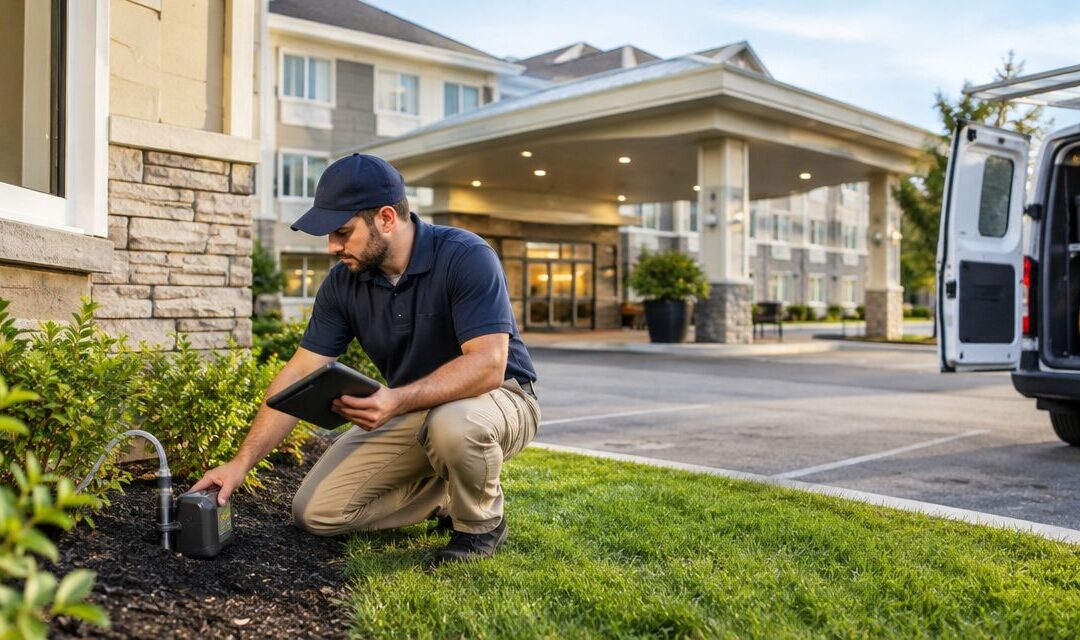
Best overall for a Michigan hotel or motel: a certified radon contractor with documented lodging-project experience. Best for independent verification: a separate testing professional paired with a qualified installer. Best local residential-service inquiry: Michigan Radon Control, with hotel suitability confirmed before hiring. This 2026 guide explains how to choose the right provider without confusing residential credentials with commercial-building experience.
- Best radon mitigation companies for hotels and motels Michigan: prioritize documented lodging experience and building-specific plans.
- Michigan Radon Control provides NRPP-certified residential radon services; confirm hotel project suitability before hiring.
- Separate testing from installation when you want an independent check of mitigation results.
- Require room-level testing records, a written installation scope, and post-installation verification.
Why this matters
It's completely natural to worry about radon when guests and staff spend time in your building. Testing gives you a concrete starting point. Radon is a radioactive gas you cannot see or smell, and exposure increases lung cancer risk.
A hotel is not simply a large house. Guest rooms, additions, foundation sections, mechanical spaces, and ventilation zones all need consideration when you commission testing and mitigation. Start with the building layout, not a promise that one fan will solve everything.
For your 2026 planning, the guide to radon testing for Michigan hotels and motels is a useful companion. Choose a provider who can explain what will be tested, what the proposed system will address, and how results will be verified.
What makes the best hotel radon mitigation company?
The strongest proposal makes the building, the work, and the acceptance process understandable. Use these criteria before comparing contractors:
- Relevant experience: Request examples involving hotels, motels, or comparable occupied commercial buildings. Ask what made those projects similar to yours.
- Credentials and insurance: Verify the named professional's current certification, relevant qualifications, and insurance for the proposed work. A company name is not a credential.
- Building plan: Require a foundation review, testing-location plan, and explanation of the proposed mitigation approach. Different wings deserve separate consideration.
- Guest coordination: Ask how drilling, access, noise, electrical work, and equipment placement will be coordinated with your staff.
- Verification: Define who performs follow-up testing, which locations are included, and what happens if the agreed target is not met.
- Maintenance: Require operating instructions, a service contact, inspection responsibilities, and a plan for responding to equipment problems.
Do not rank a contractor first because its residential reviews sound reassuring. Reviews help you assess communication. Comparable project records and a clear scope help you assess suitability for your property.
Hotel radon mitigation options at a glance
This comparison ranks hiring approaches by project fit, not companies by unsupported claims about hotel performance. Each option has a different purpose.
| Rank and option | Best for | Standout feature | Key limitation |
|---|---|---|---|
| Commercial radon mitigation contractor | A hotel needing building-wide assessment and installation | One accountable installation scope tied to the property's layout | Certification alone does not establish lodging experience |
| Independent testing professional plus qualified installer | An owner wanting separate measurement and installation responsibilities | Independent review of testing and follow-up results | Requires coordination between providers |
| Michigan Radon Control inquiry | A local residential-property question in Metro Detroit or Lansing | NRPP-certified testing, installation, and maintenance services for homeowners and realtors | Hotel-project suitability must be established separately |
A provider's category is only the starting point. Before awarding a 2026 project, apply the criteria above to the actual professionals and proposal.
1. Commercial radon contractor: best for hotel-wide mitigation
A commercial radon mitigation contractor evaluates the building and proposes a system for its foundations and occupied spaces. Your selection should rest on documented relevant work, not on the word commercial in an advertisement. Ask the contractor to explain how the proposed design addresses separate foundation sections and ventilation conditions.
Commercial radon contractor pros:
- Creates a single installation scope for the property.
- Gives you an accountable lead for system design and installation.
- Allows testing, access, and commissioning requirements to be addressed together.
Commercial radon contractor cons:
- A single-provider arrangement does not provide independent verification by itself.
- Residential certification or experience alone does not prove hotel-project competence.
- An incomplete proposal leaves room access, electrical responsibilities, and follow-up work unresolved.
Best for: Hotel and motel owners who need an integrated mitigation project across an occupied building.
Ask for a comparable project example and permission to contact its owner or manager. Then ask a practical question: what changed between the initial design and the final installation? A useful answer explains the building conditions and the decisions they required.
Verdict: Buy only after relevant experience, scope, and verification responsibilities are documented.
2. Independent testing plus installer: best for separate verification
This approach assigns measurement and installation to different professionals. The testing professional develops or reviews the measurement plan, while the installer addresses the identified radon problem. Agree on the follow-up process before installation begins so both providers work toward the same documented objective.
Independent testing plus installer pros:
- Separates measurement responsibilities from installation decisions.
- Gives ownership a distinct reviewer for follow-up results.
- Keeps test-location records central to the acceptance process.
Independent testing plus installer cons:
- Requires you to coordinate access, schedules, and reporting between providers.
- Unclear responsibilities create gaps when follow-up results require additional work.
- Independence does not replace the need to verify each professional's qualifications.
Best for: Owners who want a separate testing professional to verify the installer’s work.
Require both providers to use consistent room identifiers and building drawings. A report labeled only basement does not clearly identify the sampled location in a property with several wings. Your records should make each measurement traceable to its location and test conditions.
Verdict: Buy when separate verification matters and both scopes define the handoff.
3. Michigan Radon Control: best for a local residential inquiry
Michigan Radon Control provides NRPP-certified radon testing, mitigation system installation, and system maintenance for homeowners and realtors in Metro Detroit and Lansing. That makes the company a relevant inquiry for an associated residential property. For hotels and motels, confirm commercial scope and comparable experience before treating the company as an installation candidate.
Michigan Radon Control pros:
- Provides NRPP-certified radon services.
- Offers testing, mitigation installation, and maintenance.
- Serves homeowners and realtors in Metro Detroit and Lansing.
Michigan Radon Control cons:
- Its stated service scope is residential, not proof of hotel-project qualification.
- An NRPP credential does not by itself establish experience with your building type.
- A lodging project needs a separate discussion of testing coverage, design, and operating responsibilities.
Best for: Homeowners and realtors needing local residential radon services, including questions about a separate residence associated with a lodging property.
If you contact the company about a motel or hotel, identify the property type immediately. Explain the foundation layout, occupied areas, existing test results, and whether the work concerns the lodging building or a separate residence. That distinction prevents a residential inquiry from becoming an assumed commercial commitment.
Verdict: Hold a hotel hiring decision until project suitability is confirmed.
How this hiring order works
The order prioritizes hotel-project fit, then independent verification, then a local residential-service inquiry. It does not assign unsupported scores for response time, customer satisfaction, installation results, or lodging experience.
For a 2026 hotel project, the commercial contractor route is the default because it puts building-specific design and installation responsibility first. The separate-provider route suits owners who want independent measurement responsibilities. The residential inquiry route serves a different need and should not be mistaken for a hotel endorsement.
What radon numbers mean for your decision
EPA's A Citizen's Guide to Radon recommends fixing homes at 4 pCi/L or higher and considering mitigation between 2 and 4 pCi/L. The 4 pCi/L concentration is approximately 148 Bq/m³. These are published residential guidance values, not a statement of a Michigan hotel-specific legal requirement.
The distinction matters. Ask your testing professional to identify the applicable commercial-building protocol and explain the action criteria proposed for your property. Do not let a contractor substitute a familiar residential threshold for a complete hotel testing plan.
A result below an action level does not mean zero risk. Radon levels also vary with building conditions, so record the test dates, locations, duration, and operating conditions. Compare results with professional guidance rather than judging the building from one isolated reading.
Require a complete plan before authorizing work
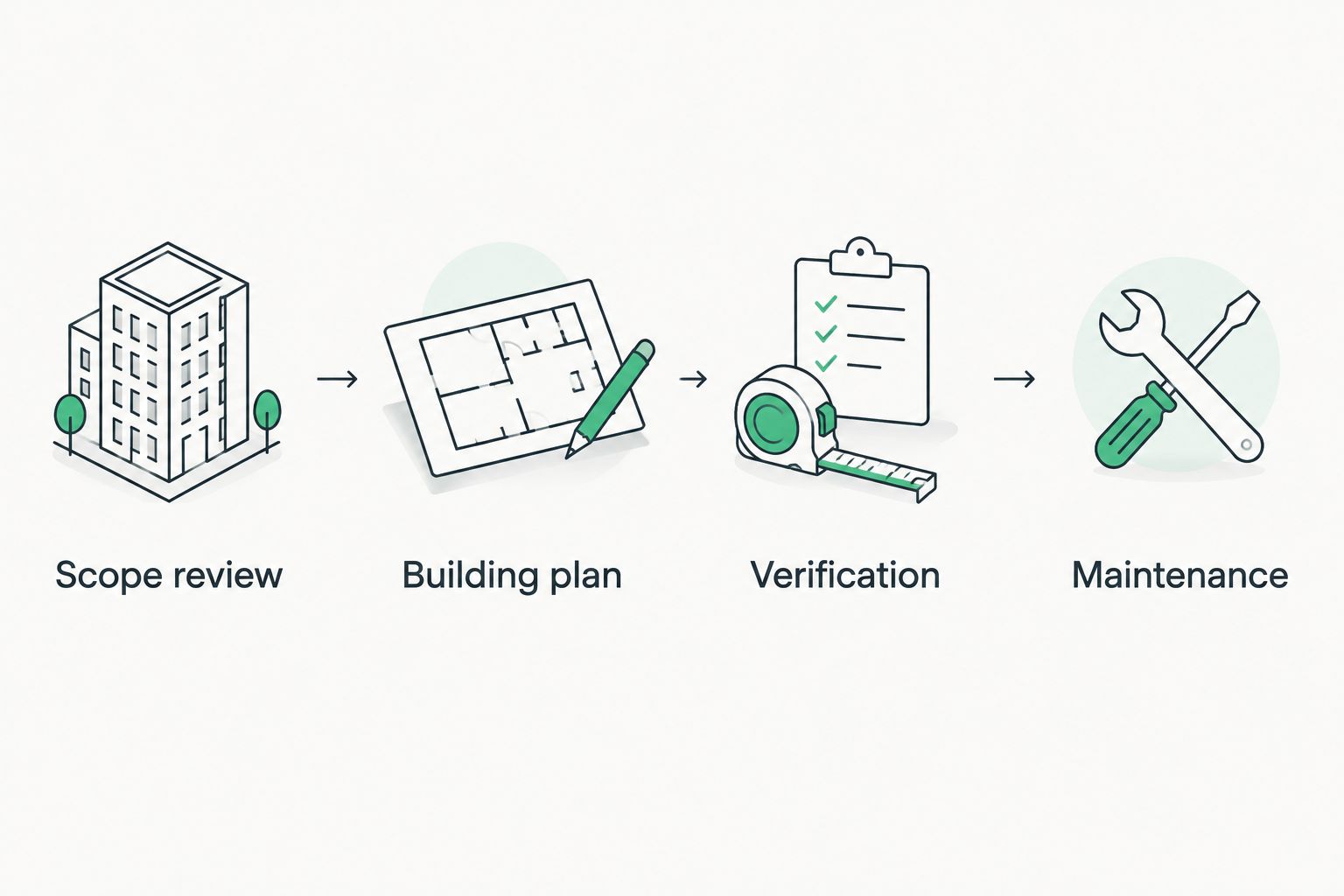
A useful proposal follows a clear sequence. You should understand each stage before anyone drills through a floor or chooses a fan location.
- Scope review: Identify buildings, wings, foundations, occupied spaces, previous results, and existing systems.
- Building plan: Document test locations and the proposed mitigation layout, including access and discharge placement.
- Verification: Specify follow-up measurements, reporting, acceptance criteria, and responsibility for corrective work.
- Maintenance: Assign routine checks, service contacts, operating instructions, and recordkeeping.
The sequence keeps installation connected to evidence. It also gives your manager a practical record to use after the contractor leaves.
Ask the contractor to identify exclusions in plain language. Electrical work, roof access, concealed utilities, room restoration, and follow-up testing should each have an assigned responsible party. An exclusion is manageable when you understand it before signing.
Questions to ask during a site visit
Bring a floor plan and your existing test reports. Walk through the property with the person responsible for the proposed design, not only the person preparing the estimate.
- Which foundation sections need separate assessment?
- Which guest rooms and staff areas belong in the testing plan?
- How will normal ventilation and building operation be documented?
- Where will the fan and discharge be placed?
- How will noise and maintenance access be addressed?
- Who coordinates electrical work and applicable approvals?
- Who receives the follow-up results and decides whether corrective work is needed?
For your 2026 records, write down the answers and include the agreed responsibilities in the proposal. A clear site visit should produce a clearer scope, not just a reassuring conversation.
Which provider should you choose?
Choose a certified contractor with documented comparable commercial experience and a written verification plan for the hotel itself. Use separate testing and installation providers when independent measurement is a priority.
Choose Michigan Radon Control for a residential radon-service inquiry in its stated Metro Detroit and Lansing service areas. For a lodging project, establish suitability first. A familiar local name is helpful, but your building needs its own assessment.
Before signing, make sure the proposal answers three questions: what areas does the work address, how will performance be measured, and who responds when something needs attention? If those answers are absent, wait for a revised scope.
FAQ
What’s the best radon mitigation company for a Michigan hotel?
Choose a certified contractor with documented comparable commercial-building experience and a hotel-specific testing, installation, and verification plan. Residential credentials alone do not establish suitability for a hotel.
Does Michigan Radon Control provide hotel radon mitigation?
Michigan Radon Control’s stated services cover NRPP-certified testing, mitigation installation, and maintenance for homeowners and realtors in Metro Detroit and Lansing. Ask the company to confirm hotel-project suitability and relevant experience before hiring for a lodging building.
Is independent testing better than having the installer test?
Independent testing separates measurement responsibilities from installation responsibilities. It is a useful arrangement when an owner wants a separate professional to verify results, but both providers still need appropriate qualifications and coordinated scopes.
What radon level means a hotel needs mitigation?
Ask a qualified commercial-building testing professional to identify the applicable protocol and action criteria for your hotel. EPA’s familiar 4 pCi/L action level is residential guidance and should not be presented as a Michigan hotel-specific legal threshold.
Can one radon test cover an entire motel?
Do not assume one test represents an entire motel. Have a qualified professional develop a location plan that considers the building layout, foundation sections, occupied areas, and relevant testing protocol.
Can guests remain during radon mitigation installation?
Guest access and room use need a project-specific work plan. Ask the contractor to identify affected areas, drilling and electrical work, noise, access restrictions, and any required coordination before scheduling installation.
How much does hotel radon mitigation cost?
Request a building-specific written proposal rather than applying a residential estimate to a hotel. The scope should identify assessment, installation, electrical responsibilities, follow-up testing, and exclusions so you can compare proposals on the same basis.
Does a running radon fan prove the hotel is protected?
No. A running fan or pressure indicator does not measure the building’s radon concentration. Follow-up radon testing verifies results in the locations covered by the testing plan.
One last thing
A system pressure gauge shows a pressure difference, not a radon concentration. The fan can be running while the building still needs attention. Keep the installation record and follow-up test report together so your staff understands the difference between checking equipment and verifying indoor radon levels.
Make verified results the finish line—not the day the fan turns on.
Related guides
- Verify a radon contractor's insurance and bonding
- Schedule radon testing after mitigation installation
- Maintain your radon mitigation system