
A radon mitigation system only works if it keeps running, and most homeowners never check it after installation day. This guide walks through the exact maintenance routine that keeps a system pulling radon out of your home year-round, plus the warning signs that mean it's time to call someone.
- Check the manometer monthly – a flat or empty gauge means the fan has stopped and radon is building back up.
- Radon mitigation system maintenance in 2026 costs little beyond a fan replacement every 5-7 years.
- Retest indoor radon every two years, or immediately after any fan or pipe repair.
- A silent fan or a gurgling sump pump are the two most common signs your system needs service.
Why this matters
A radon mitigation system is a mechanical device with a moving part – the inline fan – and moving parts wear out. The EPA's action level for indoor radon is 4 pCi/L, and a system that quietly fails can let levels climb back above that line in a matter of weeks, not months.
Michigan's climate makes this worse. Freeze-thaw cycles crack sealant around the vent pipe, ice can clog exterior vent caps, and heavy spring rain raises groundwater pressure under slabs, which changes how much suction the fan needs to do its job. None of that means the system is failing. It means it needs eyes on it a few times a year.
If you had a system installed through Michigan Radon Control or another certified contractor, the good news is that maintenance is mostly visual. You're checking gauges and listening for sound, not opening up the pipe.
What you'll need
- 5 minutes a month for a manometer check
- A flashlight for inspecting the vent pipe termination outside
- A short-term or continuous radon test kit for retesting every two years
- The installation paperwork noting fan model and install date
- A ladder if your vent pipe exits through the roofline
The steps
1. Check the manometer every month
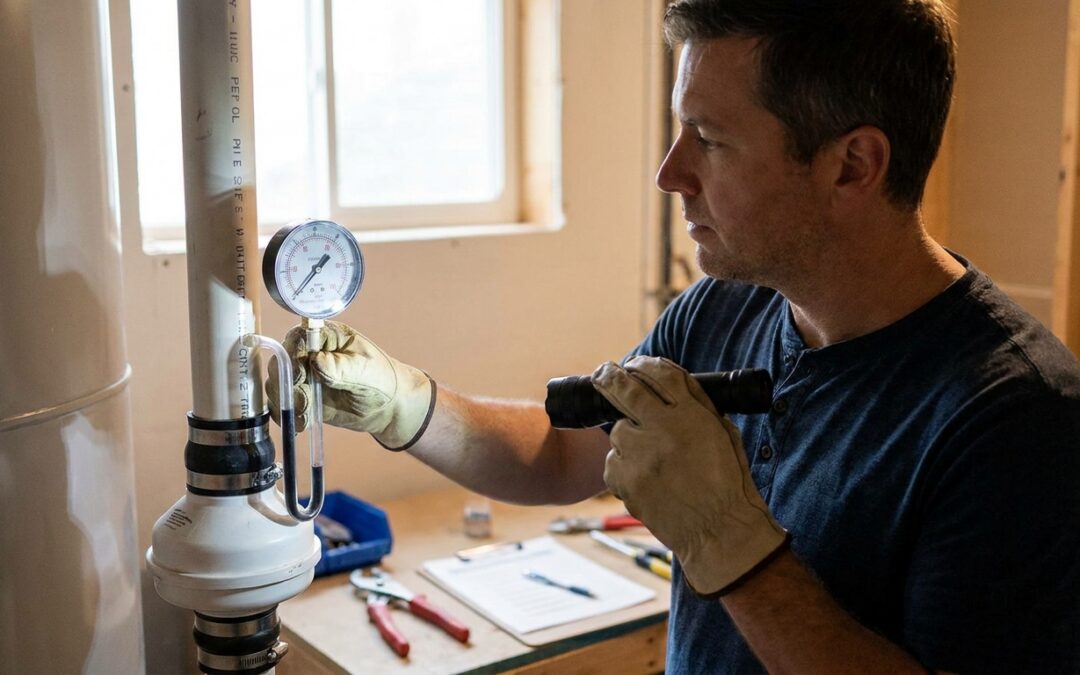
The U-tube manometer near your fan is the simplest diagnostic tool you have. It's a small tube with colored liquid that shows the pressure differential the fan is creating in the pipe below your slab.
A healthy reading typically sits between the marked range shown on the gauge sticker installed with your system – usually around 0.5 to 2.0 inches of water column, but the exact range depends on your specific setup. If the liquid sits flat, level, or reads zero, the fan has stopped moving air. That's the single most common maintenance issue homeowners catch, and catching it early is the whole point of checking monthly instead of yearly.
Common mistake: ignoring a gauge that's slowly drifting rather than flat. A slow drift over several weeks usually means a partial blockage, not a full failure – worth a call before it becomes a full stop.
2. Listen for the fan
Radon fans run continuously, 24 hours a day, every day of the year. Most are quiet enough that you forget they're running, which is exactly why a sudden silence is easy to miss.
Stand near the fan location – usually in the attic, garage, or exterior wall – once a month and listen for the low hum. No hum means no power, a tripped breaker, or a burned-out motor. Fans in Michigan homes typically last 5 to 7 years before the bearings wear out, so a fan installed in 2020 or earlier is due for a listen-and-check routine more often than a newer one.
3. Inspect the exterior vent termination
Walk outside and look at where the vent pipe exits your roof or exterior wall. The termination point needs to stay clear of ice buildup, bird nests, leaves, and snow drifts, because a blocked exit backs pressure into the whole system.
Do this check twice a year at minimum: once in late fall before snow accumulates and once in early spring after thaw. Michigan winters are the biggest culprit behind blocked vent terminations – ice dams and snow load can seal a pipe opening without any visible sign from inside the house.
Common mistake: assuming a rooftop termination is fine because you can't see a problem from the ground. Get the ladder out or use binoculars if the roofline is steep.
4. Retest indoor radon levels every two years
The manometer tells you the fan is running. It doesn't tell you what your actual indoor radon level is. Retesting closes that gap.
Run a short-term test kit for 48 hours in the lowest livable level of the home, following the same placement rules as your original test – away from drafts, closed windows, away from bathrooms and kitchens. If levels come back above 4 pCi/L despite a functioning system, something in the setup needs adjustment, not just a fan swap.
5. Replace the fan when it fails, not before
Radon fans don't need preventive replacement on a fixed schedule the way an HVAC filter does. Replace it when the manometer reads flat, the fan goes silent, or it starts making a grinding or rattling sound that wasn't there before.
Most fans carry a rated lifespan of 5 to 7 years under continuous operation, so budget for a replacement in that window rather than treating it as an emergency expense. A fan swap on an existing system is far less invasive than a full radon mitigation system installation, since the pipe and slab penetration are already in place.
6. Watch the system after major weather events
Heavy rain, spring thaw, and prolonged drought all change groundwater levels and soil pressure under your slab. After any of these events, do an extra manometer check outside your normal monthly routine.
Homes with sump pumps see this most: if your radon mitigation system shares a pit with a sump pump, rising groundwater can affect both systems at once, and a sealed sump lid that's cracked or lifted will let radon bypass the mitigation piping entirely.
7. Schedule a professional check annually
A yearly visit from a certified technician catches what a homeowner's eye can miss – pipe joint seals breaking down, fan motor wear that hasn't failed yet, or a sealed slab penetration that's developed a hairline gap. This is a 20 to 30 minute visit for most single-family homes.
An annual check is especially worth scheduling if you're planning to sell, since a documented, functioning system with recent test results makes radon disclosure conversations with buyers far simpler.
Get your system checked before selling
NRPP-certified technicians inspect and service existing systems across Metro Detroit and Lansing.
Troubleshooting
- Fan is silent and manometer reads zero: Check the breaker first – fans are often on a dedicated circuit that trips without other signs. If power is fine, the fan motor has likely failed and needs replacement.
- Manometer reading is slowly dropping over weeks: Usually a partial blockage in the pipe or a failing fan bearing. Schedule a service call before it drops to zero.
- Gurgling or bubbling sound near the sump pit: Groundwater is rising and interacting with the sealed sump lid. Confirm the lid seal hasn't cracked, especially in homes where the mitigation system and sump pump share the same pit.
- Retest comes back above 4 pCi/L despite a running fan: The system may need a larger fan, an additional suction point, or better slab sealing – common in slab-on-grade construction where multiple cracks provide separate entry paths for soil gas.
- Ice or condensation forms inside the pipe near the fan: Normal in Michigan winters on exterior-mounted fans. It becomes a problem only if it's freezing solid and blocking airflow – insulating the exposed pipe section usually resolves it.
- New musty smell near the vent termination: Usually vented soil gas mixing with exterior air in still weather, not a sign of a leak indoors. If the smell appears inside the home, call for an inspection immediately.
Tools and resources
- Manometer gauge sticker from your original install paperwork
- Short-term radon test kit for the two-year retest cycle
- How to prepare your home for a radon mitigation system if you're planning an upgrade or second suction point
- Radon mitigation for slab-on-grade homes if your home has multiple entry points to manage
- Best radon mitigation contractors in Metro Detroit for scheduling an annual professional check
What to do next
If your system is more than 5 years old and you haven't retested since installation, book a retest before your next maintenance check rather than after. A system that's been quietly underperforming for a year is a cheaper fix now than a full remediation later, and 2026 test kits return results faster than they did even a few years ago.
FAQ
How often should I check my radon mitigation system?
Check the manometer gauge once a month and inspect the exterior vent termination at least twice a year. A functioning system needs monthly eyes-on checks, not constant monitoring.
What does it mean if my radon mitigation system alarm is sounding?
An alarm means the fan has lost pressure or stopped running entirely. Check the breaker first, then call for service if power is confirmed and the fan is still silent.
How long does a radon mitigation fan last?
Most radon fans last 5 to 7 years running continuously before the motor or bearings wear out. Fans installed before 2020 are due for closer monitoring in 2026.
Can I clean or service the mitigation pipe myself?
Homeowners can clear the exterior vent termination of leaves, snow, or debris safely. Anything involving the pipe seal, fan wiring, or slab penetration should go to a certified technician.
Does Michigan require radon system inspections for home sales?
Michigan requires radon disclosure during real estate transactions, and a documented, recently tested mitigation system makes that disclosure straightforward for sellers.
How much does radon mitigation system maintenance cost?
Routine maintenance costs little beyond your own time for monthly checks. The main expense is a fan replacement every 5 to 7 years plus an annual professional inspection.
What happens if my radon fan stops working and I don’t notice?
Radon levels can climb back toward or above the EPA action level of 4 pCi/L within weeks of a fan failure. Regular manometer checks catch this before it becomes a health concern.
Should I retest radon levels after any system maintenance?
Yes – retest after any fan replacement, pipe repair, or slab sealing work. A short-term 48-hour test confirms the fix actually restored proper suction.
One last thing
The manometer gauge is the cheapest diagnostic tool in your entire house and most homeowners walk past it for years without a glance. A flat gauge caught in week one is a five-minute fix; a flat gauge caught after six months is a season of radon exposure you can't get back. Look at it on the same day you check your smoke detector batteries – the habit sticks better that way.
Related guides
- How to prepare your home for a radon mitigation system
- Radon mitigation system installation for Michigan homes
- Radon mitigation for homes with sump pumps
- Radon mitigation for slab-on-grade homes
- Best radon mitigation contractors in Metro Detroit