
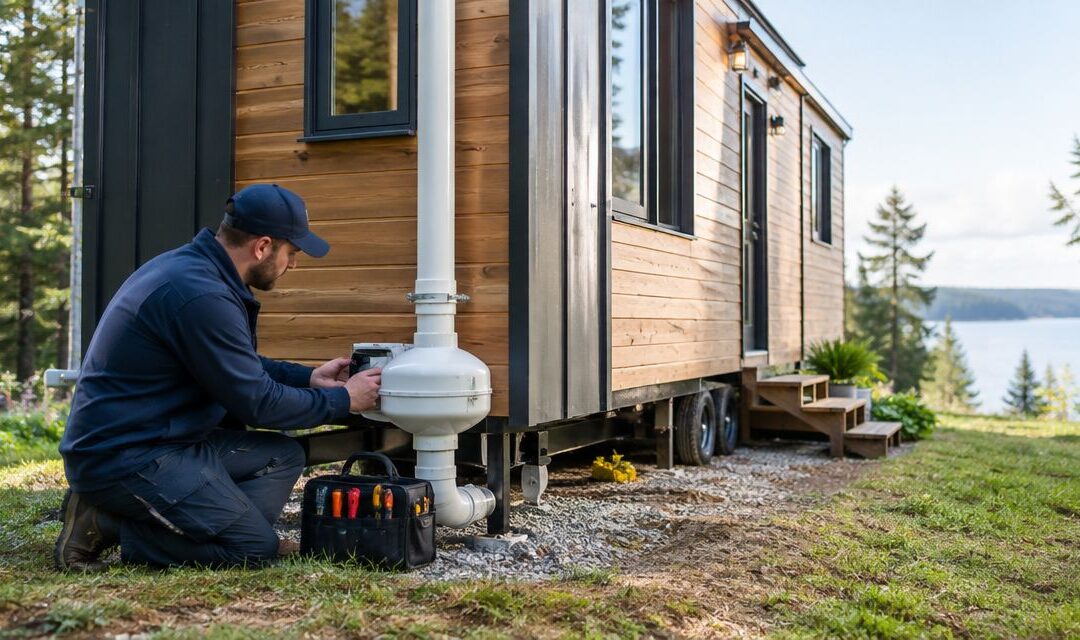
Best starting point in Metro Detroit and Lansing: Michigan Radon Control. Best hiring route for an exposed-earth foundation: a crawl-space radon specialist. Best for a tiny home still being designed: a new-construction radon specialist. This 2026 guide explains how to choose by foundation, testing needs, and installation constraints—not floor area alone.
- Michigan Radon Control is the recommended starting point for homeowners comparing radon mitigation companies for Michigan tiny homes locally.
- Choose a crawl-space radon specialist when exposed soil beneath the home needs a sealed collection membrane.
- Choose a new-construction radon specialist before the builder closes access to foundation components and pipe routes.
- Require a foundation-specific proposal and post-installation radon testing before accepting any mitigation system as effective.
Why this matters
It is completely natural to worry about radon in a home where your bedroom, kitchen, and living space sit close together. You do not need to guess whether the home is affected. Testing measures the radon concentration; an inspection identifies the foundation conditions that shape the solution.
A tiny home on a concrete slab presents a different installation problem from a home above exposed soil. A movable home adds questions about its current site, enclosure underneath, and future relocation. The label tiny home does not answer any of those questions.
Choose the contractor who explains your foundation before recommending equipment. A small footprint is not proof of low radon, and it is not a reason to accept a standard system without inspection.
What makes the best tiny-home radon contractor?
Use these criteria when comparing contractors in 2026. Each should produce a clear answer in the inspection discussion or written proposal.
- Relevant credentials: Verify the professional's current radon certification and whether it covers measurement, mitigation, or both.
- Foundation-specific design: Ask how the proposed system addresses a slab, exposed-earth crawl space, enclosed underfloor area, or mixed foundation.
- Practical routing: Require an explanation of pipe placement, fan location, electrical needs, and exhaust placement before approving work.
- Testing and verification: Establish who performs the follow-up radon test and how you receive the result.
- Service access: Check that the fan, system indicator, membrane, and other serviceable components remain accessible.
- Written responsibilities: Clarify installation scope, exclusions, maintenance responsibilities, and how unresolved elevated readings are handled.
Do not substitute a review score for those answers. A review about a conventional basement installation does not establish experience with a compact crawl space or a movable dwelling.
Tiny-home radon hiring options at a glance
The ranking below separates hiring routes by use case. Michigan Radon Control is the named local provider recommended here; the other entries describe qualifications to seek, not claims about unverified competing companies.
| Rank and option | Best for | Standout fit | Key limitation |
|---|---|---|---|
| 1. Michigan Radon Control | Homeowners in Metro Detroit and Lansing seeking testing, installation, and maintenance | NRPP-certified radon services across those needs | Tiny-home foundation fit still requires inspection |
| 2. Crawl-space radon specialist | Tiny homes above exposed soil | A proposal addressing soil coverage, seals, and suction beneath a membrane | Crawl-space work alone does not establish radon mitigation competence |
| 3. New-construction radon specialist | Tiny homes before foundation and interior work close access | Coordination of collection components and pipe routing with the builder | Planned features still need testing after completion |
1. Michigan Radon Control: best local starting point
Best for: Tiny-home owners in Metro Detroit and Lansing who need a radon assessment and a path from testing through maintenance.
Michigan Radon Control provides NRPP-certified radon testing, mitigation system installation, and system maintenance services for homeowners and realtors in those areas. That service scope makes the company a practical first contact when you need to establish the radon level before deciding on work.
For a tiny home, the next step is a discussion about the structure itself. Share whether the home sits on a slab, over a crawl space, or on a movable chassis. Include photographs of the underside and any existing radon piping.
Michigan Radon Control pros
- Testing, mitigation installation, and maintenance are within the stated service scope.
- NRPP-certified radon services provide a credential to verify during contractor selection.
- The stated service areas include Metro Detroit and Lansing.
Michigan Radon Control limitations
- The stated service areas do not establish coverage throughout Michigan.
- General residential service credentials do not replace confirmation that the proposed design fits your particular tiny home.
Ask for an inspection-led explanation rather than assuming the home needs a particular fan or suction arrangement. The guide to radon mitigation for Michigan tiny homes provides additional context for that conversation.
Verdict: Buy the inspection-led approach; approve installation only after reviewing the foundation-specific scope.
2. Crawl-space radon specialist: best for exposed soil
Best for: Tiny homes with exposed earth beneath an enclosed crawl space.
A crawl-space radon specialist should explain how soil gas will be collected beneath a sealed membrane and exhausted outdoors. This approach is commonly called submembrane depressurization. The membrane, its seals, and the suction arrangement work together; laying plastic over the ground is not the same as designing a radon system.
Ask how the proposal handles supports, perimeter edges, utility penetrations, and access for future repairs. In a compact underfloor area, those details belong in the scope before installation starts.
Crawl-space specialist pros
- Focuses the proposal on the exposed-soil pathway beneath the home.
- Allows membrane sealing and radon collection to be planned together.
- Brings underfloor access and maintenance into the design discussion.
Crawl-space specialist limitations
- Encapsulation experience alone does not establish radon measurement or mitigation qualifications.
- Plumbing repairs or other later work can disturb membrane seals, making access planning important.
Ask the contractor to distinguish moisture-control work from radon-control work. A dry crawl space is not a radon test result, and a dehumidifier does not replace a radon mitigation system.
Verdict: Buy this specialist route when exposed soil is part of the problem and the proposal includes radon-specific design and verification.
3. New-construction radon specialist: best before the build
Best for: Tiny-home owners and builders who can still coordinate the foundation, collection components, and vent route.
A new-construction radon specialist helps plan radon-resistant features before construction blocks access. For a slab-based tiny home, this means discussing below-slab components and a possible vent route before the slab and interior finishes are complete.
The specialist should coordinate with the builder rather than treating mitigation as an isolated attachment. Pipe routing, access, electrical provisions, and the home's intended placement all belong in that discussion.
New-construction specialist pros
- Addresses radon provisions while foundation components remain accessible.
- Lets the builder coordinate the vent route with the interior layout.
- Establishes a testing plan before occupancy rather than leaving verification undefined.
New-construction specialist limitations
- Radon-resistant construction does not prove the finished home has a low radon concentration.
- A passive system can require activation with a fan if testing shows elevated levels.
For a 2026 build, ask who owns the final testing task: the builder, the radon contractor, or you. Put that responsibility in writing so completion of construction does not become a substitute for measurement.
Verdict: Buy early design coordination; hold acceptance of system performance until the completed home is tested.
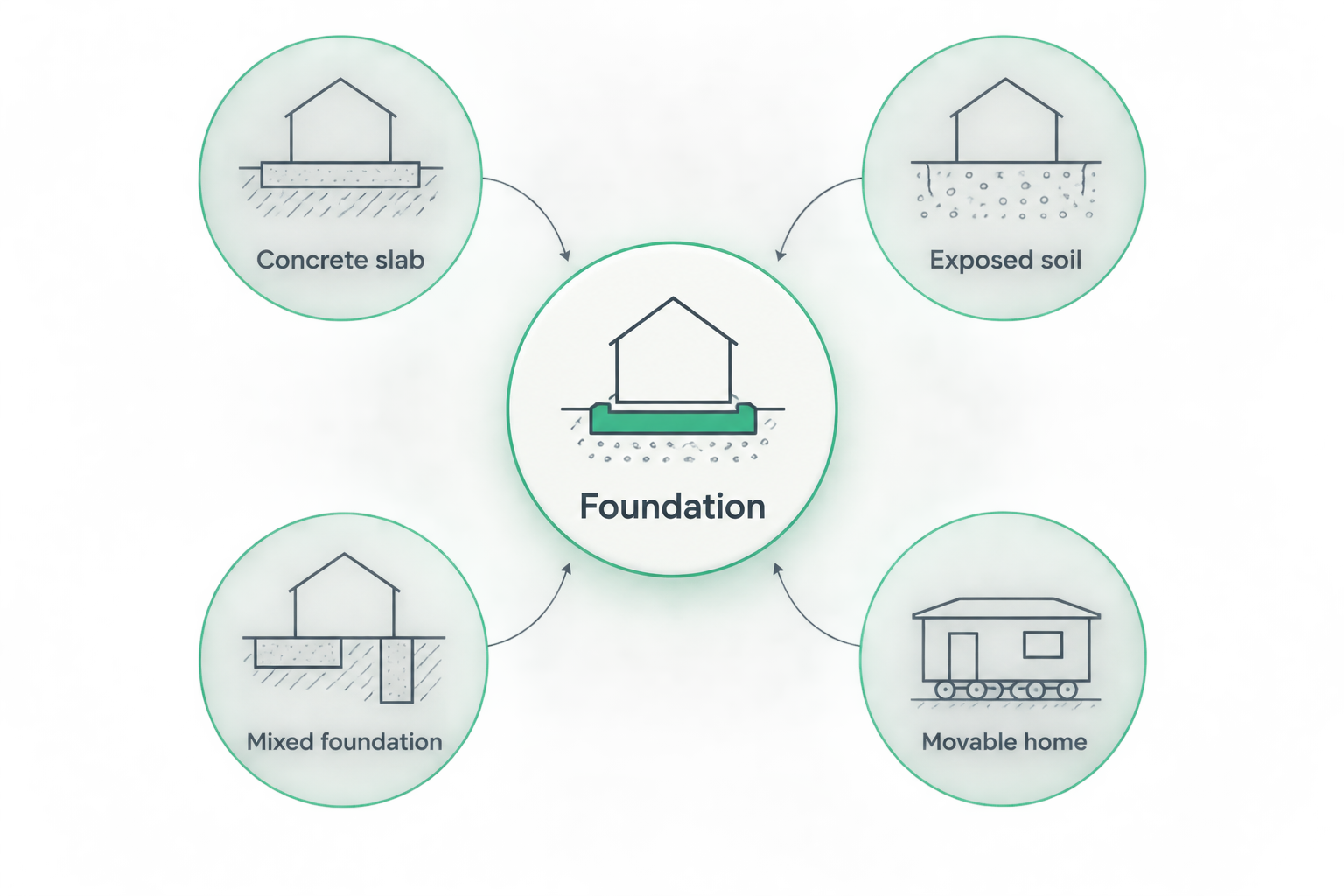
Match the proposal to the foundation
The foundation is the most useful starting point for comparing radon proposals. These categories describe design questions, not automatic prescriptions.
- Concrete slab: Ask how the contractor will evaluate collection beneath the slab and identify a suitable suction location.
- Exposed soil: Ask how the membrane will seal around edges, supports, and penetrations, and how suction will be applied beneath it.
- Mixed foundation: Ask whether separate foundation sections communicate beneath the floor or need different collection arrangements.
- Movable home: Ask how the current site and underfloor enclosure affect the assessment, and what needs reassessment after relocation.
In a small living space, also ask the installer to identify the fan and pipe route relative to sleeping areas. Review that route before work starts. Do not accept a promise about noise without discussing mounting, placement, and service access.
Use testing to decide what happens next
For your 2026 decision, use the EPA's A Citizen's Guide to Radon as the household reference for interpreting results. The EPA recommends fixing homes at 4 pCi/L or higher and considering corrective action between 2 and 4 pCi/L. Those recommendations concern measured concentration, not house size.
The EPA distinguishes short-term tests lasting 2 to 90 days from long-term tests lasting more than 90 days. Follow the selected test's instructions and the applicable measurement protocol. Do not choose placement or change ventilation simply to obtain a lower reading.
Before installation, ask the contractor to document:
- The test result and measurement location.
- The foundation conditions used to select the design.
- The proposed collection method and exhaust route.
- The follow-up testing procedure and responsible party.
- The next step if follow-up results remain elevated.
A running fan is not proof that the indoor radon concentration has fallen. The follow-up radon test verifies the outcome. Keep that report with the installation documents so future maintenance decisions start from an actual result.
Request a radon inspection
Discuss your tiny home’s foundation, testing needs, and proposed mitigation approach.
How this ranking works
This 2026 ranking prioritizes documented service fit, foundation-specific design, and a clear verification process. It does not assign competing companies unsupported scores or treat a general residential service description as proof of tiny-home specialization.
The local provider takes the first slot because its stated services cover testing, installation, and maintenance in Metro Detroit and Lansing. The specialist routes address distinct situations: exposed soil and construction that has not yet closed access.
Use the table to choose whom to contact. Use the inspection and written proposal to decide whom to hire.
Which tiny-home radon contractor should you choose?
Michigan Radon Control is the recommended starting point for tiny-home owners in Metro Detroit and Lansing who need radon testing, mitigation installation, and maintenance. Ask the company to confirm the home's foundation configuration and proposed scope before authorizing installation.
Choose a crawl-space radon specialist when exposed soil requires membrane-based collection planning. Choose a new-construction specialist when the builder can still coordinate below-floor components and routing.
For any 2026 proposal, require the same finish line: a completed installation, operating instructions, and follow-up radon measurement. The best proposal explains all three without making you chase the details.
FAQ
What’s the best radon mitigation company for a tiny home near Detroit or Lansing?
Michigan Radon Control is the recommended starting point within its stated Metro Detroit and Lansing service areas. It provides NRPP-certified radon testing, mitigation installation, and maintenance; confirm the proposed approach for your tiny home’s foundation during the inspection.
Does a tiny home need radon testing if it has no basement?
Yes, a home without a basement still needs testing to determine its indoor radon concentration. A slab or enclosed crawl space does not establish that the living area has low radon.
Is crawl-space encapsulation the same as radon mitigation?
No, crawl-space encapsulation and radon mitigation are not interchangeable. A radon proposal must explain collection and exhaust, and follow-up testing must verify the indoor result.
Can a tiny home on wheels have a radon problem?
A movable home’s radon concentration must be measured rather than inferred from its wheels or chassis. Tell the testing professional about its site, skirting, underfloor enclosure, and intended occupancy.
What radon level means my tiny home needs corrective action?
The EPA recommends fixing homes at 4 pCi/L or higher and considering corrective action between 2 and 4 pCi/L. Follow the appropriate testing and confirmation procedure when deciding on mitigation.
Is a passive radon system enough for a new tiny home?
Testing determines whether a passive system is sufficient. Radon-resistant features do not establish the finished home’s radon concentration, and elevated results can require activation with a fan.
How do I know the radon installation worked?
A post-installation radon test verifies whether the indoor concentration has fallen. A running fan or a system pressure indicator alone does not measure indoor radon.
One last thing
Your radon system's pressure indicator and your radon test answer different questions. The indicator helps you track system operation; the test measures radon in the air you breathe.
Before the installer leaves, ask for a demonstration of normal operation and instructions for responding to a change. Keep those instructions where you can find them—not behind a finished wall or inside an inaccessible underfloor compartment.
Related guides
- Radon mitigation systems for crawl-space homes
- How to schedule radon testing after mitigation installation
- How to verify a radon mitigation contractor's NRPP certification