
Installing a radon mitigation system is one of the most effective ways to reduce radon levels in a home. But many Michigan homeowners assume that once the system is installed, the job is done forever.
In reality, radon systems require occasional monitoring and simple maintenance to ensure they continue protecting your household.
Because Michigan has naturally occurring uranium in its soil, radon gas can accumulate in homes throughout the state. In fact, the average indoor radon level in Michigan is about 3.5 pCi/L, which is already close to the EPA action level of 4.0 pCi/L. Studies also estimate that around 12% of homes in Michigan exceed the EPA’s recommended safety threshold, making regular testing and proper mitigation system maintenance especially important.
Below is a practical guide to maintaining your radon mitigation system and recognizing when something might not be working correctly.
Key Parts of a Typical Michigan Radon Mitigation System
Understanding the main components of a mitigation system makes it much easier to monitor its performance.
Most systems installed in Michigan homes include the following parts:
Radon Fan
The fan is the heart of the system. It runs continuously and creates suction that pulls radon gas from beneath your home and vents it safely outside.
These fans are typically installed in the attic, garage, or on the exterior of the house.
PVC Vent Pipe
A network of PVC pipes carries radon gas from beneath the basement slab or crawlspace to the outside of the home. The pipe usually runs vertically and exits above the roofline.
This allows the radon gas to disperse safely away from windows and ventilation openings.
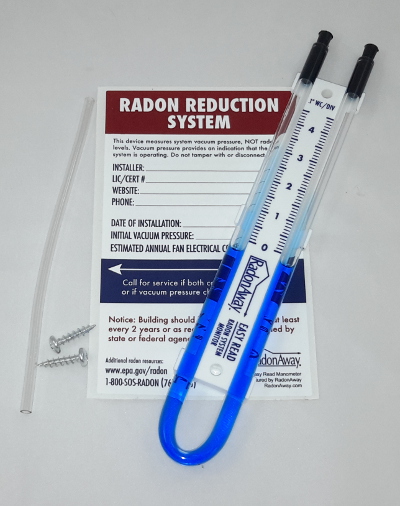
Manometer (U-Tube Gauge)
The manometer is a small U-shaped gauge attached to the pipe, usually located in the basement.
It shows the pressure difference created by the fan.
When the system is working properly, the two liquid levels in the tube should be uneven. If the levels are equal, it may indicate the fan has stopped working.
Vent Termination
The pipe must release radon above the roofline to prevent the gas from re-entering the home through windows or attic vents.
Sealed Sump Covers and Foundation Openings
If the system draws air from a sump pit or foundation cracks, these areas should be sealed to prevent soil gas from leaking back into the home.
Knowing where these components are located will make routine checks quick and easy.
Monthly Radon System Checks Homeowners Should Do
You don’t need technical training to make sure your radon system appears to be working.
A quick monthly inspection can catch many problems early.
1. Check the Manometer
Look at the U-tube gauge attached to the pipe.
A normal reading shows one side higher than the other, indicating suction from the fan.
If the liquid levels suddenly become equal, the fan may not be running.
2. Listen to the Fan
Radon fans typically produce a low, steady hum.
Warning signs include:
- Grinding noises
- Loud rattling
- Sudden silence
Any of these may indicate the fan is failing.
3. Inspect the Exterior Vent Pipe
Michigan winters can cause snow buildup, ice, or debris around the vent pipe.
Occasionally check that the pipe outlet is clear and unobstructed.
Bird nests and leaves can also block discharge points.
4. Check Seals Around the System
Look for:
- Loose pipe connections
- Cracked caulking around sump covers
- Openings in the basement floor
Maintaining airtight seals helps the system maintain proper suction.
5. Confirm Power to the Fan
Make sure the fan still has power and the circuit breaker hasn’t tripped.
These quick inspections usually take only a few minutes and can prevent long periods of unnoticed system failure.
Signs Your Radon Mitigation System May Be Failing
Even well-installed systems can develop problems over time.
Watch for these common warning signs:
- The manometer levels become equal
- The fan becomes very loud or completely silent
- Your radon test results increase
- Visible damage to pipes or fittings
- Water issues near sump-based mitigation systems
If you notice any of these problems, it’s best to schedule a professional inspection.
When Michigan Homeowners Should Retest for Radon
Even if you already have a mitigation system installed, periodic radon testing is still recommended.
Because radon levels in Michigan are often elevated compared with the national average, ongoing testing helps ensure your system continues to perform properly over time. Some counties and soil regions have significantly higher radon potential than others, making follow-up testing an important part of home maintenance.
Most experts recommend testing every two years, even if a mitigation system is installed.
You should also test again if:
- A mitigation system was newly installed
- The radon fan was replaced
- Major renovations were completed
- A basement was finished
- HVAC systems were upgraded
- Structural changes were made to the home
These changes can alter airflow and pressure inside the house, which may impact radon levels.
If you want more detailed guidance, see our guide explaining how often you should test a working system.
When to Call a Professional Radon Contractor in Michigan
Some radon system problems require professional service.
A certified radon contractor can test airflow, evaluate system pressure, and confirm that radon levels remain safe.
You should contact a professional if:
- The radon fan stops working
- Radon levels remain above 4.0 pCi/L
- Pipes become disconnected
- The system appears to lose suction
- You want a routine inspection for peace of mind
Typical Radon System Service Costs in Michigan
Costs vary depending on the repair, but typical ranges include:
- Radon fan replacement: $300–$700
- System inspection: $100–$250
- Professional radon test: $75–$200 depending on the test type
Most radon fans operate continuously and typically last 5–10 years before needing replacement.
Choosing a qualified radon mitigation contractor with experience in Michigan homes can help ensure the system continues operating correctly.
Frequently Asked Questions
How do I know if my radon mitigation fan is working?
Check the manometer on the pipe. If the two liquid levels are uneven, the fan is creating suction and likely operating normally.
What should the manometer reading look like?
The two sides of the U-tube should not be level. One side should be higher than the other, indicating the system is pulling air.
How often should Michigan homes with mitigation systems be tested for radon?
Most experts recommend testing every two years, even if a mitigation system is already installed.
How long do radon mitigation fans last?
Most radon fans last 5–10 years before needing replacement.
Keep Your Radon System Protecting Your Home
A radon mitigation system is one of the most important safety improvements you can make to a Michigan home. But like any home system, it works best when it’s monitored and maintained.
Checking the manometer, listening for unusual fan noise, and retesting periodically helps ensure your system continues protecting your household.
If you already have a mitigation system installed, consider scheduling a quick system check and follow-up radon test to confirm everything is working properly.
A small investment in maintenance can help keep your home safe for years to come.
Protect Your Family from Radon Exposure
Don’t wait until it’s too late. Schedule your professional radon test today and breathe easier knowing your home is safe.
Schedule Your Radon Test Now✓ NRPP Certified | ✓ EPA Standards Guaranteed | ✓ Fast Results