

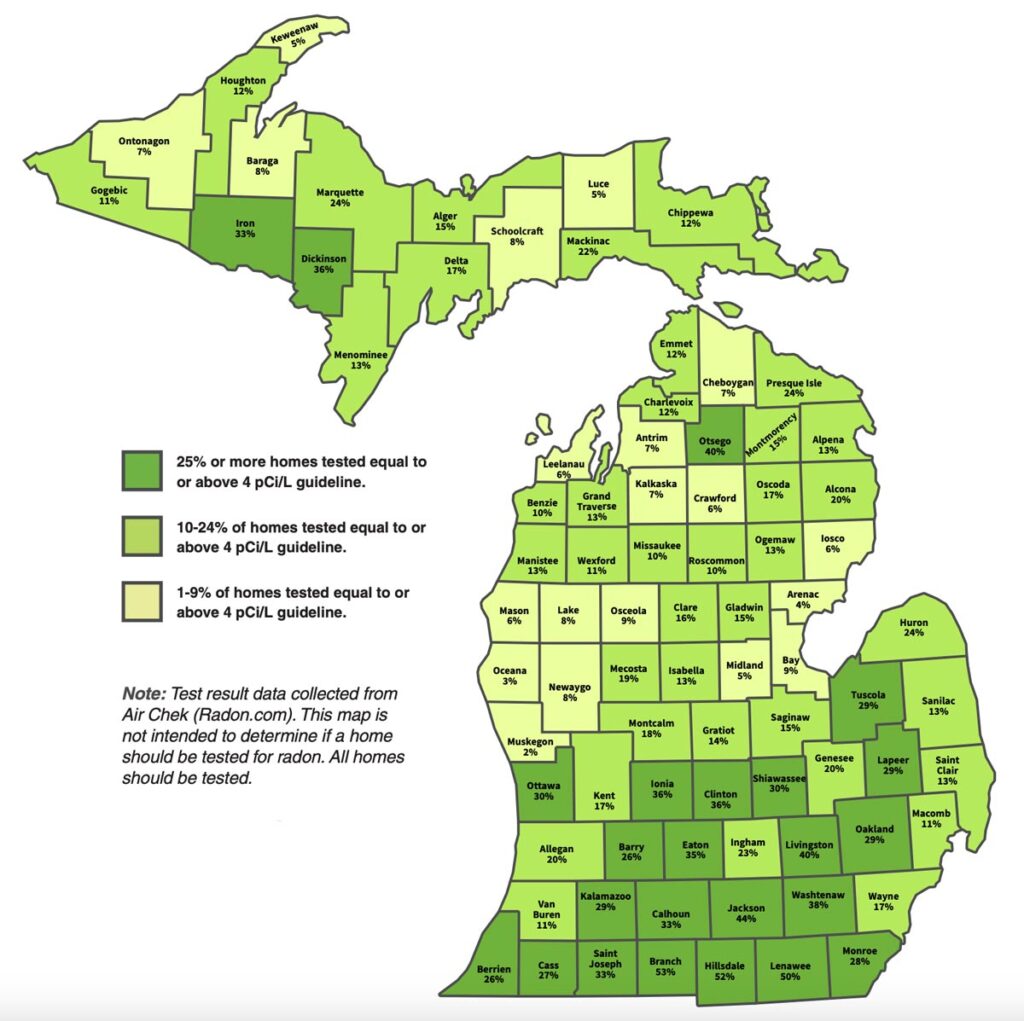
Michigan’s elevated radon levels aren’t random—they’re tied directly to our state’s unique geology, climate, and home construction patterns. Many Michigan counties, including Oakland, Washtenaw, Livingston, and Macomb, consistently report radon levels above the national average. Understanding why helps homeowners take the proper steps to protect their families.
Michigan’s Geology Naturally Produces Higher Radon Levels
Radon begins underground. Michigan’s soil and bedrock contain higher concentrations of uranium, a naturally occurring mineral that breaks down into radon gas. As this gas moves upward through the soil, it follows the path of least resistance, entering homes through:
- Foundation cracks
- Sump pits and drain tiles
- Crawl spaces
- Gaps around pipes
- Unsealed joints in concrete
Because radon is colorless and odorless, homeowners often have no idea it’s present unless they test.
Cold Winters and Tightly Sealed Homes Increase Indoor Radon
Michigan’s long winter season plays a major role in elevated indoor radon levels. When homes remain sealed tightly for months, the natural airflow that helps dilute radon is significantly reduced. Energy-efficient construction, while beneficial for heating costs, also creates ideal conditions for radon to accumulate indoors.
Basements, which are common in Michigan, add another factor. Since they sit below grade, they’re in direct contact with soil and are a primary entry point for radon gas.

Lack of Awareness Leads to Delayed Testing
Despite Michigan’s well-documented radon risk, many homeowners still aren’t familiar with how radon forms or why it’s dangerous. Testing is often performed only during a real estate transaction, and even then, follow-up mitigation may be delayed or never completed.
This lack of awareness allows high radon levels to go undetected for years, increasing long-term exposure and health risks.
Radon Doesn’t Follow Neighborhood Patterns
A common misconception is that radon issues only affect certain areas or older homes. In reality:
- Urban and suburban homes are just as vulnerable as rural homes.
- Two neighboring houses can have completely different radon levels.
- Radon levels cannot be predicted by ZIP code, home age, foundation type, or building materials.
The only way to know your home’s radon level is through proper testing.
Michigan Homeowners Have Effective Solutions
The good news: radon testing and mitigation in Michigan are straightforward, affordable, and highly effective. At Michigan Radon Control, we use advanced measurement tools and custom mitigation systems designed for your home’s structure. A properly installed mitigation system can consistently reduce radon levels to well below the EPA’s recommended action level.
Understanding why Michigan has elevated radon levels—and how the gas enters homes—is the first step toward protecting your health and improving your indoor air quality.