
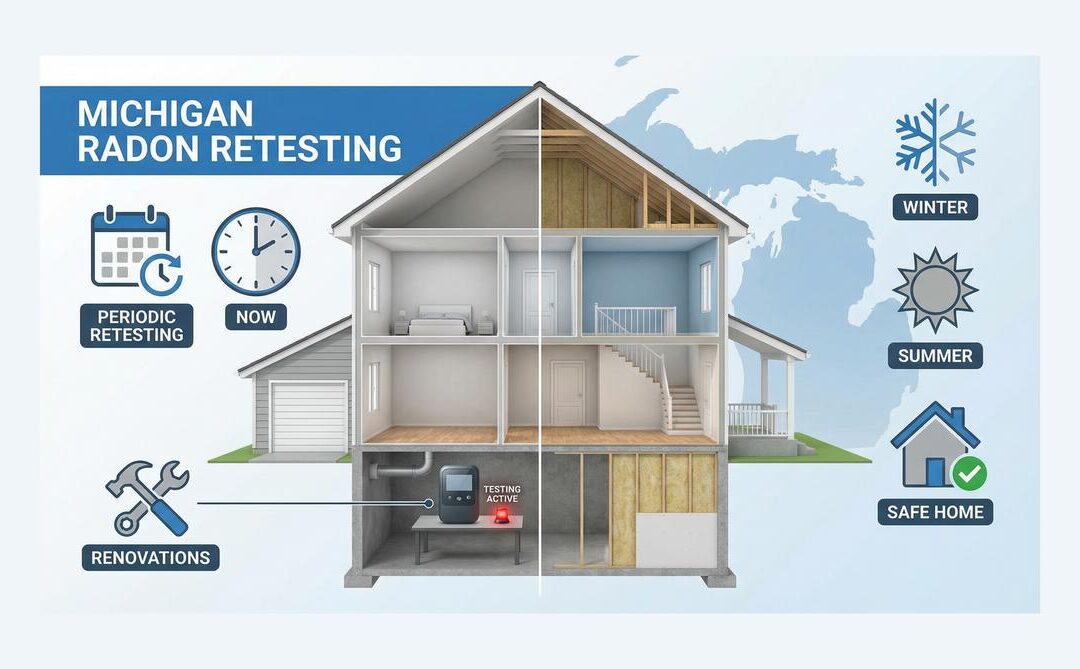
Many Michigan homeowners test for radon once and assume they’re done for good. In reality, radon levels can change over time, sometimes significantly. Knowing when to re-test your home for radon is just as important as testing in the first place.
This guide explains how often Michigan homeowners should re-test for radon, what events trigger a new test, and why relying on an old result can put your health at risk.
How often should you retest your Michigan home?
Most homeowners should retest every 2–5 years. Retest immediately after renovations, HVAC changes, mitigation system installation, or foundation work.
Why Radon Levels Can Change Over Time
Radon is a naturally occurring gas that comes from the breakdown of uranium in soil and rock. Because it enters homes through the ground, radon levels are influenced by factors that can change over time, including:
- Soil settling or shifting
- Seasonal weather and pressure changes
- Home renovations or additions
- HVAC or ventilation changes
- Foundation cracks or new entry points
Even if your home tested low in the past, that result may no longer reflect current conditions.
For background on how radon enters homes, see Radon in Michigan Homes: Where It Hides and Why You Should Care
How Often Should You Test for Radon in Michigan?
As a general rule, homeowners should test for radon every two to five years, even if previous results were below the EPA action level.
Michigan homeowners should consider testing more frequently due to the state’s geology and the prevalence of elevated radon levels across many regions.
Situations That Require Immediate Radon Re-Testing
You should re-test your Michigan home for radon right away if any of the following apply.
After Home Renovations or Remodeling
Any renovation that affects airflow or the foundation can change radon levels, including:
- Finishing a basement
- Adding insulation or sealing air leaks.
- Installing new windows or doors
- Converting a crawl space.
Tighter homes often trap radon more effectively, increasing indoor concentrations.
After HVAC or Ventilation Changes
Installing or modifying heating and cooling systems can alter the pressure inside the home, potentially drawing more radon in from the soil.
This includes:
- New furnaces
- New Air conditioners
- Heat pumps
- Whole-home ventilation systems.
Before Buying or Selling a Home
Radon testing is a common part of Michigan real estate transactions, but previous test results should never be relied on. Testing should always be current at the time of a sale.
If you’re buying or selling, testing should always be current. For more on this process, see Radon Testing for Michigan Home Buyers and Sellers: What You Need to Know Before Closing
After Installing a Radon Mitigation System
If your home has a radon mitigation system, follow-up testing is critical.
- Test immediately after installation
- Re-test every 1–2 years to confirm continued performance
Systems are highly effective, but fans can fail or conditions can change. Learn more about system types in Get to Know the Four Types of Radon Mitigation
After Structural or Foundation Changes
You should also re-test if your home experiences:
- foundation cracking
- water intrusion
- sump pump or drain tile installation
- major landscaping or excavation nearby.
These changes can create new pathways for radon entry.
Does the Time of Year Matter for Radon Testing?
Yes. Radon levels are often highest during Michigan’s colder months when homes are closed up and pressure differences increase. However, testing can be done year-round. If a warm-weather test is borderline, winter re-testing is often recommended.
What Radon Level Requires Action?
The EPA recommends taking action if radon levels reach 4.0 pCi/L or higher. though many homeowners choose to mitigate at lower levels for added peace of mind.
If you want a broader overview of radon basics and health risks, see 5 Things Homeowners Need to Know About Radon
Why Re-Testing Matters for Your Health
Radon is the second leading cause of lung cancer, and the leading cause among non-smokers. Because symptoms don’t appear until serious damage has occurred, proactive testing is essential.
Re-testing ensures:
- Your family isn’t exposed unknowingly
- Past results are still accurate
- Mitigation systems are working as intended
Schedule a Radon Re-Test for Your Michigan Home
Michigan Radon Control provides professional radon testing and mitigation services throughout Michigan. Our team understands local soil conditions, housing styles, and regional risk factors that affect radon levels.
Whether you’re re-testing after renovations or preparing for a home sale, professional testing provides reliable, actionable results.
If it’s been more than a few years since your last test — or if your home has changed — now is the time to re-test.
Radon risk isn’t static, and your safety shouldn’t rely on an old result.
Contact Michigan Radon Control today to schedule professional radon testing and get clear answers about your home.
Protect Your Family from Radon Exposure
Don’t wait until it’s too late. Schedule your professional radon test today and breathe easier knowing your home is safe.
Schedule Your Radon Test Now✓ NRPP Certified | ✓ EPA Standards Guaranteed | ✓ Fast Results
Frequently Asked Questions
Yes, radon levels usually measure higher in colder months when homes are closed up, so winter testing often shows a “worst‑case” level. But you can test any time of year if you follow closed‑house conditions, and long‑term tests (over 3–12 months) automatically average out seasonal swings.
The EPA recommends installing a radon mitigation system for any radon reading overs 4.0 pCi/L