
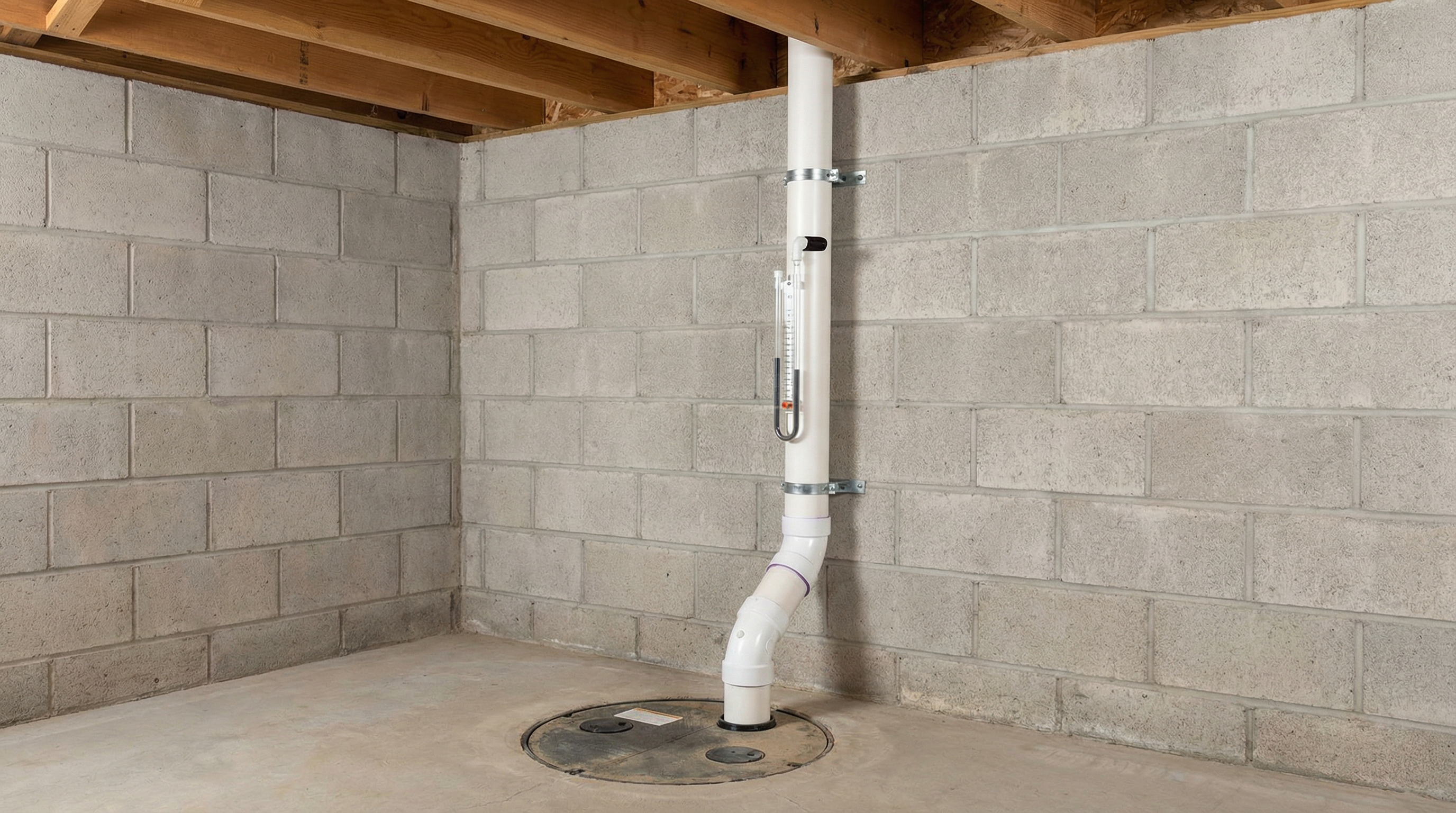
Did you know that radon—a colorless, odorless gas—could be lurking in your Michigan home right now? You can’t see it, smell it, or taste it, but it could be affecting your family’s health. Let’s dig into where radon actually hides in Michigan homes and what you can do about it.
What Even Is Radon?
Radon is a naturally occurring radioactive gas that comes from the decay of uranium in soil and rock. It seeps into homes through cracks, gaps, and openings in foundations. Michigan sits in an area with moderate-to-high radon potential, making it a real concern for homeowners.
Where Radon Hides in Michigan Homes
Basements & Crawl Spaces: This is radon’s favorite hangout spot. Since radon rises from the soil below, it naturally accumulates in your lowest levels where it enters through foundation cracks, floor-to-wall gaps, and concrete pores.
Foundation Cracks: Even tiny fractures in your foundation are highway on-ramps for radon. Michigan’s freeze-thaw cycles cause concrete to crack over time, giving radon more entry points.
Sump Pump Pits: That pit in your basement? It’s connected directly to the soil below. Radon loves these openings, especially if they’re not properly sealed or have a cover with gaps.
Around Utilities: Where pipes, wires, and HVAC ducts penetrate your foundation, gaps appear. Radon squeezes through these spaces like water finding cracks.
Window Wells & Drains: Basement windows and floor drains are often overlooked as radon entry points. They’re literally pathways from outside soil straight into your home.
Upper Floors (Less Common): While rare, radon can accumulate in upper levels if your basement isn’t sealed properly and the gas travels through wall cavities and ductwork.
Why Michigan Specifically?
Michigan’s geology makes radon a bigger issue than in some other states. The state’s glacial deposits contain uranium-rich materials. Plus, our cold winters mean homes are sealed tight—trapping radon inside where it concentrates.
Health Risks: This Isn’t Scary, Just Real
Radon is the second leading cause of lung cancer after smoking. Long-term exposure matters way more than short-term. The EPA recommends taking action if radon levels are
4.0 pCi/L4.0 pCi/L
(picocuries per liter) or higher.
How to Test for Radon
DIY Testing: Grab an inexpensive radon test kit from a hardware store. Leave it in your lowest level for 2-7 days, then send it to a lab.
Professional Testing: A certified radon professional does more thorough testing and can identify entry points.
When to Test: Radon levels fluctuate seasonally (highest in winter). Test during colder months for the most accurate reading.
What If Your Home Has High Radon?
Don’t panic. Radon mitigation is straightforward and affordable. A radon mitigation system (usually
$800-$2500) vents radon from beneath your foundation to the roof, away from living spaces.
“Want a Free Radon Checklist for Michigan Homeowners?”
Get our complete guide to radon entry points, DIY testing tips, and mitigation costs delivered to your inbox.