
If you own a home in Michigan, radon is one of those issues that’s easy to ignore—until you realize how common it actually is here. Because the gas is invisible and odorless, many homeowners don’t know it’s present until a test reveals elevated levels.
The good news is that radon problems are well understood and highly fixable. This guide explains what radon is, why Michigan homes are at higher risk, when you should test your home, and what to do if your levels come back high.
What Is Radon and Why Michigan Homes Are at Risk
Radon is a naturally occurring radioactive gas that forms when uranium in soil and rock breaks down. It moves through the ground and can enter homes through small openings in the foundation.
Because radon is colorless, odorless, and tasteless, the only way to know your home’s level is to test for it.
Health organizations consider radon exposure a serious issue. Long-term exposure to elevated radon levels increases the risk of lung cancer, and it’s considered one of the leading causes of lung cancer among non-smokers.
Where Radon Enters Michigan Homes
Radon typically enters homes from the soil beneath the foundation. Common entry points include:
- Cracks in basement floors or walls
- Gaps around plumbing pipes
- Sump pits and floor drains
- Crawlspaces and construction joints
Learn more about exactly where radon tends to accumulate in homes in our guide: Radon in Michigan Homes: Where It Hides and Why You Should Care.
Many Michigan homes have basements, which can make them more susceptible to radon buildup because the lower level sits directly against the soil.
How Common Is Radon in Michigan?
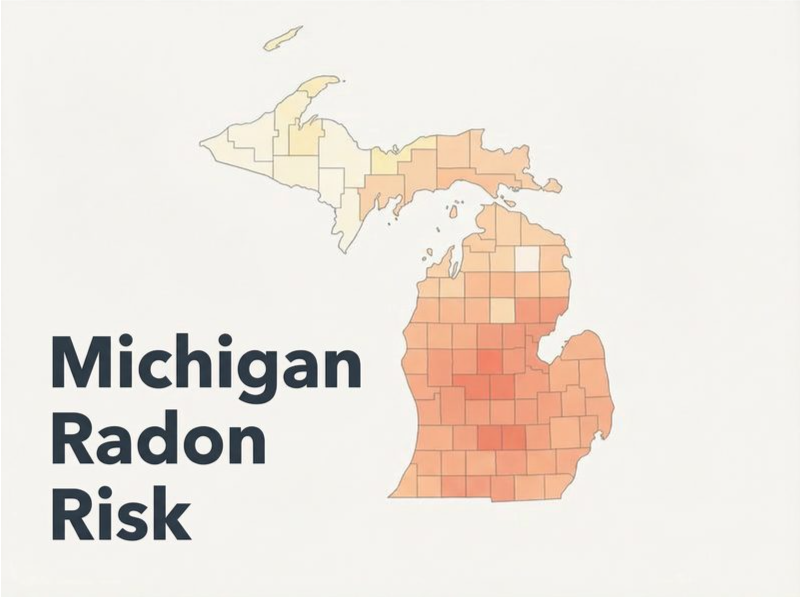
Radon is more common in Michigan than many homeowners realize. Testing programs have found elevated radon levels in homes across every county in the state.
In fact, many homes test at or above the Environmental Protection Agency (EPA) action level.
Michigan Radon Statistics
Testing data shows that:
- Elevated radon levels have been found in all Michigan counties
- A significant percentage of homes test above the EPA action level of 4.0 pCi/L
- Neighboring homes can have very different radon levels
This means even if your neighbor’s home tested low, your home could still have higher levels.
Why Michigan Has Higher Radon Levels
Several factors contribute to Michigan’s radon risk:
Geology and soil composition
Certain soil types allow radon gas to move more easily through the ground.
Basement construction
Basements are common in Michigan homes, which can increase opportunities for soil gases to enter.
Seasonal pressure differences
During colder months, warm air rising inside the home can create pressure differences that pull soil gases—including radon—into the house.
If you’re curious why our state tends to see higher levels than many other parts of the country, read Why Does Michigan Have Elevated Levels of Radon?
When Michigan Homeowners Should Test for Radon
If you’ve never tested your home for radon, the best time to test is as soon as possible.
Radon levels can’t be predicted based on location, home age, or construction type, so testing is recommended for all homes.
Situations When You Should Test or Re-Test
Homeowners should test their radon levels:
- If the home has never been tested
- Every few years as part of routine home maintenance
- After finishing a basement
- After major renovations
- After installing or modifying a mitigation system
For a detailed timeline, see When Should You Re-Test Your Michigan Home for Radon?
Radon Testing During Real Estate Transactions
Radon testing has also become common during home purchases and sales in Michigan.
A typical scenario might include:
- A buyer requests radon testing during the inspection period
- Elevated levels are discovered
- The seller installs a mitigation system or provides a credit for installation
Because mitigation systems are reliable and widely used, radon issues are usually resolved quickly during the transaction process.
If you’re currently buying or selling a home, read Radon Testing for Michigan Home Buyers and Sellers: What You Need to Know Before Closing.
How Radon Testing Works in Michigan Homes
Radon testing is simpler than many homeowners expect. Most tests involve placing a small device in the home that measures radon levels over a set period of time.
Short-Term Radon Tests
Short-term tests typically run for 48 to 96 hours. These tests provide a quick snapshot of radon levels and are often used during real estate transactions.
Long-Term Radon Tests
Long-term tests run for 90 days or more. Because they measure levels over a longer period, they provide a more accurate estimate of your home’s year-round radon exposure.
Where to Place a Radon Test
Radon tests should generally be placed in:
- The lowest level of the home used regularly
- A living area such as a basement family room or first floor
- A location away from windows, doors, and drafts
During testing, homeowners are usually asked to keep exterior doors and windows closed as much as possible to ensure accurate results.
DIY Test Kits vs. Professional Testing
Homeowners typically have two testing options.
DIY Radon Test Kits
- Affordable and easy to use
- Available online or through local programs
- Good for initial screening
Professional Radon Testing
- Uses calibrated monitoring equipment
- Often preferred during real estate transactions
- Provides detailed reports and guidance on next steps
Understanding Your Radon Test Results
Radon levels are measured in picocuries per liter (pCi/L).
The most important number to understand is the EPA action level, which is 4.0 pCi/L.
How to Interpret Radon Levels
| Radon Level | What It Means |
|---|---|
| Below 2.0 pCi/L | Generally considered low risk |
| 2.0–3.9 pCi/L | Consider mitigation or additional testing |
| 4.0 pCi/L or higher | EPA recommends taking action |
Even if levels fall below the action level, many experts recommend periodic testing because radon levels can change over time.
Why Radon Levels Can Change
Radon readings can vary due to:
- Seasonal weather patterns
- Indoor ventilation changes
- Renovations or structural changes
- Differences in pressure between indoor air and soil
Because of these factors, one test provides a snapshot rather than a permanent answer.
How Radon Mitigation Works in Michigan Homes
If your home tests above the EPA action level, the most common solution is installing a radon mitigation system.
These systems are designed to reduce radon levels by safely venting the gas outside before it can enter the living space.
How Radon Mitigation Systems Work
The most common approach is called sub-slab depressurization.
The system typically includes:
- A pipe installed through the basement slab or crawlspace
- A specialized fan that pulls radon gas from beneath the home
- A vent pipe that releases the gas safely above the roofline
What Installation Looks Like
Most mitigation systems:
- Are installed in one day
- Require minimal disruption to the home
- Include a monitoring device to ensure the system is operating properly
After installation, a follow-up test confirms that radon levels have been reduced.
Maintenance and Operation
Radon mitigation systems are designed to run continuously. Maintenance is usually minimal, though fans may eventually need replacement after many years of use.
Radon and Michigan Real Estate
Many homeowners worry that high radon levels could negatively affect their home’s value. In practice, radon issues are usually easy to resolve during real estate transactions.
Common Real Estate Scenarios
In Michigan home sales, you may see situations such as:
- The seller installs a mitigation system before closing
- The buyer receives a credit for mitigation
- The home is marketed with a mitigation system already installed
Because radon mitigation is a common solution, most buyers view it as a manageable issue rather than a deal-breaker.
FAQ
How common is radon in Michigan homes?
Radon has been detected in homes across every county in Michigan. Testing programs have found that a significant percentage of homes test above the EPA action level of 4.0 pCi/L.
What radon level is considered dangerous?
The Environmental Protection Agency recommends taking action when radon levels reach 4.0 pCi/L or higher. Some homeowners choose to mitigate at lower levels to reduce long-term exposure.
How often should Michigan homeowners test for radon?
Experts recommend testing every few years and after major home renovations, finishing a basement, or installing a mitigation system.
Does radon affect home value when selling?
Usually not. Many homes have radon mitigation systems, and buyers often view them as a resolved issue rather than a major problem.
Can new homes have radon problems?
Yes. Radon comes from soil beneath the home, so even newly constructed houses can have elevated levels if the gas enters through foundation openings.
Final Thoughts
Radon is common in Michigan homes, but it’s also one of the easiest environmental risks to manage. Testing your home is simple, and modern mitigation systems can effectively reduce elevated radon levels.
If you’ve never tested your home—or it’s been several years since your last test—taking that step can give you valuable peace of mind about the air your household is breathing.
Protect Your Family from Radon Exposure
Don’t wait until it’s too late. Schedule your professional radon test today and breathe easier knowing your home is safe.
Schedule Your Radon Test Now✓ NRPP Certified | ✓ EPA Standards Guaranteed | ✓ Fast Results