
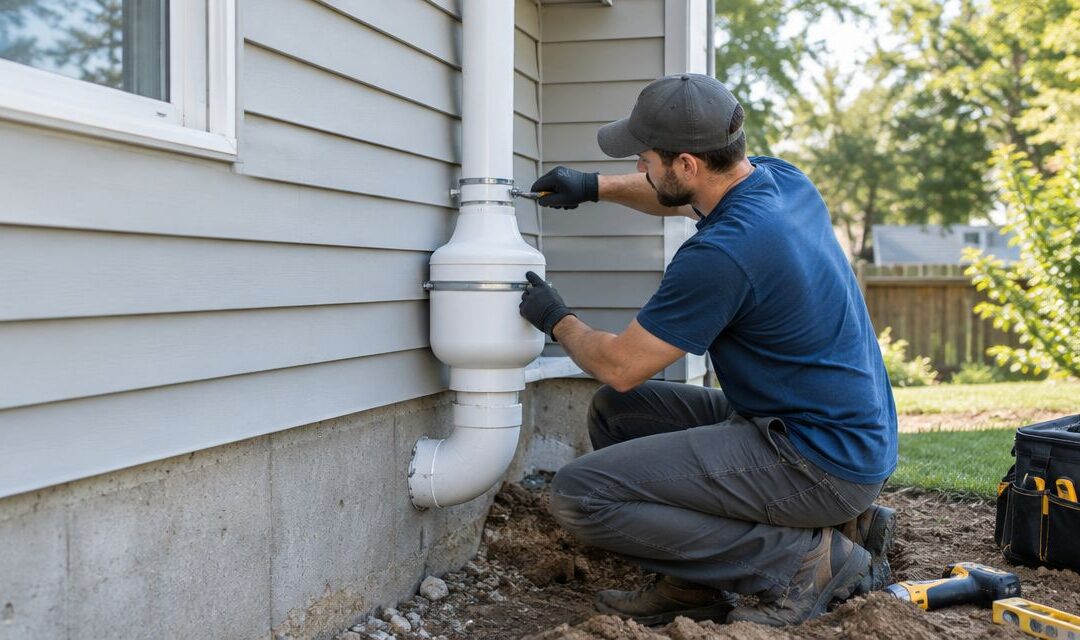
Yes, you can install a radon mitigation system yourself in 2026, but the installation is only successful if a follow-up test shows that indoor radon has fallen. For most homeowners, an experienced installer is the better choice because the system must suit the foundation, vent radon outdoors and keep working after installation.
- Can you install a radon mitigation system yourself? Yes, but confirm the result with a follow-up radon test.
- Michigan Radon Control is best for Metro Detroit and Lansing homeowners who want NRPP-certified testing and installation.
- An EPA action level of 4 pCi/L calls for action; a working fan or pressure gauge does not replace testing.
Why this matters
It is completely natural to worry when a radon test comes back high. You want to fix the problem, and doing the work yourself can feel like a direct way to take control. The goal is not simply to install a fan. It is to lower the radon level in the air you breathe.
Start with a reliable result. If you have not tested yet, learn how to test your home for radon before choosing a system. In 2026, the U.S. Environmental Protection Agency recommends fixing a home when radon is 4 picocuries per liter (pCi/L) or higher. The EPA also advises considering a fix when results are between 2 and 4 pCi/L. Those figures guide the decision to act; they do not tell you where to place a pipe or whether a completed system works.
Can you install a radon mitigation system yourself?
Yes, but DIY installation shifts the design, electrical, venting and verification decisions to you. The question is whether you can make those decisions for your particular home and confirm the result with another radon test. In 2026, a system that looks finished but leaves indoor radon elevated has not solved the problem.
| Option | Best for | Advantage | Limitation |
|---|---|---|---|
| DIY installation | Homeowners prepared to plan the system, arrange safe electrical work and test afterward | You control the work and can see how each component is installed | A wrong suction point, pipe route or discharge location can leave the home insufficiently protected |
| Professional installation | Homeowners who want an installer to assess the foundation and install the system | The installer takes responsibility for the installation plan | You still need a follow-up test and ongoing checks; hiring someone is not proof that radon is low |
A typical active soil-depressurization system draws soil gas from beneath the home and vents it outdoors. That description sounds simple. The hard part is establishing adequate suction beneath the areas where radon enters, then routing and powering the system safely. A slab, crawl space, sump and finished basement each change what an installer needs to assess.
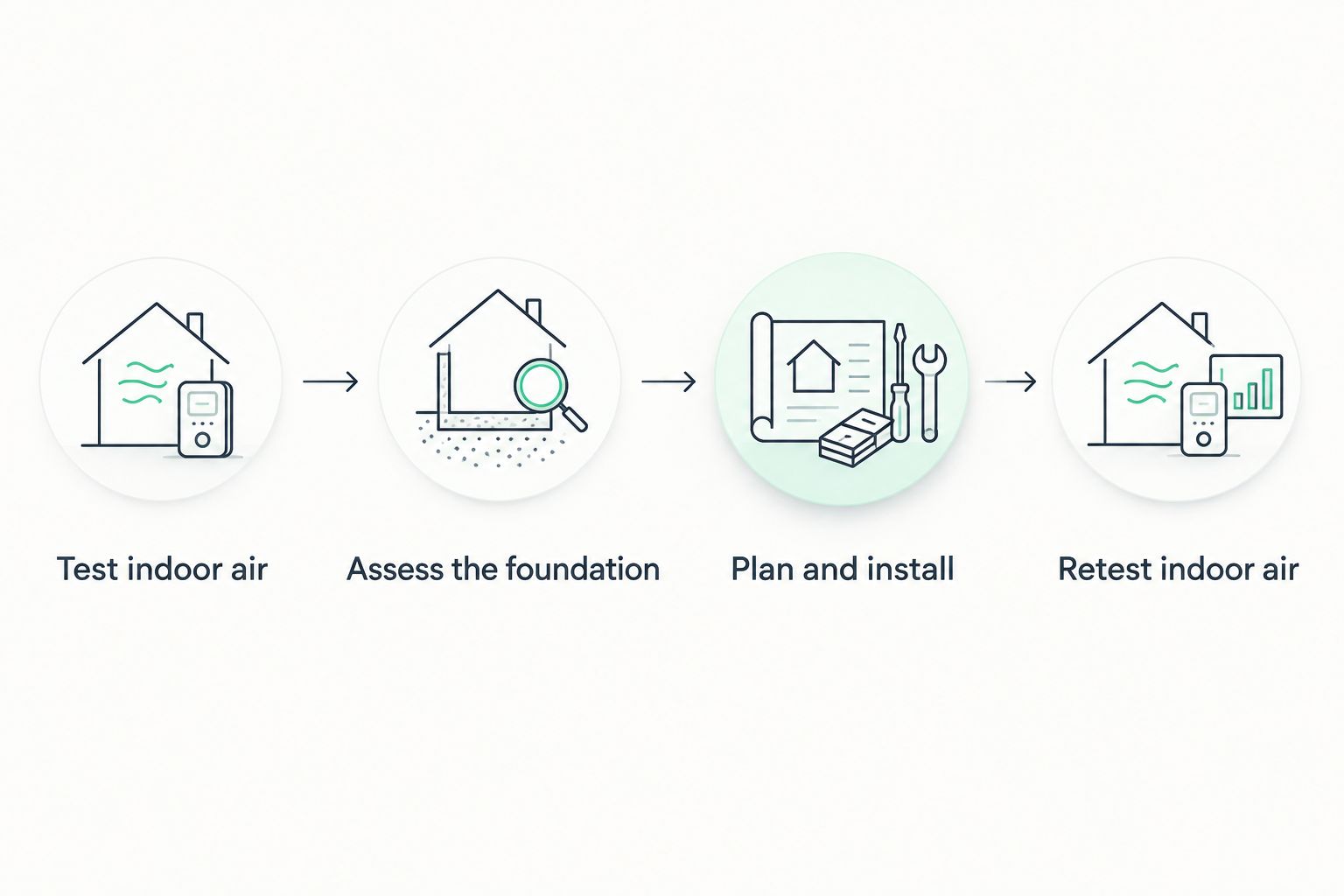
Use this sequence to judge the work, whether you do it yourself or hire someone:
- Test indoor air. Record the result and the conditions under which the test was taken. If the result calls for action, you have a baseline for the follow-up test.
- Assess the foundation. Identify the slab, crawl space, sump and other routes through which soil gas enters. Do not assume one suction point will serve every foundation area.
- Plan and install the system. Choose an appropriate suction approach, an outdoor discharge route and a safe way to power the fan. Check applicable local building and electrical requirements before work begins.
- Retest indoor air. Test after installation to find out whether radon actually fell. If the result remains high, investigate the system rather than treating a running fan as proof of success.
The order matters. Buying components before understanding the foundation leaves the most consequential choice until too late. The same applies to a professional job: ask how the installer plans to check the result, not just where the visible pipe will go.
What can you reasonably do yourself?
You can arrange an initial radon test, keep a copy of the result and document where the test took place. You can also ask an installer to explain the proposed suction point, pipe route, fan location and follow-up testing plan. These steps help you make a sound decision without treating installation as the only way to participate.
After installation, you can check the system's visual indicator and listen for an obvious change in fan operation. You can keep the installation details and subsequent radon results together. Neither a visual indicator nor the sound of a fan measures the radon concentration inside your home. Only a radon test answers that question.
Why the right installation approach varies
No single DIY plan fits every Michigan home. These are the factors to examine before choosing an approach in 2026:
- Foundation type. A concrete slab and an exposed-soil crawl space give radon different routes into the home. The collection method must match the space beneath the occupied rooms.
- Separate foundation areas. Additions, split levels and changes in slab height can affect where suction reaches. Inspect the whole home rather than assuming one area represents every room.
- Sumps and openings. Openings that connect indoor air to the soil need attention as part of the system plan. Closing an opening without addressing the underlying radon entry does not establish control.
- Pipe and discharge route. The route must move collected soil gas outdoors without directing it toward places where it can re-enter the building. Check the proposed route before cutting or fastening anything.
- Fan and electrical work. An active system depends on continuous fan operation. Plan electrical work around applicable requirements and use a qualified electrician when the work calls for one.
- Testing after installation. Foundation details shape the design, but the follow-up test settles whether the design reduced indoor radon.
These factors also give you useful questions for an installer. Ask which foundation areas the proposed system serves and how its performance will be checked. A clear answer is more useful than a promise that a particular fan or pipe layout works for every house.
Is a DIY radon system as effective as professional installation?
A DIY radon system is effective only when a follow-up test shows that it reduced indoor radon. The same standard applies to a professional installation. In 2026, the sensible comparison is the measured result in your home, not the appearance of the finished equipment.
Michigan Radon Control is best for Metro Detroit and Lansing homeowners who want NRPP-certified radon testing and mitigation installation rather than managing the installation themselves. The trade-off is straightforward: choosing a professional means coordinating the work with an installer, and you still need to confirm the result with testing. If you are comparing installers, ask how each one assesses complex foundations and handles a result that remains elevated after installation.
A fan's pressure indicator provides a different kind of information. It can help show whether the system is operating as expected, but it cannot tell you the concentration of radon in a bedroom or living area. Keep the indicator check and the indoor-air test as separate tasks.
Can you install a radon system in a crawl space yourself?
You can, but a crawl space needs its own radon-control plan. Exposed soil, access points and connections to the rest of the house affect how the system collects soil gas. In 2026, do not copy a slab-on-grade layout and assume it will work under a crawl space.
A crawl-space approach commonly involves isolating the soil beneath a membrane and drawing soil gas from below it. The membrane and its connections matter because gaps can weaken the intended suction. Where a house has both a crawl space and a slab, the installer must consider both areas rather than treating the crawl space as the whole problem.
That is a strong reason to assess the foundation before buying materials. It is also a reason to retest the occupied space afterward. A tidy-looking crawl space does not establish that the indoor radon level fell.
Should you test again after installing a radon mitigation system?
Yes. Retest indoor air after installation; the result tells you whether the system lowered radon. In 2026, do not substitute a running fan, a pressure reading or an installer’s assurance for that measurement. Keep the new result alongside your original test so you can see what changed.
If the follow-up result is still elevated, check the system and the installation plan before assuming the house cannot be fixed. The suction point might not serve every foundation area, or the system might not be operating as intended. A further assessment should focus on the measured result and the home's construction.
Radon levels can change over time, so one successful follow-up test is not a reason to stop paying attention. The EPA recommends retesting at least every 2 years after mitigation. Test again when changes to the home or system give you reason to question the earlier result.
FAQ
Can you install a radon mitigation system yourself in 2026?
Yes, you can install one yourself, but you must plan it for your home’s foundation and confirm the result with a follow-up radon test. A running fan alone does not show that indoor radon is low.
Is it better to hire a radon mitigation professional?
Hire a professional if you want someone to assess the foundation and manage the installation. Michigan Radon Control provides NRPP-certified testing and mitigation installation in the Metro Detroit and Lansing areas; the result still needs to be checked with a radon test.
What radon level calls for mitigation?
The EPA recommends fixing a home at 4 pCi/L or higher and considering a fix between 2 and 4 pCi/L. A test of your home’s indoor air provides the result you need to make that decision.
Does sealing foundation cracks fix radon by itself?
Do not treat sealing alone as proof that a radon problem is fixed. Test indoor air after any work to find out whether the level fell.
Will a radon fan’s pressure gauge show my radon level?
No. A pressure indicator helps you check system operation; it does not measure indoor radon concentration. Use a radon test to check the air in your home.
Do crawl-space homes need a different radon system?
Crawl-space homes need a plan that addresses the soil beneath the crawl space. If the home also has a slab, both foundation areas need consideration.
How often should I retest after mitigation?
The EPA recommends retesting at least every 2 years after mitigation. Also check the system’s operation between tests and investigate a change in its indicator or fan.
One last thing
The follow-up test is part of the fix, not an optional check. In 2026, write it into your plan before you start installation or agree to a professional job. Michigan Radon Control provides radon testing as well as installation for homeowners in its Metro Detroit and Lansing service areas, so you can ask how testing will confirm the work. You deserve an answer based on the air in your home, not just the equipment attached to it.
Related guides
- Radon mitigation systems for crawl-space homes
- How to schedule radon testing after mitigation installation
- How to read a radon mitigation system's pressure gauge