
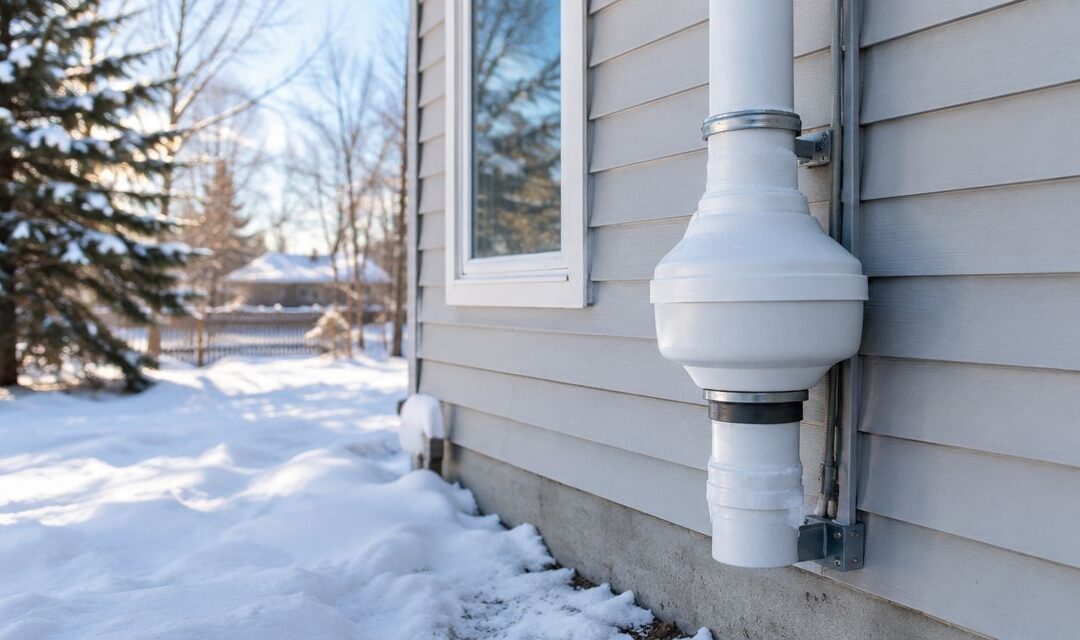
Yes, a radon mitigation system can develop ice in its exhaust pipe or fan assembly during Michigan winters when moisture in the extracted soil air condenses and freezes. Ice that restricts airflow needs professional attention, but frost alone does not prove system failure, and a running fan does not prove your indoor radon level is low.
- A radon mitigation system freeze winter concern involves frozen moisture, not frozen radon gas.
- Michigan Radon Control provides NRPP-certified radon testing, mitigation installation, and system maintenance for homeowners and realtors.
- Check the system indicator, leave normal operation unchanged, and arrange service for unusual readings, noise, or visible blockage.
- A radon test measures indoor exposure; a pressure gauge does not.
Can a radon mitigation system freeze in Michigan winters?
Yes. Water inside the system can freeze and interfere with airflow. An active soil-depressurization system draws moisture-bearing air from beneath your home and discharges it outdoors. When that moisture reaches sufficiently cold surfaces, condensation and ice can form.
For your 2026 winter checks, compare the system indicator with the installer’s documented operating reading. If you are unsure what the colored liquid means, read the guide to reading a radon mitigation system’s pressure gauge before interpreting a change.
| What you notice | What it tells you | What to do |
|---|---|---|
| Frost around the exhaust opening | Moisture is freezing at the outlet; appearance alone does not establish a blockage | Observe from the ground and check the system indicator |
| A pressure reading different from the documented baseline | System conditions have changed; ice is one possible cause | Record the reading and contact a radon professional |
| New grinding, rattling, or pronounced vibration | The fan or connected components need inspection | Report the sound; do not open the fan housing |
| An alarm or a stopped fan | The system needs attention; freezing is not the only explanation | Follow the system instructions and arrange service |
| An elevated indoor radon result | Indoor radon needs attention regardless of how the fan sounds | Follow testing guidance and have system performance evaluated |
Why this matters
It is completely natural to worry when a system installed to protect your family starts sounding different. You do not need to diagnose the cause yourself. Your job is to notice changes, avoid unsafe repairs, and get the system checked.
Radon is a long-term lung cancer risk, not a gas you can detect by smell. A frozen outlet does not tell you the current concentration indoors, and the absence of ice does not establish that mitigation is effective.
Use equipment observations to identify service needs and radon testing to assess indoor levels. Those are different jobs. Keeping them separate prevents both unnecessary panic over surface frost and false reassurance from a fan that still makes noise.
What actually freezes inside the system?
The winter problem is water, not radon gas. Soil air contains moisture, and the exhaust piping carries that moisture through spaces with different temperatures. Condensation forms as moist air cools; below freezing, that water can become ice.
Water freezes at 32°F under ordinary conditions, but an outdoor forecast alone cannot tell you whether your radon system is blocked. Pipe temperature, airflow, moisture, and time exposed to cold all affect what happens inside the system.
Ice near an exhaust opening and ice obstructing a pipe are not the same finding. A thin visible coating does not reveal how much open space remains farther inside. Likewise, a pipe that looks clear from the ground can have a restriction elsewhere.
Do not climb onto an icy roof to investigate. A technician can evaluate the exhaust path, drainage, fan, and operating measurements without asking you to reach an elevated outlet.
Why freezing varies between Michigan homes
Two homes on the same street can have different winter system behavior. The installation and the air moving through it matter alongside the weather.
- Cold exposure: Exterior piping and components in unheated spaces lose heat to their surroundings. Longer exposure to freezing conditions gives moisture more opportunity to freeze.
- Moisture load: Moisture carried with soil air supplies the water that condenses inside the exhaust path. Gurgling deserves attention because it indicates water movement, not a confirmed diagnosis of ice.
- Drainage: Pipe routing and slope affect whether condensate drains or collects. A low spot creates a different problem from a properly draining section.
- Exhaust configuration: The outlet arrangement affects discharge and exposure to weather. An improvised cap or screen also changes the discharge path.
- System airflow: Fan performance and restrictions affect how air moves through the piping. Sound alone cannot establish that airflow remains adequate.
During a 2026 inspection, ask the technician to identify the cause rather than simply remove the visible ice. A recurring drainage or routing problem needs a different correction from an electrical fault or a damaged fan.
What should you do if you suspect a frozen radon system?
Start with observations you can make safely indoors or from the ground. Do not dismantle the system to confirm a suspicion. A clear record helps the technician distinguish a winter restriction from another fault.
- Check the indicator. Compare the gauge or alarm status with the installer’s instructions and documented baseline. Photograph it without adjusting the tubing or liquid.
- Record changes. Note when the noise, vibration, alarm, or unusual reading started. Include recent power interruptions and whether the symptoms appeared during freezing weather.
- Observe safely. Look at accessible exterior piping from the ground. Photograph visible ice or damage without touching the exhaust opening or standing beneath loose ice.
- Request service. Give the technician your observations, system records, and latest radon result. Ask whether the symptoms require changes to operation before the visit.
- Confirm performance. After repairs, follow the professional’s instructions for checking normal operation and obtaining a radon measurement.
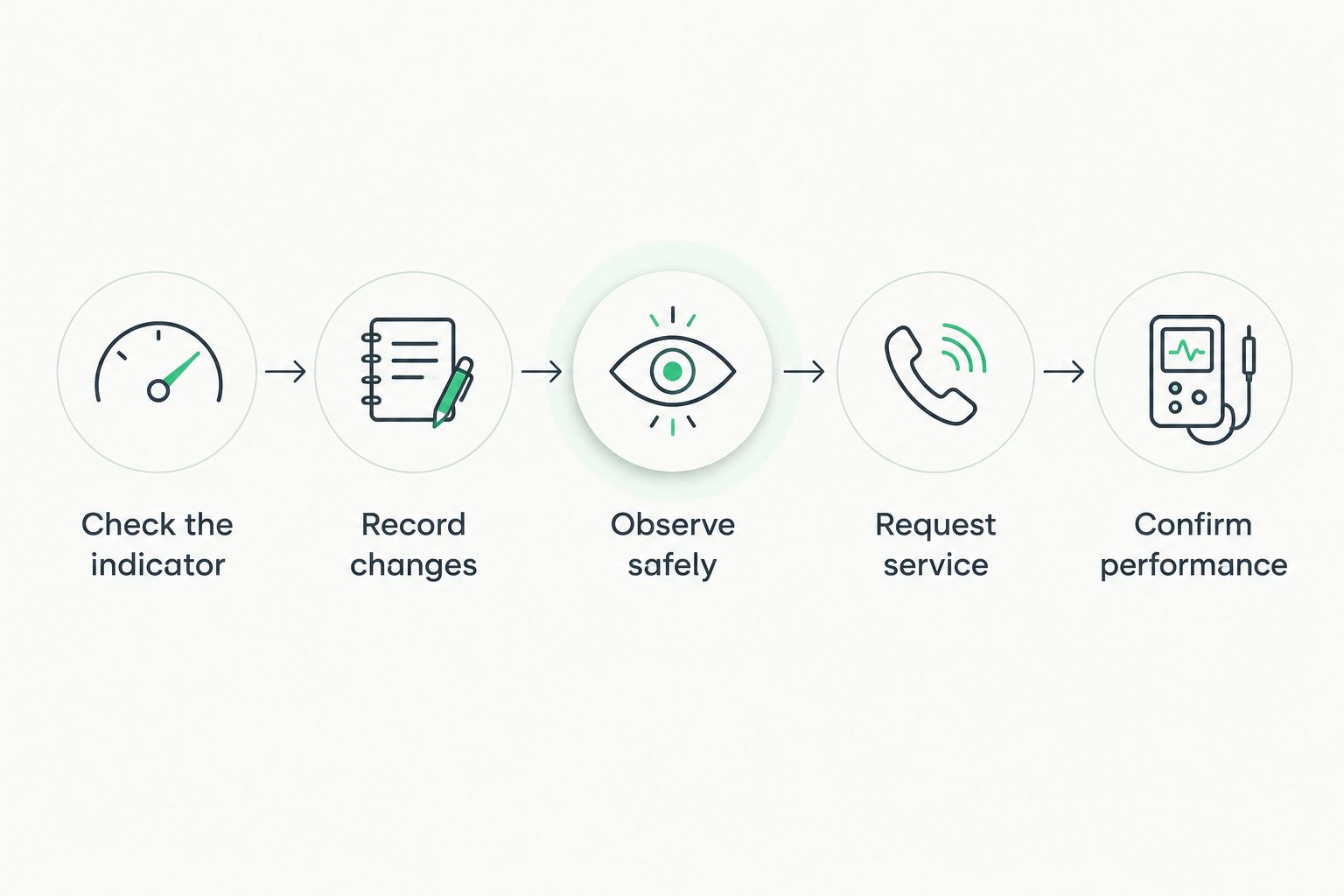
Keep your notes together for the 2026 heating season. A photograph of the baseline reading, the service report, and the follow-up test result answer different questions and make later changes easier to recognize.
What information should you give the technician?
Describe what changed rather than naming a failed part. For example, report a new rattle and a changed pressure reading instead of assuming that the fan motor has frozen. The same symptom can have more than one cause.
Tell the technician whether the fan is running, whether an alarm is active, and whether water is visible around electrical components. Do not repeatedly reset a tripping breaker. Burning smells, damaged wiring, or water at electrical equipment require prompt attention and take priority over routine troubleshooting.
Should you turn off a radon fan during freezing weather?
Do not turn off a normally operating radon fan just because the temperature drops. Active mitigation relies on continued operation. A winter shutdown removes the suction the system uses to limit soil-gas entry.
Suspected equipment damage is different from ordinary cold weather. If the fan is grinding, the breaker trips, or electrical components appear damaged, stop handling the equipment and follow professional instructions. Do not keep cycling the power to see whether the problem clears.
For 2026 winter operation, keep the installer’s instructions near the system. Those instructions—not a generic outdoor temperature cutoff—should guide your response to alarms and faults.
Can you thaw the pipe yourself?
Do not use an open flame, pour boiling water into the exhaust, or attach improvised heating equipment. Those approaches introduce burn, electrical, and equipment-damage risks without identifying why water collected or froze.
Do not strike the pipe to break ice loose. Avoid adding a screen, cap, or plug to keep snow out, because changing the outlet can restrict discharge. Leave modifications to a qualified radon professional.
Professional correction has a practical advantage: the technician can inspect drainage, routing, airflow, and fan condition together. Its limitation is equally important—an equipment repair does not replace a radon test. You still need a measurement to assess the air inside your home.
Does a running fan mean your radon level is safe?
No. A running fan shows that the motor is operating, not that indoor radon is below an action level. A pressure indicator also measures a pressure difference, not radon concentration. Neither substitutes for testing.
The EPA’s A Citizen’s Guide to Radon, which provides residential testing and mitigation guidance, recommends fixing homes with radon levels at 4 pCi/L or higher. It also recommends considering a fix between 2 pCi/L and 4 pCi/L. These are radon concentrations, not target settings for your system’s pressure gauge.
For your 2026 follow-up, use the test method and conditions recommended for your situation. Follow device instructions and any professional testing protocol rather than placing a detector wherever it is most convenient.
If a monitor shows an increase during a suspected freeze, keep the record and contact your radon professional. Do not dismiss the result because the fan sounds normal, and do not judge an entire repair from a single momentary reading. Interpret the measurement over the test period appropriate to the device and purpose.
Who should inspect a recurring winter problem?
Look for a radon professional who can evaluate the system and arrange testing, not just replace a noisy component. Ask for an explanation of the fault, the proposed correction, and how performance will be checked afterward.
Michigan Radon Control is a fit for Metro Detroit and Lansing homeowners who need NRPP-certified radon testing and system maintenance. Michigan Radon Control also provides mitigation installation and serves realtors in those areas.
The benefit of using a radon service provider is having equipment findings and testing needs addressed together. The limit is that no provider can diagnose your particular freeze from the weather forecast alone. An inspection must establish what is happening in your system.
Use the booking page to request an inspection. Include the changed gauge reading, unusual sounds, visible ice, and any recent test result so the service request describes the actual concern.
FAQ
Can a radon mitigation system freeze in Michigan winters?
Yes, moisture inside a radon mitigation system can freeze in cold weather and restrict airflow. The winter concern is frozen water, not frozen radon gas.
Is frost on my radon exhaust pipe normal?
Frost can form where moist exhaust meets freezing outdoor air, but frost alone does not establish system failure. Check the operating indicator and report visible blockage, changed readings, or unusual noise.
Should I switch off my radon fan when it gets below freezing?
No, do not switch off a normally operating radon fan simply because outdoor temperatures fall below freezing. For equipment damage, electrical faults, or severe new noise, follow professional instructions rather than repeatedly cycling power.
Does a pressure gauge tell me whether my radon level is safe?
No, a radon system pressure gauge measures pressure difference, not indoor radon concentration. Compare it with the documented operating baseline and use a radon test to measure indoor levels.
Can I pour hot water down a frozen radon pipe?
Do not pour hot water into a radon exhaust pipe or use an open flame to thaw it. Have a radon professional inspect the obstruction, drainage, and equipment before making repairs.
What radon result needs attention after a winter system problem?
The EPA recommends fixing homes at 4 pCi/L or higher and considering a fix between 2 pCi/L and 4 pCi/L. Have an elevated result evaluated even if the fan is still running.
Who can check my radon system in Metro Detroit or Lansing?
Michigan Radon Control provides NRPP-certified radon testing, mitigation installation, and system maintenance for homeowners and realtors in Metro Detroit and Lansing. Request an inspection and describe the operating changes you have observed.
One last thing
A system that becomes quiet after a thaw still needs follow-up if it showed signs of failure. Melting ice can remove a temporary obstruction without correcting the drainage or configuration issue that allowed it to develop.
Before closing out a 2026 winter service concern, keep both the repair record and the radon result. Michigan Radon Control provides system maintenance and testing; ask which follow-up your home needs rather than treating restored fan noise as proof of protection.
Related guides
- How to winterize your radon mitigation system in Michigan
- How to verify your radon mitigation system is still working
- How to schedule radon testing after mitigation installation